Table of Contents
Why Riot Protection for Storefronts Can’t Wait
How Rioters Actually Attack Storefront Glass
Security Glazing Basics for Retail Storefronts
Retrofit Riot Protection Over Existing Glass Storefronts
Choosing Levels of Protection: Forced Entry vs Bullet Resistant Glazing
Cost, Installation, and Downtime for Riot-Protected Storefronts
FAQs About Riot Protection for Storefronts
Why Choose Impact Security for Storefront Riot Protection
Next Steps: Hardening Your Storefront Before the Next Incident
Introduction: Why Riot Protection for Storefronts Can’t Wait
Between 2020 and 2025, civil unrest, organized retail crime, and coordinated smash and grab theft reshaped the security landscape for retail businesses across the United States. Retailers reported a 93% increase in shoplifting incidents from 2019 to 2023, and U.S. retailers experienced over $112 billion in shrink in 2022. For glass storefronts, the math is brutal: a single sledgehammer blow can turn a display window into an open invitation.
When we talk about riot protection for storefronts, we mean more than keeping glass from shattering. The goal is preventing forced entry and prolonged break ins through commercial storefront windows, denying access to merchandise even when the outer pane cracks. Typical targets include retail stores, cannabis dispensaries, pharmacies, electronics and sneaker stores, jewelry stores, and bank branches. Their glass doors and windows offer curb appeal and window shopping visibility, but they also create vulnerable entry points that attackers exploit in seconds.
The most effective riot protection today is retrofit security glazing mounted over existing glass. Polycarbonate and multi-layer riot glass systems are virtually unbreakable, blend with existing glass, and can be retrofitted onto existing glass systems without a full tear-out. This article walks through how attackers breach storefront glass, what security glazing options exist, how modern retrofit solutions from Impact Security work, and how to choose the right level of protection for your property.
| Old Approach | Modern Riot Protection |
|---|---|
| Plywood boards after the fact | Clear polycarbonate overglaze installed proactively |
| Iron bars or roll-down gates | Retrofit riot glass that preserves an open and inviting look |
| Basic security window film | Engineered forced entry resistant glazing systems |
How Rioters Actually Attack Storefront Glass
In May 2024, a flash mob armed with hammers hit a luxury flagship store in San Francisco’s Union Square. Within 45 seconds, one pane of tempered glass was shattered completely, and shelves of watches and accessories were grabbed before any response arrived. This is the pattern: rioters and smash and grab crews target existing glass in retail storefronts because it is the fastest path to high-value inventory. Over 28% of burglaries occur in commercial business locations, and storefront glass is the number-one easier target.
Riot glass is designed to resist impacts from sledgehammers and crowbars, but regular glass fails against:
- Sledgehammers and bricks delivering focused blunt force
- Crowbars and pry bars levering at frame corners
- Battery-powered saws cutting through mullions
- Repeated kicks or multi-person battering on a single panel
The distinction between breaking glass and gaining entry matters. Standard tempered glass or annealed glass shatters into fragments, creating a human-sized opening almost immediately. Broken glass on the ground is a nuisance; an open storefront is a catastrophe. When civil unrest stretches across multiple nights, the security requirements shift from brief delay to sustained access denial for 30 to 60 minutes or longer. Riot glass can withstand multiple impacts from blunt-force attacks, holding that physical barrier in place when everything else fails.

Security Glazing Basics for Retail Storefronts
Security glazing is an engineered system: the glass or polycarbonate panel, any interlayers, and the framing and anchors all work together against forced entry, looting, and other threats. Understanding the main categories helps you match the right solution to your threat level and budget.
Tempered glass is standard safety glass. It breaks into small granules rather than dangerous shards, which protects people from cuts, but it offers zero resistance to determined forced entry. It is not security glass.
Laminated glass bonds two or more glass layers with interlayers like PVB, ionoplast, or SGP. These interlayers hold broken glass in place, preventing easy reach-through. However, laminated glass offers only light security against sustained forced entry and works best for new builds or moderate-risk zones compared with dedicated riot-protective window and door systems.
Polycarbonate overglaze and riot glass shields are the top retrofit solution for high-risk glass storefronts. Advanced DefenseLite Pro polycarbonate systems are up to 250 times stronger than regular glass and provide passive protection against projectiles and blunt force, making them a leading retail security and loss prevention solution. These shields flex under impact instead of shattering, absorbing energy across the panel.
Bullet resistant glazing uses glass-polycarbonate composites rated under UL 752 to stop specific ammunition. Purpose-built BulletShield retrofit systems are heavier, more expensive, and reserved for firearms-threat locations like banks and some cannabis dispensaries.
Security window film can delay entry for 30 seconds to 1 minute during a break-in attempt, but even stacked RiotLite security films cannot match the shatter resistance of engineered polycarbonate glazing or laminated security systems. Independent testing consistently shows that DefenseLite vs security glass film comparisons favor engineered polycarbonate shields when the goal is stopping smash and grab attacks. Products are tested against standards like ASTM F1233, ASTM F3038, UL 972, and UL 752, which simulate real-world forced entry and ballistic threats.
| Category | Threats Resisted | Best For | Works with Existing Glass? |
|---|---|---|---|
| Tempered glass | Accidental impact only | Basic safety, low risk | Already installed |
| Laminated security glass | Moderate forced entry | New builds, moderate risk | Requires full replacement |
| Polycarbonate riot glass | High forced entry, looting, riots | High-risk storefronts, urgent upgrades | Yes, retrofit over existing glazing |
| Bullet resistant glazing | Firearms plus forced entry | Banks, secure rooms, dispensaries | Heavy; frames must support weight |
Retrofit Riot Protection Over Existing Glass Storefronts
A retrofit solution mounts a security shield over or in front of your existing window system and door frames, avoiding full tear-out and structural changes. This is where Impact Security’s approach stands apart. Their forced entry security glazing systems and BulletShield ballistic systems strengthen existing glass storefronts, glass doors, and curtain walls by layering engineered polycarbonate panels over the commercial glass already in place.
The process works like this: custom-fabricated clear shields are sized to your existing openings, attached with engineered aluminum framing that accommodates thermal expansion, and designed to create a continuous access-denial layer. The result is a virtually invisible upgrade that blends seamlessly with your storefront windows and preserves natural light and visibility for customers.
Riot glass can keep intruders out for up to 1 hour during attacks, providing protection well beyond the typical police response window. Installation can occur without shutting down the store, and pre-emptive storefront riot protection solutions typically take 1 to 3 nights per location. Purpose-built smash-proof anti-theft glass panels are engineered specifically to stop smash and grab crews from breaching display windows. Retrofitting costs less than replacing existing glass entirely, a critical advantage when you are protecting dozens of commercial properties.
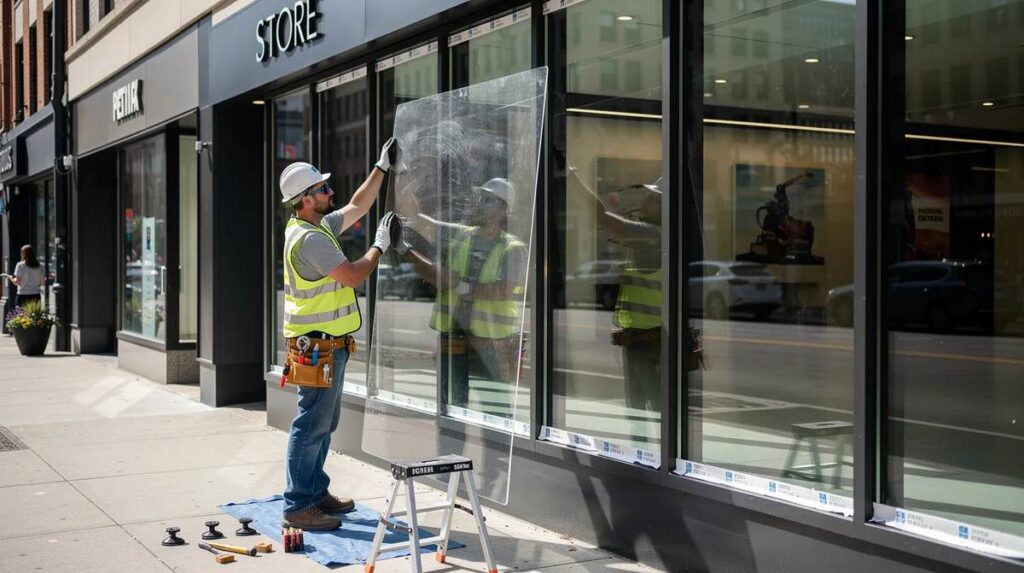
The key advantages for retailers and property owners include minimal disruption during after-hours installation, preserved curb appeal and the open and inviting look that drives foot traffic, and avoidance of plywood, bars, and roll-down shutters. Dedicated storefront security solutions for glass doors and windows are most impactful at high-visibility street-facing glass, doors and vestibules, display windows holding high-value merchandise, cash-wrap sightlines, and at-risk uses like cannabis dispensaries and pharmacies holding controlled substances.
Choosing Levels of Protection: Forced Entry vs Bullet Resistant Glazing
Not every storefront needs bullet-resistant glazing. For most retail businesses, the primary threat is smash-and-grab theft and looting, not firearms. Forced entry resistant security glazing, tested to withstand repeated attacks with common tools while preventing a body-sized opening for a defined time window under ASTM F3038, covers the vast majority of riot and burglary scenarios.
Bullet-resistant glazing carries UL 752 ratings from Level 1 through Level 8, corresponding to threats from 9mm handguns up through rifle rounds. These systems are typically specified for banks, government buildings, and high-end retail stores or cannabis dispensaries where firearms threats are documented, where broader bulletproof windows and doors security solutions are often part of an integrated protection strategy.
Effective storefront protection during civil unrest requires a combination of physical defenses and emergency planning, and some high-risk facilities also factor in blast resistant glass panels and bomb protection when evaluating extreme-threat scenarios. Here is how security requirements typically map to scenarios:
- Suburban retail store or boutique: Laminated security glass or entry-level DefenseLite retrofit for basic forced entry delay
- Urban pharmacy or big-box chain: Higher forced-entry rating with DefenseLite-grade systems; physical barriers such as roll-down shutters and plywood boards can deter looting as a supplementary measure but should not be the primary solution
- Luxury retailers or jewelry stores: Forced entry protection across all storefront windows plus selective bullet resistant zones at display cases
- Cannabis dispensaries and cash-intensive businesses: Ballistic-rated BulletShield at transaction windows and entries, active shooter mitigation glazing or complementary ballistic window film solutions in occupied areas, and forced entry protection elsewhere
A professional risk assessment evaluates local crime data, prior break in attempts, visibility, inventory value, and operating hours. Impact Security provides on-site surveys to match glazing performance to realistic threats and budget, acting as a visual deterrent and a proven barrier.
Cost, Installation, and Downtime for Riot-Protected Storefronts
Major cost drivers include the square footage of glass, the number of storefront windows and doors, performance level (forced entry versus bullet resistant), framing modifications, and project location. Costs vary based on glass thickness and performance rating, with typical DefenseLite retrofits ranging from $45 to $90 per square foot.
A typical storefront retrofit takes 2 to 4 weeks of fabrication at U.S. fabrication centers in Marietta, GA and Glendale, AZ. Installation typically requires 1 to 3 nights for a standard retail location, with all work done after hours to keep operations running and customers unaffected.
What to expect during installation:
- Site visit and measurement of existing glass and framing
- Engineering review and selection of DefenseLite, BulletShield, or custom system
- Fabrication of panels and framing
- After-hours installation with existing glass and existing window left in place
- Final inspection, cleaning guidance, and maintenance handoff
Maintenance is straightforward: non-abrasive cleaning for polycarbonate surfaces, periodic hardware checks, and multi-year manufacturer warranties. Compared to repeated emergency board-ups, full storefront glass replacement, and stacking insurance deductibles from multiple incidents, retrofit riot protection delivers dramatically better long-term value for secure commercial properties.
FAQs About Riot Protection for Storefronts
Will riot protection glazing stop all break ins? No single system guarantees absolute prevention, but riot glass can withstand multiple impacts for up to 1 hour, which far exceeds typical police response times and discourages even coordinated attackers. The goal is sustained access denial, not just delay entry for a few seconds. Alarms and surveillance complement the physical barrier.
Can you install over my existing glass without shutting down my store? Yes. Riot glass installation typically happens during off hours over 1 to 3 nights. Your retail store stays open during business hours, and the existing window and framing remain in place throughout the process.
What is the difference between safety glass, forced-entry resistant glass, and bullet resistant glazing? Safety glass (tempered glass) prevents injury from shards but breaks easily under attack. Forced-entry resistant glass or polycarbonate glazing systems resist sustained impact from tools and deny unauthorized entry. Bullet resistant glazing is rated under UL 752 to stop specific calibers and is used selectively at high-threat openings.
Will security glazing change how my store looks? Retrofit riot glass is virtually invisible once installed. Clear polycarbonate shields with low-profile framing preserve the open and inviting look of your storefront, maintaining visibility and natural light that drive window shopping and customer engagement.
Is this better than window film, plywood, or gates? Security window film can delay entry for 30 seconds to 1 minute, but it cannot prevent determined forced entry. Plywood boards are reactive and destroy curb appeal. Roll-down shutters signal “closed” to customers. Polycarbonate riot glass provides superior protection while keeping storefronts attractive and welcoming.
Does riot protection help with insurance or compliance? Documented security solutions can strengthen discussions with insurers. Affordable insurance policies can cover vandalism, looting, and business interruption, and verified upgrades may support favorable terms. In some jurisdictions, cannabis dispensaries and pharmacies must meet specific security requirements that retrofit glazing can satisfy.
How do I maintain polycarbonate riot glass? Use non-abrasive cleaners and soft cloths. Avoid ammonia-based products. Well-placed surveillance cameras and adequate lighting deter opportunistic crime and reduce wear from repeated incidents. Businesses should also remove high-value merchandise from display windows during periods of unrest and clear exterior areas of potential projectiles to minimize damage.
Why Choose Impact Security for Storefront Riot Protection
Impact Security is a U.S.-based manufacturer and installer specializing in retrofit security glazing for glass storefronts, doors, and commercial windows since 2016. Their About Us overview highlights a turnkey approach that covers every step from risk assessment to ongoing support.
- Turnkey service: risk assessment, engineering, fabrication, professional installation, and warranty
- Purpose-built systems including DefenseLite for forced entry and riot protection and BulletShield for bullet resistant glazing
- Nationwide dealer and installer network experienced in multi-site rollouts for retail chains
- Proven deployments across high-risk sectors including cannabis dispensaries, pharmacies, K–12 schools, banks, and luxury retailers
Impact Security solutions preserve the aesthetics of modern and historic storefronts alike, using clear polycarbonate shields with low-profile framing and door-focused AccessShield retrofit door systems. With fabrication centers in Marietta, GA and Glendale, AZ, they support both single-location independents and national retailers with standardized riot protection packages. Emergency plans should define closure authority and evacuation procedures for staff, and coordination with neighboring businesses enhances safety and communication during unrest. Developing a business continuity plan helps firms resume operations after disruptions, and Impact Security can guide that process alongside your glazing upgrade.
Next Steps: Hardening Your Storefront Before the Next Incident
Proactive riot protection costs a fraction of what reactive board-ups, insurance deductibles, lost sales, and brand damage add up to after an incident. Every week you wait, your storefront glass remains the weakest link in your security chain.
Here is the path forward:
- Request a free site assessment or virtual review of your existing glass storefronts using the DefenseLite contact form
- Discuss your risk level, budget, and options with an Impact Security specialist covering DefenseLite, BulletShield, or a custom retrofit solution
- Approve a phased installation plan that prioritizes the most vulnerable doors and display windows first
Impact Security can retrofit while your store stays open, with scheduling that works around peak hours and seasonal demands. Contact Impact Security today for a free estimate, connect with a certified local installer, or schedule a security glazing assessment. The best time to harden your storefront is before the next wave of civil unrest or smash-and-grab activity, not after.