Table of Contents
- Why Riot Resistant Storefront Glass Matters in 2026
- What Is Riot Resistant Storefront Glass?
- Modern Threats to Commercial Storefronts
- How Riot Resistant Storefront Glass Systems Work
- Retrofit Options vs. Full Storefront Replacement
- Choosing the Right Level of Glass Protection
- Costs, Installation Timelines, and Maintenance
- FAQs About Riot Resistant Storefront Glass
- Why Choose Impact Security
- Secure Your Storefront Before the Next Incident
Introduction: Why Riot Resistant Storefront Glass Matters in 2026
Between 2020 and 2025, civil unrest, coordinated smash-and-grab theft rings, and organized retail crime reshaped how facility managers think about storefront glass. Cities like Chicago, Seattle, Atlanta, Los Angeles, and Philadelphia saw repeated incidents where standard commercial storefront windows failed within seconds under sledgehammer strikes or vehicle rams. Retailers reported a 93% increase in shoplifting incidents from 2019 to 2023, and U.S. retailers lost roughly $9 billion to organized retail crime in 2025 alone.
Cameras and alarms record events. They do not stop them. Traditional commercial glass units-whether tempered glass or annealed-shatter under a few blows, leaving glass storefronts wide open to looters and vandals. Riot resistant storefront glass is the retrofit solution that changes this equation. It is security glazing designed to harden existing glass in doors and windows against forced entry, smash and grab, and active threat scenarios.
This guide is written for facility managers, retail security leaders, school administrators, bank operations teams, pharmacy chains, and architects responsible for commercial buildings. You will learn how these systems work, how they compare to security window films and full glass replacement, where ballistic protection fits in, what they cost, and how Impact Security’s DefenseLite and BulletShield install over existing glass with minimal disruption.
What Is Riot Resistant Storefront Glass (and How It Differs from Standard Storefront Glass)?
Riot resistant storefront glass is not simply thicker glass. It is engineered security glazing designed around a single principle: access denial. Even if the outer surface cracks under attack, intruders cannot create a human-sized opening through glass doors and windows. The primary mechanism of defense is delaying intruders’ access long enough for law enforcement to respond, providing a stronger security and safety glass solution for vulnerable storefronts.
Riot glass can be retrofitted over existing glass systems, fitting into existing window and door systems without structural changes. Riot glass products like DefenseLite, RiotLite security glazing, and riot glass armor plast shields use materials like military-grade polycarbonate typically found in fighter jet canopies, laminated glass, and glass clad polycarbonate. Different materials available for riot-resistant glazing include laminated glass and polycarbonate glazing, each offering distinct advantages in shatter resistance and optical clarity.
Riot resistant storefront glass is not intended to be entirely bulletproof unless specifically rated for ballistic protection. However, it effectively enhances protection against vandalism and riots while maintaining an open and inviting look that standard laminated security glass or ugly iron bars cannot match. Riot glass systems are virtually invisible and maintain aesthetic appeal, so customers still enjoy natural light and unobstructed window shopping.
Here is how the options compare:
- Tempered glass: meets safety glass codes, shatters into small pieces on impact, fails in seconds under tools
- Laminated glass: holds shards together via interlayer, better than tempered but still vulnerable to sustained prying or repeated blows
- Riot resistant security glazing: multi-layer assemblies tested for prolonged forced entry attempts, keeps the opening intact even after outer damage
- Ballistic resistant riot glass: adds certified bullet resistance (UL 752 levels) on top of forced entry performance
Modern Threats to Commercial Storefronts and Glass Doors
Enhanced security and prevention are significant benefits of riot-resistant glass for businesses, because the threat landscape has changed dramatically. Applications for riot-resistant glass now extend well beyond high end retail stores to include retail stores, schools, government buildings, liquor stores, pharmacies, and other targeted business areas.
Here are the scenarios driving adoption:
- Organized retail crime rings: coordinated crews targeting retail storefronts with tools and vehicles. A Riverside, California smoke shop suffered $100,000 in damage after suspects rammed a car through its front glass. Average loss per perimeter attack runs roughly $22,000 across studied incidents.
- Vehicle-ram burglaries: Seattle’s Belltown and Greenwood neighborhoods saw repeated car-ramming smash and grab attacks on smoke and vape shops. Chicago’s West Town district experienced a U-Haul truck driven directly into a storefront.
- Civil unrest and election-year vandalism: protest activity that spills into property destruction along commercial corridors, leaving commercial properties with shattered facades and looted interiors.
- Active shooter and stray-bullet exposure: urban violence near targeted business areas creates a safety concern for staff and customers behind unprotected commercial glass.
- Repeat hits: data shows some locations are struck again within 90 days. Riot-resistant glass is effective in improving building security by increasing break-in time, turning a seconds-long vulnerability into a barrier that holds.
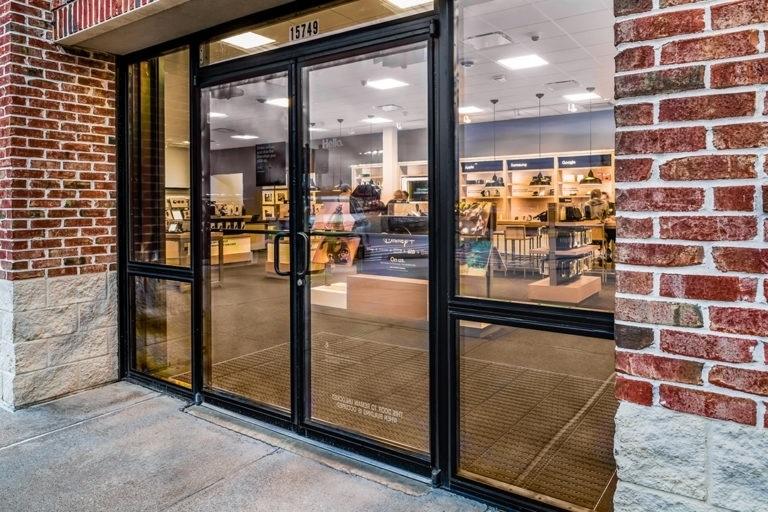
Ground-floor storefront windows, recessed entries, corner locations, and wide glass façades are the most vulnerable entry points. Upper-floor or interior-mall glazing faces far less risk. Alarms and cameras matter, but they are reactive. Riot resistant storefront glass adds the missing physical barrier.
How Riot Resistant Storefront Glass Systems Work
Layered construction is the foundation. Multiple plies of glass, polycarbonate, or glass-clad polycarbonate are bonded with interlayers such as PVB, ionoplast, or SGP. These interlayers absorb and distribute impact energy across the assembly, so a single strike does not create a breach. Riot glass is often composed of polycarbonate or laminated security glazing engineered for high-impact resistance-a key feature of every riot resistant storefront glass system.
Retrofit shields like DefenseLite Pro impact security glazing and RiotLite mount over existing glass with custom security framing made from engineered aluminum. This creates a tough, clear glass protection layer-sometimes described as glass armor plast- that keeps shards contained and attackers out. Riot glass can withstand multiple impacts from blunt-force attacks and is designed to resist forced entry from tools like sledgehammers, pry bars, and battery-powered saws, similar to other riot protective window and door systems. Riot glass is tested to UL 972 for burglary resistance, and many systems provide protection for up to 1 hour during sustained attacks.
How Layered Glazing Resists Forced Entry
For locations needing ballistic protection-banks, pharmacies, military and government facilities-active shooter mitigation solutions like BulletShield combine forced entry resistance with bullet resistant performance rated to UL 752 standards. A system prevents bullet and ballistic breaches at levels ranging from Level 1 (9 mm handgun) up to Level 7 (5.56 mm rifle rounds). This addresses glass bullets penetration risk without requiring a completely new storefront assembly.
Heavy-duty framing and anchoring transfer loads from the panel back into the building structure. Without proper framing, even the strongest glazing can be kicked or pried from its opening. Riot glass systems have a sleek, modern appearance, and optical clarity is essential for maintaining the storefront’s aesthetic. Riot glass does not block natural views or light, so security glazing solutions remain virtually invisible from the sidewalk-no window bars, grilles, or roll-down shutters.
Key components to evaluate:
- Glazing infill: polycarbonate, laminated glass, or glass clad polycarbonate-ask about thickness and scratch resistance
- Interlayer: PVB vs. ionoplast vs. SGP-each affects bond strength and UV stability
- Security framing: aluminum profiles engineered for the specific threat level, color-matched to existing mullions
- Attachment hardware: fasteners, gaskets, and perimeter sealing that maintain cluster integrity under sustained attack
Retrofit Options vs. Full Storefront Replacement
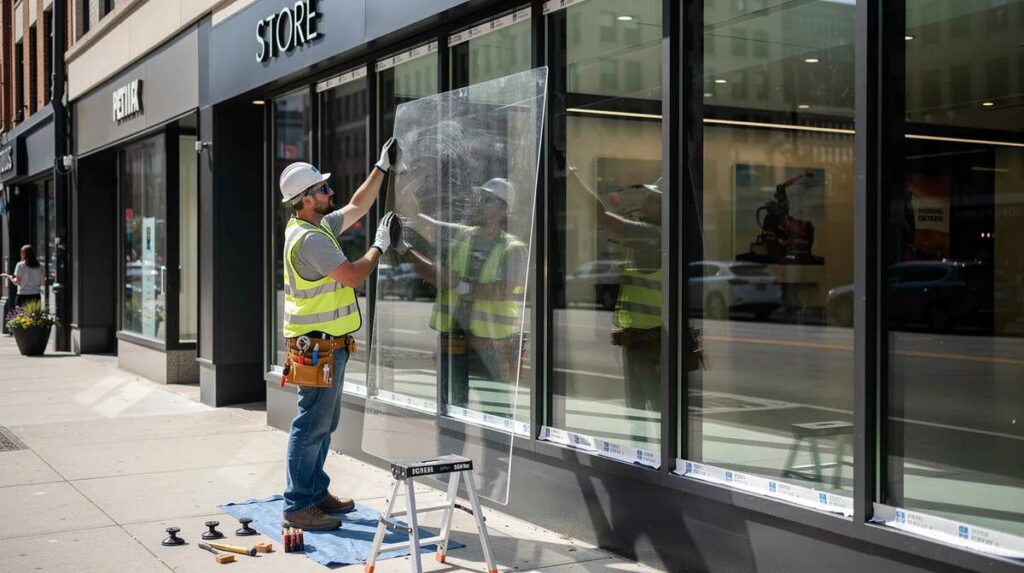
Retrofit security glazing means installing clear protective panels over or inside existing glass windows and frames. Storefront security solutions for glass doors and windows can protect storefronts without structural changes, and retrofitting requires minimal demolition and allows overnight installation. This means commercial buildings keep their current american thermal window or storefront system in place while gaining after hours protection against forced entry attempts.
Retrofitting riot glass saves money compared to full replacement. There is less demolition, faster installation, less business disruption, and a lower initial outlay. Riot glass offers these advantages while strengthening the existing storefront. A national pharmacy chain, for example, can add DefenseLite shields to dozens of locations over existing glass in a matter of weeks-an approach that would take months and multiples of the budget with full tear-outs.
Full frame replacement becomes the better path when frames are severely corroded, structurally unsound, or from non-code-compliant 1970s–1980s storefronts. Very high ballistic protection levels may also require frame replacement with purpose-built assemblies. A single high-risk government facility moving to new ballistic storefront assemblies is a different project than a 40-location retail rollout.
Before choosing, evaluate existing glazing condition: check for water intrusion, mullion spacing, rust or rot in frames, and whether previous security window films or improvised window bars are present. A professional site survey is the starting point. Impact Security’s team inspects structural integrity, photographs vulnerabilities, measures openings, and defines the threat level to produce a tailored proposal.
| Retrofit Over Existing Glass | Full Security Storefront Replacement | |
|---|---|---|
| Cost | Lower initial investment | Higher, includes demolition and new framing |
| Speed | Often completed in 1-3 nights | Weeks to months |
| Disruption | Minimal, usually after hours | Significant, may require frame replacement and closure |
| Protection ceiling | Excellent forced entry; ballistic up to mid-levels | Maximum protection including highest ballistic ratings |
Choosing the Right Level of Glass Protection for Your Storefront
Start with a basic risk assessment: crime history around the property, past break ins, merchandise value, hours of operation, and how exposed your glass is at street level. Corner positions and recessed entries deserve extra attention.
- Enhanced forced entry resistance: covers smash-and-grab mitigation for most retail storefronts. Riot glass solves the majority of commercial threats at this tier.
- No-entry riot protection: sustained resistance against mob-style or coordinated tool attacks, rated to upper ASTM F3561 levels with RiotLite. Ideal for locations near protest corridors or in high-ORC zones.
- Combined ballistic protection: for facilities facing other dangerous threats including firearms. BulletShield-class systems deliver both forced entry denial and bullet resistant performance for government buildings, banks, and healthcare.
Where lighter solutions like security window films can make sense: upper floors, interior glazing, or low-risk secondary openings. But films alone are insufficient for primary storefront doors and display windows at street level. Riot protection strategies for storefront glass offer far greater performance on the openings that matter most.
Prioritize main entry doors, large display storefront windows, and easily accessed side doors first. Phased upgrades work well for multi-location retailers to secure vulnerable entry points across budget cycles. Riot resistant storefront glass maintains high visual transparency while providing security, preserving curb appeal without sacrificing visual appeal. Riot glass makes it possible to enhance security while keeping the look warm and inviting-no fortress aesthetic required.
Pair glazing with lighting upgrades, access control, monitored alarms, and exterior cameras for a layered security strategy. Light security improvements across multiple vectors compound effectiveness.
Costs, Installation Timelines, and Maintenance Considerations
Standard commercial storefront glass replacement runs roughly $50–$150 per square foot installed. Security glass and safety glass upgrades with forced entry or ballistic ratings carry a premium over that baseline, varying by threat level, opening size, and framing complexity. Riot glass costs about the same as a single board-up-and it prevents the next one.
A typical project timeline in 2026: site assessment takes one to several days; typical storefront retrofit takes 2-4 weeks of fabrication at Impact Security’s facilities in Marietta, GA or Glendale, AZ; shipping and on-site installation follow. Riot glass installation typically takes 1-3 nights for an average storefront of 6-10 openings. Installation can occur without shutting down the business, preserving revenue throughout the process.
Long-term benefits that offset initial cost:
- Fewer emergency board-ups and unplanned closures after attempted break ins
- Reduced shrink from smash and grab theft and vandalism
- Riot-resistant glass systems can provide insurance cost savings by reducing theft risk
- Improved staff safety and reduced energy costs security glass can influence through UV-filtering interlayers
Maintenance is straightforward: clean polycarbonate and glass clad polycarbonate surfaces with non-abrasive cleaners, inspect gaskets and fasteners annually, and address any scratched or abraded areas promptly. Multi-year warranties on materials and workmanship are standard when certified installers handle the project.
FAQs About Riot Resistant Storefront Glass
Will riot resistant storefront glass stop all break ins?
No glazing system is literally impenetrable. However, riot glass is virtually unbreakable and blends seamlessly with existing glass while providing access denial that standard glass cannot match. Tested systems resist sustained attack with bats, hammers, and pry bars for 20-60 minutes-riot glass provides protection for up to 1 hour during attacks-versus tempered glass that fails in seconds. Riot glass can withstand multiple impacts from blunt-force attacks, often preventing entry entirely or delaying it until responders arrive.
Is riot resistant storefront glass really invisible to customers?
Yes. Riot glass is virtually invisible from normal viewing distances. Clear polycarbonate and glass clad polycarbonate shields are engineered for high optical clarity, color stability, and minimal visual distortion when installed over existing glass. Frames can be color-matched to existing mullions, and riot glass maintains an inviting storefront appearance that supports rather than undermines branding.
Can you retrofit over my existing glass without a full remodel?
In most cases, absolutely. Impact Security’s retrofit systems mount onto or into existing storefront framing, avoiding demolition of the original glass. Projects are frequently completed during off-hours. Exceptions exist; very old or damaged frames may require reinforcement or partial replacement. A professional site evaluation confirms suitability before work begins.
What’s the difference between forced entry and bullet resistant glazing?
Manufacturers engineer forced entry resistant glass to withstand repeated impacts and prying but not to stop bullets. Testing laboratories evaluate bullet resistant glass against specific firearm threats under UL 752 levels. BulletShield and similar systems combine both functions-ballistic protection plus extended access denial-but are thicker, heavier, and higher-cost than non-ballistic riot shields. Most retail storefronts need forced entry protection; banks, pharmacies, and military and government facilities often require both.
Can I protect only certain doors and windows to control cost?
Many commercial properties start by securing the most vulnerable openings-main entrance glass doors, large display windows, and easily accessed side doors-over existing glass before expanding coverage. A phased plan aligns with budget cycles while meaningfully reducing risk at high-value display zones and other targeted business areas.
Does adding riot resistant glazing affect energy use or UV fading?
Many security glazing products incorporate UV-filtering interlayers that reduce fading of merchandise compared with untreated existing glazing. Properly designed retrofits maintain natural light transmission. Some assemblies also reduce solar heat gain or exterior noise, though they cannot replace full energy retrofit packages.
Why Choose Impact Security for Riot Resistant Storefront Glass Retrofits
Impact Security is a U.S.-based manufacturer and installer specializing in retrofit security glazing solutions for commercial buildings, operating nationwide since 2016. Core product families-DefenseLite, RiotLite, BulletShield, and AccessShield-are designed specifically to strengthen existing glass in storefronts, doors, curtain walls, and high-risk openings across retail, education, healthcare, banking, and government sectors.
The company delivers turnkey service: threat assessment, engineering, fabrication in Marietta, GA and Glendale, AZ, certified installation, and ongoing warranty support. Unlike generic glass shops or film-only vendors, Impact Security focuses exclusively on access-denial glazing-tested riot glass products that integrate with existing commercial storefront windows instead of requiring full rebuilds. Every project is tailored to the building’s openings, threat profile, and operational constraints.
Next Steps: Secure Your Storefront Before the Next Incident
Standard storefront glass leaves commercial properties exposed to fast, repeatable break ins. Riot resistant storefront glass adds the physical barrier that cameras, alarms, and guards cannot provide. The cost and disruption of a single emergency board-up, lost merchandise, and unplanned closure often exceeds the investment in a proper retrofit.
Take action before the next incident:
- Schedule a site assessment with Impact Security via the DefenseLite contact form to evaluate your existing glass, frames, and threat exposure
- Discuss DefenseLite, RiotLite, or BulletShield options tailored to your locations and risk profile
- Request a detailed proposal with pricing, timelines, and phased rollout options for multi-site portfolios
- Share drawings or photos of your current storefronts to accelerate the engineering and quoting process
Multi-site operators-retail chains, banking groups, healthcare networks-should ask about national account support and standardized specifications across their portfolio. Waiting for an incident is always more expensive than preventing one.