Table of Contents
What Is Blast Resistant Glazing and Why It Matters in 2026
How Blast Resistant Glass Systems Work
Where and When to Use Blast Resistant Glazing
Blast Resistant vs. Other Security Glazing: Forced Entry, Ballistic, and Safety Glass
Retrofit Blast Resistant Systems from Impact Security: How the Process Works
FAQs: Blast Resistant Glass and Security Glazing
Why Choose Impact Security for Blast Resistant Glazing
Next Steps: Talk to a Blast Resistant Glazing Specialist
What Is Blast Resistant Glazing and Why It Matters in 2026
Blast resistant glazing refers to a complete glazing system – glass panes, polymer interlayers, reinforced frame, and anchors – engineered to protect building occupants from explosions by containing flying glass shards and maintaining the building envelope under explosive force. This is not simply thick glass. True blast resistance depends on how every component in the system performs under dynamic loading.
Glass fragmentation is a leading cause of injuries in blast events. In the 1995 Oklahoma City bombing, roughly 39% of injuries were glass related, with most victims located within five feet of exterior windows. The 2020 Beirut port explosion showed similar patterns: 81% of documented hospital patients were indoors, and proximity to windows strongly correlated with penetrating soft tissue injuries. More recent urban IED incidents continue to confirm that unprotected glass remains the single greatest secondary hazard in an explosion.
Understanding terminology matters before you compare products:
- Blast resistant means tested and rated for specific overpressure and fragment hazard levels
- Blast mitigating may reduce injury but does not earn a full performance rating
- Standard safety glazing (tempered or laminated) addresses accidental impacts, not security threats
Key risks that blast resistant glazing addresses:
- Glass shard injuries including lacerations and ocular trauma
- Business interruption from façade failure
- Loss of mission-critical operations in hospitals, utilities, and defense facilities
Today, blast resistant systems extend well beyond embassies and military bases into schools, hospitals, data centers, banks, police stations, and Class A offices near high-risk targets.
How Blast Resistant Glass Systems Work
Blast loads are dynamic – pressure rises in microseconds, hits the glazing infill, then reverses during the negative phase. A blast resistant glass system must flex, absorb energy, and remain anchored rather than stay completely rigid. The objective of blast resistant glazing is to protect occupants and limit structural damage by keeping fragments contained.
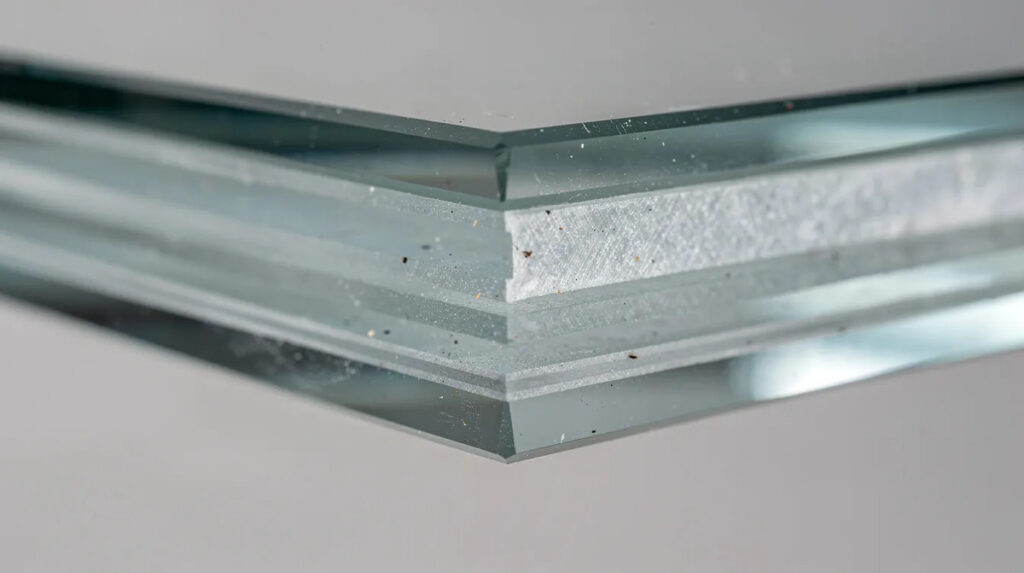
Blast resistant glass is engineered with high-strength glass and specialized inner layers. Laminated glass is essential for blast resistant glazing design: multiple glass plies are bonded with polymer interlayers such as PVB, ionoplast, or polycarbonate. The flexibility of blast resistant glazing helps to absorb high-pressure shockwaves. Blast resistant glass absorbs blast force to prevent shattering, and it remains intact by holding glass pieces together after cracking. Glazing remains in its frame during an explosion to reduce hazards.
Blast resistant glazing must be properly anchored to a reinforced framing system. Design methods for blast resistant glazing include attachment to framing with continuous edge engagement – not just corner clips. Framing systems that lack redundant anchorage into the supporting structure will fail regardless of how strong the glass is.
Testing includes ASTM F-1642 and GSA protocols to classify blast resistance. ASTM F 1642-04 is a standard test method for glazing and window systems subject to airblast loading. ASTM standards guide blast resistant glazing design and testing alongside specifications like GSA-TS01-2003, UFC 3-340-02, and EN 13541 (ER1–ER4 categories). Blast resistant glass undergoes explosion testing for damage assessment using shock tubes or open-air detonations, and blast resistant glass has a classification system for explosion resistance based on fragment hazard – how far glass fragments travel and whether they pose a life-safety threat. The U.S. Department of State has criteria for blast resistant glass used in embassies and government facilities worldwide. Performance requirements are measured by hazard rating, not a single “blast proof” label.
How blast resistant glass compares to alternatives:
- Conventional tempered or heat-strengthened glass: shatters into fragments with no retention – unsuitable beyond minimal overpressure
- Standard laminated safety glass: retains some shards but lacks the dynamic load capacity and engineered framing for serious blast force
- Ballistic resistant glazing (e.g., BulletShield): stops projectiles but is not automatically rated for blast unless tested to blast-specific test methods
- Forced-entry security glazing: delays manual attack but does not address overpressure or fragment hazard from an explosion
Where and When to Use Blast Resistant Glazing
Blast resistant glazing is prioritized wherever accidental or intentional explosions create credible risk, or where federal, DoD, or ISC criteria apply. Typical applications span a wide range of categories:
- Government buildings, courthouses, embassies, and police stations – government buildings commonly use blast resistant glass for safety
- K–12 schools and universities within urban cores or near critical infrastructure
- Hospitals, trauma centers, and emergency operations centers that must remain functional
- Industrial sites often require blast resistant glass due to explosion risks – utilities, substations, refineries, water treatment, and chemical processing
- Banks utilize blast resistant glass to protect against attacks; financial institutions, corporate HQs, high-profile retail, skylights, and data centers also qualify
- Blast resistant glass is essential in facilities prone to terrorist attacks and is used in buildings with explosion hazards
Within these facilities, blast resistant glazing protects entry doors, lobby façades, curtain walls, control rooms, interior observation windows, safe rooms, and security posts.
Signs it is time to take action:
- Your facility is within specified standoff distances in a security risk assessment
- Existing windows are single-pane or unprotected curtain wall near public streets
- Your organization must comply with UFC, ISC, or department-specific blast criteria
- Recent security audits or insurance reviews identify glazing as a vulnerability
Many facilities can upgrade protection with retrofit blast resistant systems without full window replacement – critical for occupied schools and operating hospitals where downtime must remain minimal.
Blast Resistant vs. Other Security Glazing: Forced Entry, Ballistic, and Safety Glass
Security glazing is an umbrella term, and decision-makers often confuse blast resistant glass with burglary, riot, or ballistic solutions. Each type is designed and tested for a different threat, and the specifications vary significantly:
- Safety glazing: handles accidental impacts (falls, wind); meets building codes but not security threats
- Forced-entry resistant glazing (e.g., DefenseLite Pro, RiotLite): engineered to delay or prevent smash-and-grab and rioting; tested to standards like ASTM F1233 or UL 972 and aligned with Impact Security’s forced entry security glazing solutions
- Ballistic resistant glazing (e.g., BulletShield): a combination of glass and polycarbonate designed to stop specific calibers; tested to UL 752 or NIJ levels, similar to Impact Security’s BulletShield retrofit ballistic glazing
- Blast resistant glazing: manages rapid overpressure and negative phase loads; tested to ASTM, GSA, UFC, EN 13541; focused on fragment hazard to reduce injury and protect people
In many projects – embassy annexes, police stations, critical infrastructure – designers combine blast resistant requirements with forced-entry and ballistic targets and must align systems with GSA/ISC blast resistant performance standards. This double or triple combination impacts thickness, weight, and project requirements for framing design.
Common mistakes to avoid:
- Assuming a “bulletproof window” is automatically blast resistant
- Believing thick laminated safety glass alone provides blast resistance without engineered framing
- Applying window film as a shortcut for high level blast mitigation where full systems are required
Impact Security helps customers determine the right approach: performing threat and vulnerability assessments with security consultants, then selecting the appropriate mix of blast resistant systems and other security glazing to meet your specifications as part of broader active shooter mitigation strategies.
Retrofit Blast Resistant Systems from Impact Security: How the Process Works
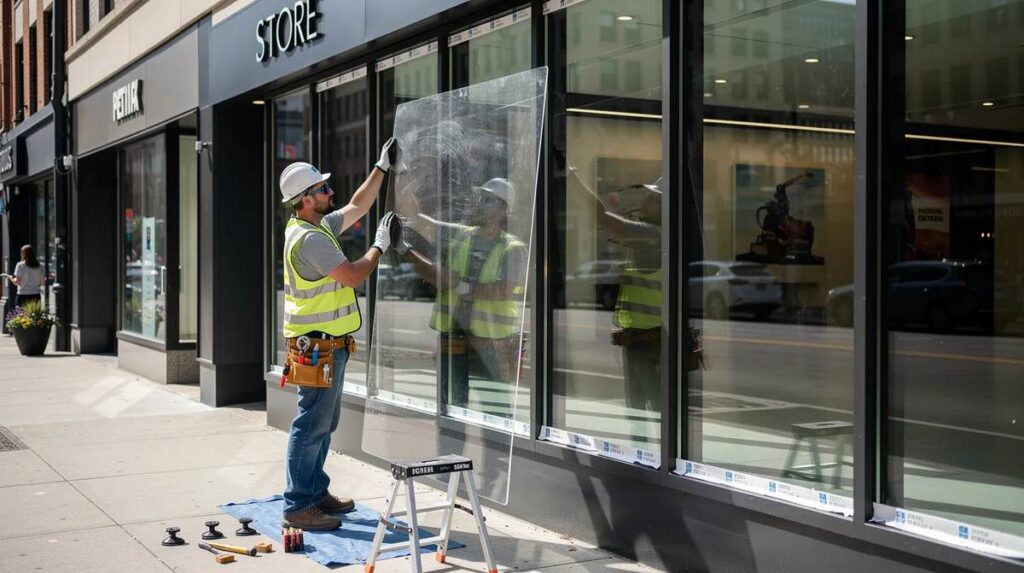
Impact Security specializes in retrofit security glazing, allowing schools, retailers, and government facilities to upgrade blast resistance without removing existing frames in many cases. Their broader portfolio – DefenseLite, BulletShield, riot and forced-entry systems – reflects a proven track record in commercial security window solutions, meaning blast resistant configurations can be integrated with other protection layers in a single project.
The typical workflow:
- Site assessment and risk review: on-site evaluation of existing glazing, framing, anchorage, and standoff distances; review of agency or owner blast criteria to determine the right performance level
- Engineering and specification: collaboration with protective design engineers to match required blast levels, ISC/UFC performance categories, and integration with other project requirements
- System design and fabrication: custom-fabricated panels, frames, and hardware manufactured in Impact Security’s Marietta, GA and Glendale, AZ facilities for national distribution
- Installation and retrofit: certified installers retrofit blast resistant systems onto or in front of existing glass with minimal disruption; night and weekend work for schools and hospitals when needed
- Testing, documentation, and warranty: the team provides relevant test data, as-built drawings, and maintenance guidance with available warranties and service support
Examples from the field: a Midwest K–12 district hardened street-facing classroom windows against blast and forced entry ahead of the 2024–2025 school year, retaining existing frames to avoid disruption during class. A metropolitan utility control center upgraded its existing curtain wall to meet updated blast criteria without tearing out the façade, preserving the integrity of ongoing operations.
Coordination with architects, structural engineers, and security consultants ensures the blast resistant system functions with the building – not against it.
FAQs: Blast Resistant Glass and Security Glazing
These FAQs address common questions from facilities managers, school administrators, architects, and procurement teams researching blast resistant glazing.
Is any glass truly “blast proof”? No glazing system is 100% blast proof. Every blast resistant system is engineered and tested for defined threat levels with acceptable hazard ratings. The goal is to protect people by managing fragment hazard and maintaining the building envelope – not to create an invincible paper-thin barrier.
How is blast resistant glass tested and rated? Blast resistant glass undergoes explosion testing for damage assessment using shock tubes or open-air detonations. Standards like ASTM F-1642 and GSA-TS01-2003 classify performance by measuring peak overpressure, impulse, and how far glass fragments travel into the interior. EN 13541 uses ER1–ER4 categories for European specifications.
Can I retrofit blast resistant glazing over my existing windows? In many commercial, school, and government buildings, retrofit systems can be anchored to existing frames. Feasibility depends on frame condition, structural capacity, and the required blast level. An on-site assessment will determine whether your location qualifies.
Does blast resistant glass also stop bullets or forced entry? Some systems are multi-threat, but not all. Blast resistant glazing enhances safety by resisting forced entry and attack in certain configurations, but owners must specify which combination of blast, ballistic, and forced-entry performance they need and verify test data for each category.
What standards should I reference in my project specifications? Common U.S. references include UFC 3-340-02, ASTM F1642, ASTM F2912, and GSA-TS01-2003. For international projects, EN 13541 applies. Working with protective design consultants who exceed typical specification depth is strongly advised.
How much does blast resistant glazing cost compared to standard glass? Cost can vary significantly by threat level, glass thickness, number of openings, and whether retrofit is possible. Blast resistant glazing typically costs several times more per square foot than standard safety glass – but remains far less expensive than full façade replacement or post-incident recovery, where energy, time, and human cost are factored in.
How long does installation take for an occupied building? Many retrofit projects can be phased by elevation or area. Small retail storefronts may take days; large campuses or hospitals typically require several weeks with work scheduled during off-hours to keep operations running and create minimal disruption.
Why Choose Impact Security for Blast Resistant Glazing
Impact Security is a U.S.-based manufacturer and installer focused exclusively on protective glazing and retrofit security systems since 2016. Their ability to handle the full lifecycle – from risk assessment through fabrication, installation, and ongoing service – sets them apart from suppliers who only sell glass, as outlined in their company overview at Impact Security.
- Specialization in retrofit blast resistant systems that work with existing windows, doors, storefronts, and curtain walls
- Turnkey B2B and B2G service model with certified DefenseLite and BulletShield dealers nationwide
- Proven portfolio: DefenseLite Pro, BulletShield, RiotLite, AccessShield, and advanced ballistic protection retrofits for custom safe-room glazing and integrated security strategies
- Fabrication centers in Marietta, GA and Glendale, AZ for fast lead times and national coverage
- Experience across schools, hospitals, retail chains, financial institutions, utilities, and federal and state agencies
Every product undergoes third-party lab testing and validation with protective design engineers to confirm blast, ballistic, and forced-entry performance for specified threat levels. Impact Security partners closely with architects, security consultants, and general contractors to deliver buildable, code-compliant, and maintainable solutions that remain effective for years.
Next Steps: Talk to a Blast Resistant Glazing Specialist
The best time to engage on blast resistant glazing is during master planning, capital budget cycles, or scheduled security upgrades – not after an incident or new regulation forces a reactive retrofit. Early engagement with Impact Security’s team almost always reduces cost and disruption.
Request a free blast and security glazing assessment for your facility. Share existing plans, elevations, or risk assessments so the team can recommend appropriate blast resistant systems and security glazing options. Connect with a local certified dealer to discuss timelines, budgets, and phasing around occupied operations.
Contact Impact Security today to discuss blast resistant glazing, forced-entry protection, and ballistic solutions tailored to your building.