Table of Contents
- Introduction: Why Access Control Door Protection Matters in 2026
- What Is Door Access Control & How Does It Work?
- Core Components of a Modern Door Access Control System
- Where Door Access Control Protection Delivers the Biggest Impact
- Choosing the Right Credentials and Authentication Methods
- Planning and Installing Door Access Control Systems
- Cost, Scalability, and Long-Term Maintenance
- Why Choose Our Team for Access Control Door Protection
- FAQs About Door Access Control and Door Protection
- Conclusion: Building a Safer, Smarter Access Control Strategy
Introduction: Why Access Control Door Protection Matters in 2026
Since 2020, hybrid work schedules, 24/7 building operations, and tightening compliance demands from frameworks like HIPAA and PCI DSS have reshaped physical security. Access control door protection systems regulate entry and exit into buildings by controlling who can open which door, when, and under what conditions. The benefits are clear: preventing unauthorized entry, protecting people and assets, generating audit trails, and simplifying credential management across offices, healthcare facilities, logistics hubs, and critical infrastructure. This article will help you plan or upgrade your door access control system with confidence.
What Is Door Access Control & How Does It Work?
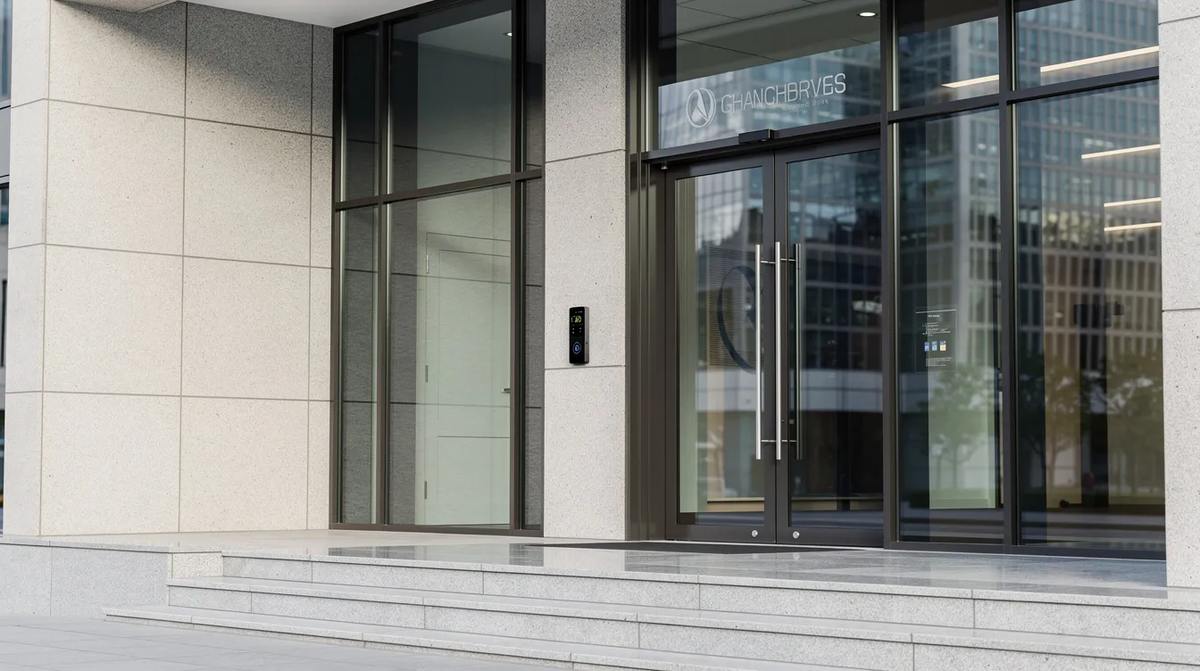
Door access control replaces traditional keys with programmable, trackable permissions. The workflow is straightforward:
- A user presents a credential (card, phone, or biometric).
- Access control readers scan credential information for entry requests.
- The door controller checks the credential against stored rules.
- The lock opens or stays locked; the event is logged.
Electronic access control systems enhance security by preventing unauthorized entry while providing granular permissions, revocable access, detailed audit trails, and remote management. Administrators can track who entered a room and when, and systems can trigger alerts for unauthorized access attempts.
Core Components of a Modern Door Access Control System
Effective door access control combines hardware at each door with centralized software logic. Every component must be compatible, commercially rated, and code-compliant.
Credentials: Identifying Who Can Open the Door
Access credentials can be physical tokens or digital identifiers. Access control systems can use physical credentials, smartphones, or biometrics. Common options include:
- PIN codes – PIN code readers are suitable for low-risk access areas but offer weak audit trails if codes are shared.
- RFID cards and fobs – keycards and fobs use RFID or NFC technology for access, storing unique credential information. Encrypted 13.56 MHz smart cards are far harder to clone than legacy 125 kHz proximity cards.
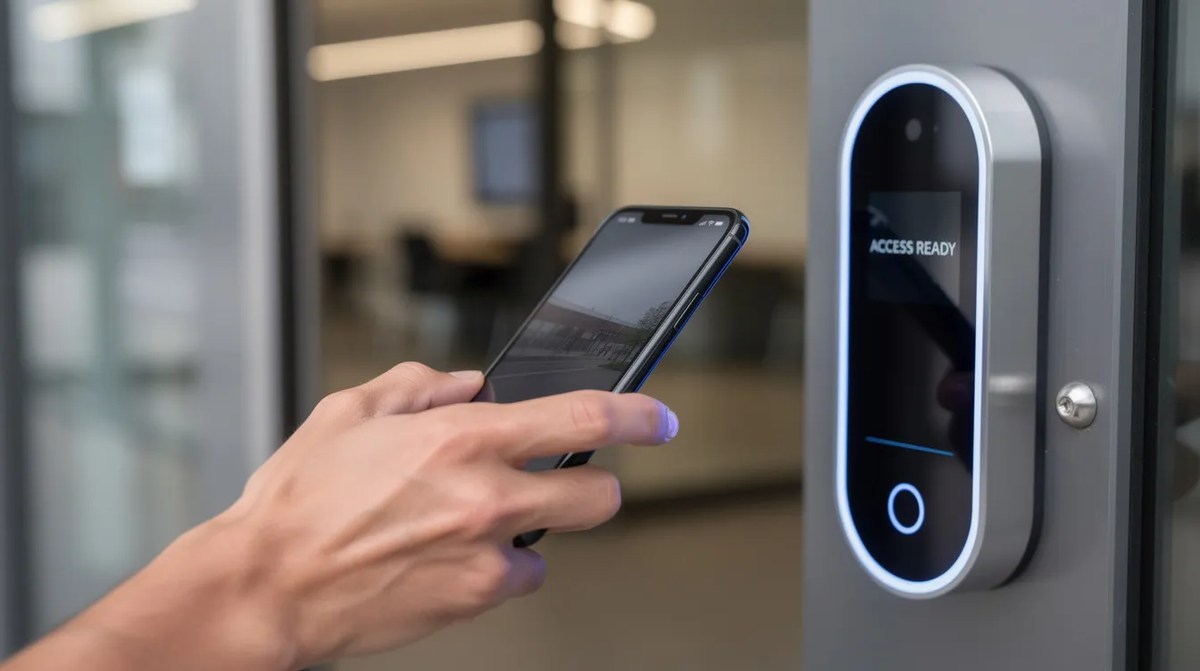
- Mobile credentials – mobile credentials allow access via smartphones for touchless entry, replacing physical tokens. Digital credentials can be deactivated instantly for security purposes.
- Biometrics – biometric credentials use fingerprint or iris data for access. Biometric systems verify entry using physiological traits like fingerprints and provide the highest level of security.
Readers: The First Line of Verification at the Door
Readers are the user-facing devices that capture credentials. Options range from mullion-mounted card readers and vandal-resistant housings to weatherproof IP65 units for exterior gates. Multi-technology readers that handle both legacy cards and newer mobile credentials are ideal during migrations. Placement must follow ADA standards, and aesthetic options matter for customer-facing entrances.
Access Controllers and Door Controllers: The System’s Decision-Makers
Access controllers act as the brains of the access control system, processing reader data and enforcing rules in real time. Centralized panel-based systems serve multiple doors from telecom rooms, while edge-based controllers place intelligence at each door for faster failover. Key specs to evaluate include the number of doors supported, event storage capacity, encrypted communication (TLS), and integration with alarms, request-to-exit devices, and door position sensors.
Locks and Door Hardware
Electronic locks include magnetic locks and electric strike locks. Fail-safe locks unlock during power loss-required on most egress paths-while fail-secure locks stay locked, suitable for sensitive storage. Always verify fire ratings, door material, and frame construction, and consider forced entry resistant doors and retrofit door security enhancements where threats justify it. Professional installation is critical to maintain UL listings and code compliance.
Access Control Software
Software defines who accesses which doors on what schedules. Cloud-based systems enable remote management of access controls and provide real-time auditing. Role-Based Access Control grants permissions based on job titles, and time restraints can restrict access to specific hours. Look for API integrations with video surveillance, HR systems, and identity management, plus strong administrator authentication and encrypted backups.
Where Door Access Control Protection Delivers the Biggest Impact
Not every door needs the same protection level. Prioritize by zoning: perimeter entrances and vehicle gates get weather-rated readers with anti-passback rules; main lobbies benefit from optical turnstiles and touchless mobile credentials; operational areas like offices and classrooms use standard card or mobile readers with schedule-based locking. High-security doors in data centers and labs warrant multi-factor authentication, mantrap configurations, and a broader defense-in-depth physical security strategy for data centers. Elevators can restrict floor selection by credential. Emergency exits must never impede egress-use delayed egress devices and panic hardware within a broader comprehensive forced entry protection strategy, and test override logic regularly.
Choosing the Right Credentials and Authentication Methods
Match credential type to risk. Mobile credentials allow entry using smartphones instead of physical tokens and suit hybrid workforces. RFID cards remain easy to issue at scale. Combine factors—card plus PIN, or mobile plus biometric—for high-risk doors without imposing friction everywhere. Plan rapid revocation policies for lost or compromised credentials.
Planning and Installing Door Access Control Systems
Start with a site survey, risk assessment, and door schedule. Door access systems require continuous power to function effectively, so plan battery backup or UPS for critical doors. Backup generators are necessary for power outages in access systems. Power-over-Ethernet simplifies installation for small offices by carrying power and data on a single cable. Installation may require modifications to door frames and infrastructure, especially in older buildings. Where forced entry is a concern, retrofit forced entry security glazing and resistant doors and windows can often be added without full tear-outs. Wireless systems reduce wiring requirements for installation where conduit paths are limited. Installation must consider integration with other security technologies, including video and intrusion detection. Involve IT, facilities, and compliance stakeholders early to avoid rework.
Cost, Scalability, and Long-Term Maintenance
Door access control costs depend on system complexity and door types. Access control systems are typically priced by door-national averages run $3,000–$5,000 per door including hardware, labor, and first-year licensing. Multi-door access control systems can be sold as kits, simplifying purchasing and reducing per-door cost. Choose scalable platforms that support adding doors and sites without replacing core hardware. Standardize on a small number of reader and lock models to simplify parts stocking. Schedule firmware updates, hardware inspections, and access-rights audits at least semi-annually-especially for terminated employees and contractors.
Why Choose Our Team for Access Control Door Protection
Our certified technicians design, install, and maintain systems end-to-end, from initial assessment through training and ongoing support. We stay current with building codes, fire regulations, and the latest credential technologies. Contact us for a site walkthrough to evaluate your doors, access controllers, and software options.
FAQs About Door Access Control and Door Protection
What’s the difference between standalone and networked systems?
Standalone systems manage one door independently; networked systems connect multiple doors to centralized software for unified policy control and reporting.
How long does installation typically take?
A single door can be installed in a few hours. A multi-door project across a facility usually takes one to several weeks depending on size and infrastructure readiness.
What happens if power or network connectivity is lost?
Fail-safe locks unlock for safe egress; fail-secure locks remain locked to protect sensitive areas. Edge controllers cache credentials locally so doors keep making decisions during outages.
How do we handle visitor access?
Cloud-based visitor management can issue temporary QR codes or mobile passes that expire automatically, keeping audit trails intact.
Can we upgrade from mechanical keys without replacing every door?
Yes. Electric strikes and wireless locks can retrofit most existing door types and frames, letting you phase the migration with minimal disruption.
Does biometric data create compliance risk?
It can. Store encrypted templates rather than raw images, obtain user consent, and follow regional privacy laws to stay compliant.
Conclusion: Building a Safer, Smarter Access Control Strategy
Start with a risk assessment, prioritize high-traffic and high-risk doors, choose the right mix of credentials and hardware, and plan for growth. Effective access control door protection improves security and daily convenience for employees and visitors alike. Document a prioritized door list-from perimeter to critical zones-as your next step, and reach out to our team for a consultation or quote. Staying ahead of evolving threats means regularly reviewing and updating your door access control systems.