Table of Contents
- Introduction
- Understanding Secure Room Environments
- Security Infrastructure and Access Control Systems
- Implementation Process and Best Practices
- Common Challenges and Solutions
- Conclusion and Next Steps
- Frequently Asked Questions
Introduction
Secure room environments represent specialized physical spaces engineered to protect sensitive equipment, confidential data, and personnel from unauthorized access and environmental threats. These controlled spaces serve as the foundation of physical security for organizations handling critical infrastructure, classified materials, or high-value assets.
This guide covers the complete spectrum of secure room environments—including data centers, server rooms, clean rooms, evidence storage facilities, and high-security areas—while excluding standard office security measures that don’t require specialized protective controls. Facility managers, IT directors, security professionals, and compliance officers responsible for protecting critical assets will find actionable strategies for designing, implementing, and maintaining these environments.
Direct answer: Secure room environments require layered physical security combining access control systems, environmental monitoring, surveillance systems, and emergency response protocols to create multiple defensive barriers against both human and environmental threats.
By the end of this guide, you will gain:
- Risk assessment strategies tailored to different secure room types
- Technology selection criteria for access control, monitoring, and surveillance systems
- Step-by-step implementation procedures from planning through deployment
- Compliance frameworks covering industry standards like HIPAA, ICD 705, and FEMA
- Solutions for common challenges including budget constraints and legacy system integration
Understanding Secure Room Environments
A secure room environment is a controlled physical space featuring multiple protection layers designed to safeguard critical assets from unauthorized access, environmental hazards, and operational disruptions. These spaces go far beyond standard rooms—they incorporate reinforced construction, sophisticated access control, continuous environmental monitoring, and comprehensive surveillance to ensure the integrity, confidentiality, and availability of everything within.
Understanding the distinct requirements of each secure room type enables security teams to implement appropriate protective measures without over-engineering or leaving critical gaps.
Data Centers and Server Rooms
Data centers and server rooms house the digital infrastructure that powers modern business operations. These facilities require 24/7 operational reliability, making environmental stability and security paramount concerns and are prime candidates for a defense-in-depth data center physical security approach that combines predictive technologies with reinforced building envelopes.
Over 60% of organizations report experiencing a physical security breach annually, highlighting the importance of controlling access to server rooms. Environmental hazards, including overheating and humidity, cause approximately 30 to 35% of unplanned data center outages, making effective environmental controls essential for server room security.
Server room security encompasses several interconnected systems: climate control maintaining stable temperatures, power redundancy through UPS and backup generators, fire suppression systems designed for electronic environments, and strictly restricted access limited to authorized users. Fire and water damage are among the most severe threats to server room integrity, with proactive planning essential to reduce exposure to these risks. Server rooms require reliable power to ensure equipment stays functional, and power disruptions account for a significant share of downtime events, while data center window and glass door security helps prevent both forced entry and environmental stressors that could trigger outages.
Clean Room Environments
Clean room environments maintain strict contamination control through specialized air filtration, pressure differentials, and rigorous personnel access protocols. These spaces serve pharmaceutical manufacturing, semiconductor fabrication, aerospace assembly, and sensitive research applications.
Air quality management defines clean room design. Most facilities use HEPA or ULPA filtration with positive pressure configurations—over 90% of clean rooms maintain positive pressure to prevent contaminant infiltration. Personnel entry requires gowning procedures through airlocks or vestibules, with interlocking doors that prevent both from opening simultaneously.
Access control in clean rooms addresses both security and contamination prevention. Touchless entry systems reduce particle introduction while maintaining strict access permissions for authorized individuals.
High-Security Storage Facilities
High-security storage facilities protect evidence, classified materials, valuable assets, and sensitive information requiring chain-of-custody documentation. These environments combine robust physical protection with comprehensive audit trails.
Walls, floors, and ceilings in secure rooms are often reinforced with steel, concrete, or bullet-resistant fiberglass panels to withstand forced entry or ballistic threats, mirroring core safe room construction best practices and the kind of integrated interior protection systems used in high-risk facilities. Secure rooms should ideally be windowless to avoid external observation and heat exposure. Position high-risk spaces near the center of the building, far from public areas, to maximize the number of barriers an intruder must cross.
These facilities maintain 24/7 monitoring through motion detection, fire suppression systems, and security cameras covering all entry points and key areas, and many also deploy bullet-resistant glass security solutions for vulnerable spaces such as lobbies or reception areas. Every access event creates documented audit trails essential for legal admissibility and regulatory compliance.
The common thread across all secure room types is the principle of layered defense—multiple independent systems working together to slow, detect, and delay threats while protecting equipment, data, and personnel within, aligning with comprehensive forced entry protection strategies that integrate physical barriers, surveillance, and trained staff response.
Security Infrastructure and Access Control Systems
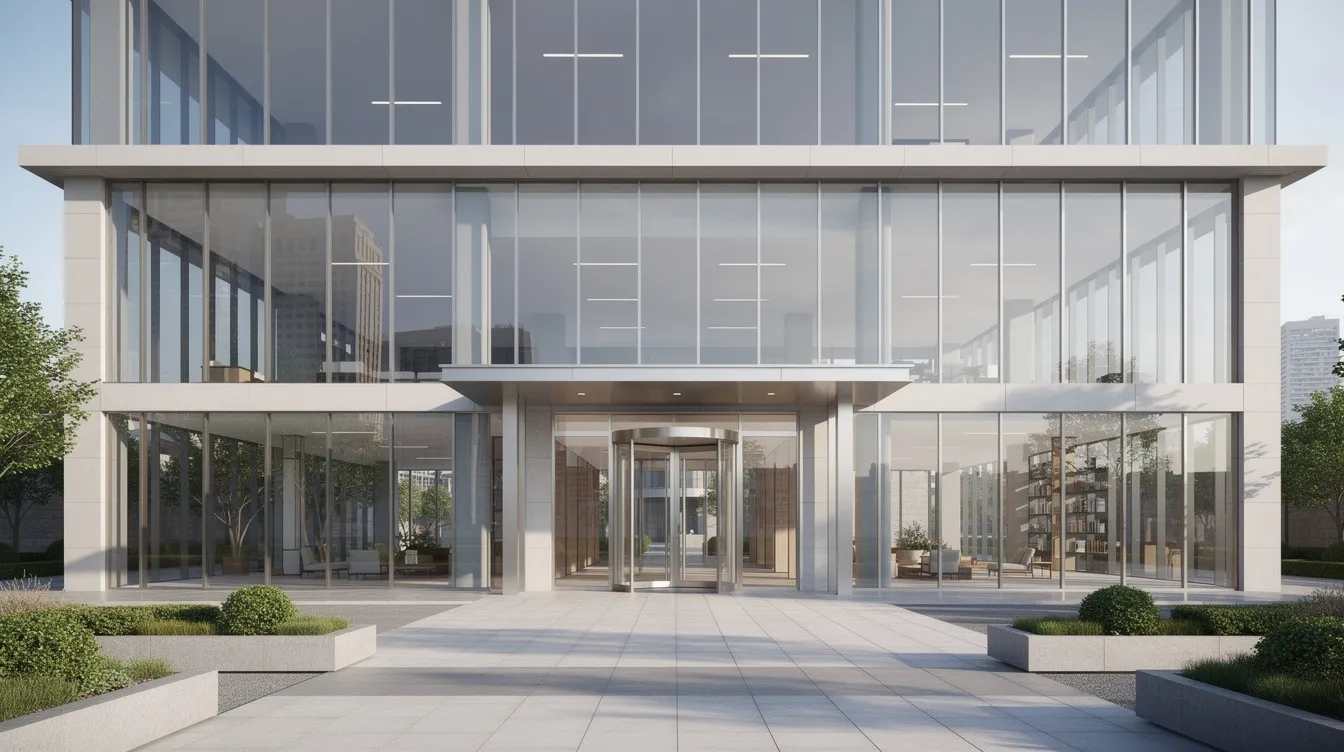
With an understanding of secure room types established, implementing effective protection requires selecting and integrating appropriate security technologies. The infrastructure supporting these environments must address physical access, environmental stability, and continuous surveillance.
Physical Access Control
Access control systems are essential for regulating who enters a facility, utilizing credentials such as key cards, fobs, or biometrics to manage entry and create an audit trail of movements. Modern systems range from simple card readers to sophisticated multi-factor authentication combining multiple verification methods, often paired with retrofit door security solutions like AccessShield to harden entry points against forced entry and active threats.
Combine at least two forms of ID for multi-factor authentication, such as a physical keycard and biometrics. This approach significantly reduces the risk of unauthorized entry through stolen credentials or social engineering. Implementing a layered access control strategy can effectively slow down, detect, and delay intruders at multiple checkpoints, enhancing overall security.
Biometric systems—including fingerprint scanners, iris recognition, and facial verification—provide the highest security levels for restricted areas containing sensitive data. However, they require careful consideration of hygiene (particularly in clean rooms), privacy compliance, and false rejection rates that could impede legitimate access.
Visitor management systems enhance access control by replacing traditional sign-in sheets with digital platforms that verify identity and issue temporary badges, thus improving accountability and safety. These systems create complete access logs documenting every person entering sensitive areas, their escort assignments, and duration of access.
Key security features for physical access include:
- Anti-tailgating detection at entry points
- Man-traps or sally ports for high-security zones
- Fail-secure configurations that maintain protection during power loss
- Integration with surveillance systems for correlated monitoring
Environmental Monitoring Systems
Environmental threats pose significant risks to equipment and operations within secure rooms. Continuous monitoring prevents catastrophic failures before they occur.
Maintain stable temperatures of 68–72°F and relative humidity of 45–55% to prevent condensation or static discharge. These parameters protect servers, electronic equipment, and sensitive materials while optimizing operational efficiency.
Comprehensive environmental monitoring includes:
- Temperature sensors distributed throughout equipment racks (front, middle, back positions)
- Humidity monitoring to prevent both static discharge and condensation
- Water leak detection under raised floors and near cooling systems
- Airflow sensors ensuring proper circulation through hot and cold aisles
- Vibration monitoring for sensitive equipment
Modern IoT sensor integration enables real time alerts when conditions drift outside acceptable thresholds. Data should be encrypted at rest and in transit within the room’s network using AES-256 and TLS 1.3+, respectively, protecting monitoring data from interception or manipulation.
Surveillance and Detection
A well-designed CCTV system helps monitor high-traffic areas, deter criminal activity, and provide critical evidence in the event of an incident. Video surveillance forms the visual backbone of secure room monitoring, capturing activity across all access points, equipment areas, and perimeters.
Strategic placement of surveillance cameras is essential to avoid blind spots, with overlapping camera views and the use of wide-angle lenses recommended in open areas. Security cameras should cover:
- All entry and exit points
- Equipment racks and server rows
- Perimeter boundaries
- Parking lots and exterior approaches
- Interior corridors and sensitive areas
Modern surveillance systems allow for remote monitoring, enabling building managers or security teams to keep an eye on activities from anywhere, enhancing responsiveness to incidents. AI-powered analytics detect suspicious behavior, unauthorized presence, and motion detection anomalies without requiring constant human attention.
Intrusion detection systems complement video surveillance through:
- Door forced-open sensors
- Glass break detectors
- Vibration sensors on walls and secured enclosures
- Beam sensors for perimeter protection
Use zoned dry-pipe or clean agent gas fire suppression systems to minimize damage to electrical equipment. These detection systems integrate with suppression to provide rapid response while protecting sensitive electronics from water damage, and should be complemented by forced entry resistant doors and frames at critical access points to slow intruders and protect occupants.
Implementation Process and Best Practices
Building on the technology foundations covered above, successful secure room implementation requires systematic planning that addresses organizational needs, regulatory requirements, and operational constraints.
Security Assessment and Planning
Conducting a professional risk assessment tailored to the specific vulnerabilities of a facility is the first and most crucial step in any security plan. A comprehensive risk assessment should include evaluating both physical and digital vulnerabilities, mapping out all potential risks to prioritize those needing immediate attention.
The greatest exposure to risk often comes from within an organization, as most security breaches are perpetrated by internal employees. This reality shapes assessment priorities and controls design.
Implementation Steps:
- Asset identification and classification — Document all assets requiring protection, their value, sensitivity, and criticality to business operations
- Threat assessment — Evaluate potential threats including unauthorized access, natural disasters, insider threats, environmental hazards, and equipment failure
- Vulnerability analysis — Identify weaknesses in current physical environment, access controls, and monitoring capabilities
- Compliance gap analysis — Map regulatory requirements (HIPAA, ICD 705, FEMA, industry standards) against current capabilities
- Security zoning design — Define layered zones from public areas through restricted areas to highly secure spaces
- Technology requirements specification — Document security systems, environmental controls, and surveillance capabilities needed for each zone
- Budget development — Create detailed cost estimates including equipment, installation, training, and ongoing maintenance
- Stakeholder alignment — Engage facility management, IT, security teams, legal, and operations to validate requirements and secure commitment
Technology Selection Criteria
Choosing appropriate security solutions requires balancing protection needs against practical constraints. The following comparison helps identify technologies matching your specific requirements.
| Security System Type | Scalability | Initial Cost | Maintenance Requirements | Integration Capability |
|---|---|---|---|---|
| Card/Badge Readers | High—supports many doors and users | Moderate | Low—occasional card replacement | Strong—integrates with HR and access management |
| Biometric Systems | Moderate—limited by enrollment capacity | High | Moderate—sensor calibration, template management | Requires privacy-compliant integration |
| Environmental Sensors | High—multiple sensors per room/rack | Low per unit | Regular calibration, battery replacement | DCIM, alerting platforms, maintenance systems |
| Video Surveillance | High—scales with camera count | High—quality equipment plus storage | High—camera maintenance, storage management | Access control correlation, analytics platforms |
| Intrusion Detection Systems | Moderate | Moderate | Low—periodic testing | Alarm monitoring, access control, video systems |
| When selecting technologies, consider your organization’s internal capabilities for ongoing management. Our team specializes in designing integrated security solutions that balance protection requirements with operational practicality, helping clients avoid both over-engineering and security gaps. |
Common Challenges and Solutions
Implementing secure room environments presents predictable obstacles. Addressing these proactively prevents project delays and ensures lasting protection.
Budget Constraints and ROI Justification
Security investments compete with other organizational priorities, requiring clear value demonstration.
Solution: Implement security in phases, starting with the highest-risk areas and most critical protections. Quantify potential costs of security failures—including downtime, data breach penalties, equipment replacement, and regulatory fines—to demonstrate return on investment. Environmental monitoring often costs less than 5% of equipment value but can prevent 20-50% of failures and associated downtime.
Integration with Legacy Systems
Existing facilities often contain older access control, CCTV, or building management systems that complicate modernization.
Solution: Deploy protocol gateways (SNMP, Modbus, REST APIs) to connect legacy systems with modern monitoring platforms. Plan incremental migration that maintains operational continuity while progressively upgrading capabilities. Cybersecurity is essential for protecting networked systems in commercial buildings, as they rely heavily on digital infrastructure for operations, reflecting broader physical security industry trends for 2025 around IT–security convergence. Implementing robust firewalls, antivirus software, and intrusion detection systems (IDS) is crucial for safeguarding digital networks from cyber threats.
Compliance and Regulatory Requirements
Secure rooms help organizations meet legal standards like FEMA for storm safety, HIPAA for healthcare privacy, or ICD 705 for government intelligence. Navigating multiple overlapping requirements creates complexity, particularly in high-occupancy environments like schools where reinforced window and door glass for school security is increasingly part of compliance and risk mitigation strategies.
Solution: Map all applicable standards during initial assessment, then design controls that satisfy the most stringent requirements—which typically covers less demanding standards as well. Maintain comprehensive documentation supporting audit readiness. Regular audits verify ongoing compliance and identify drift before it creates violations.
Staff Training and Change Management
Training staff on security protocols is essential, as many security breaches occur due to human error, such as employees inadvertently compromising security by propping open doors for unauthorized visitors. Most security breaches occur from within an organization, highlighting the importance of training employees on cybersecurity awareness and best practices.
Solution: Scenario-based training, which includes real-world situations like handling unauthorized visitors or recognizing phishing attempts, is more effective than simple checklists in cultivating a security-first mindset among employees. Regular drills and training sessions reinforce emergency procedures and ensure that all staff members know their roles during incidents, which is crucial for minimizing confusion and enhancing response effectiveness.
Conclusion and Next Steps
Secure room environments demand comprehensive planning, appropriate technology selection, and ongoing management commitment. The layered approach—combining physical access control, environmental monitoring, surveillance systems, and trained personnel—creates resilient protection for your most critical assets.
Immediate Action Steps:
- Conduct a professional risk assessment documenting current vulnerabilities and protection requirements
- Define compliance requirements applicable to your industry and operations
- Evaluate existing infrastructure for integration opportunities and upgrade needs
- Develop a phased implementation plan addressing highest-priority risks first
- Engage qualified security consultants to validate design and technology selections
- Establish training programs preparing staff for new security protocols
Our team brings extensive experience designing and implementing secure room environments across data centers, clean rooms, and high-security storage facilities. We help clients navigate the complexity of technology selection, compliance requirements, and legacy system integration—delivering protection that matches your specific operational needs and budget constraints.
Related topics worth exploring include cybersecurity integration for networked security systems, emergency preparedness and business continuity planning, and ongoing security audit programs that verify sustained protection effectiveness.
Frequently Asked Questions
What are the minimum security requirements for a server room?
At minimum, server rooms require: climate control maintaining temperatures of 68-72°F with 45-55% relative humidity; access control limiting entry to authorized individuals through badge, PIN, or biometric verification; video surveillance covering entry points and equipment areas; environmental monitoring for temperature, humidity, and water leaks; smoke detection with clean agent fire suppression; uninterruptible power supply; and comprehensive access logs documenting all entries.
How much does it cost to implement a secure room environment?
Costs vary significantly based on room size, security level, and existing infrastructure. Environmental sensors typically cost hundreds per unit; access control hardware runs thousands per door; comprehensive surveillance systems with analytics may cost tens of thousands. Clean room buildouts and reinforced construction add substantial expense. Environmental monitoring often represents less than 5% of total equipment value while preventing 20-50% of potential failures.
What compliance standards apply to secure room environments?
Common standards include: ISO 14644 for clean rooms; ASHRAE thermal guidelines for data centers; ISO/IEC 27001 for information security management; HIPAA for healthcare facilities; ICD 705 for government classified spaces; FEMA guidelines for storm protection; and industry-specific requirements like PCI-DSS for payment card environments.
How often should security systems be updated or maintained?
Schedule lock and door hardware maintenance annually. Calibrate environmental sensors at least yearly. Clean and inspect security cameras monthly. Review access permissions quarterly. Conduct penetration testing annually. Test intrusion detection systems monthly. Re-certify clean rooms according to ISO schedules (typically annually).
Can existing rooms be converted to secure environments?
Yes, though retrofitting often costs more than purpose-built construction. Assessment must evaluate structural capacity for reinforcement, HVAC capability for environmental control, and electrical infrastructure for monitoring and access control systems. Phased implementation typically works best, upgrading one zone at a time while maintaining operations.
What are the most common security vulnerabilities in secure rooms?
Common vulnerabilities include: tailgating through access points; inadequate visitor management; doors left propped open; misaligned or improperly installed sensors; camera blind spots; neglected maintenance allowing system degradation; HVAC failures causing environmental drift; staff bypassing protocols; and undocumented system changes.
How do I choose between different access control technologies?
Evaluate: required security level (risk assessment findings); number of users and access points (scale); environmental conditions like clean room hygiene requirements; privacy and regulatory constraints; budget for both installation and ongoing operation; integration requirements with existing systems; and fail-safe versus fail-secure needs based on emergency egress requirements.
What role does environmental monitoring play in room security?
Environmental monitoring protects against non-human threats that can cause catastrophic damage—temperature extremes destroying electronics, humidity causing corrosion or static discharge, water intrusion damaging equipment, and airflow failures leading to overheating. Monitoring provides early warnings enabling preventive action, supports compliance documentation, and helps optimize energy efficiency by identifying cooling inefficiencies.