Table of Contents
- Introduction
- Understanding Shatter Proof Window Film
- Types and Specifications of Shatter Proof Films
- Installation Process and Professional Services
- Common Challenges and Solutions
- Conclusion and Next Steps
- Frequently Asked Questions
Introduction
Shatter proof window film is a multi-layered polyester coating applied to glass windows that acts as an added layer of protection, holding broken glass together when impacted and preventing dangerous shards from becoming airborne projectiles. Unlike regular window tinting designed primarily for aesthetics or solar control, this protective window film creates a safety barrier that keeps shattered glass intact on the film sheet, significantly reducing the risk of cuts and serious injuries during accidents, break-ins, or natural disasters.
This guide covers residential, commercial, and institutional applications of safety and window security film, addressing the needs of homeowners seeking family protection, business owners securing retail storefronts, and facility managers responsible for schools, hospitals, and government buildings. In addition to enhancing security, window security film offers UV protection, helping to prevent fading and sun damage to your interiors. Whether you’re preparing for hurricane season, deterring smash-and-grab theft, or simply protecting children from accidental glass breakage, understanding how glass protection film works will help you make informed decisions about your property’s safety.
Security window films are a cost-effective solution used to strengthen and enhance the safety of regular glass, protecting against break-ins, vandalism, and natural disasters. Choosing security film can save you money compared to the cost of replacing broken glass, and competitive price options make it an attractive choice for many property owners.
Direct answer: Shatter proof window film is a protective coating that bonds tightly to glass surfaces and holds broken glass shards together upon impact, preventing flying glass from causing injury while maintaining a protective barrier even when the glass itself cracks or breaks.
What you’ll gain from this guide:
- Clear understanding of how security window film protects people and property from broken glass hazards
- Knowledge of film thickness options and specifications for different protection levels
- Insight into professional installation versus DIY approaches and their trade-offs
- Solutions for common installation challenges and compatibility concerns
- Actionable next steps for selecting and installing the right safety film for your needs
Understanding Shatter Proof Window Film
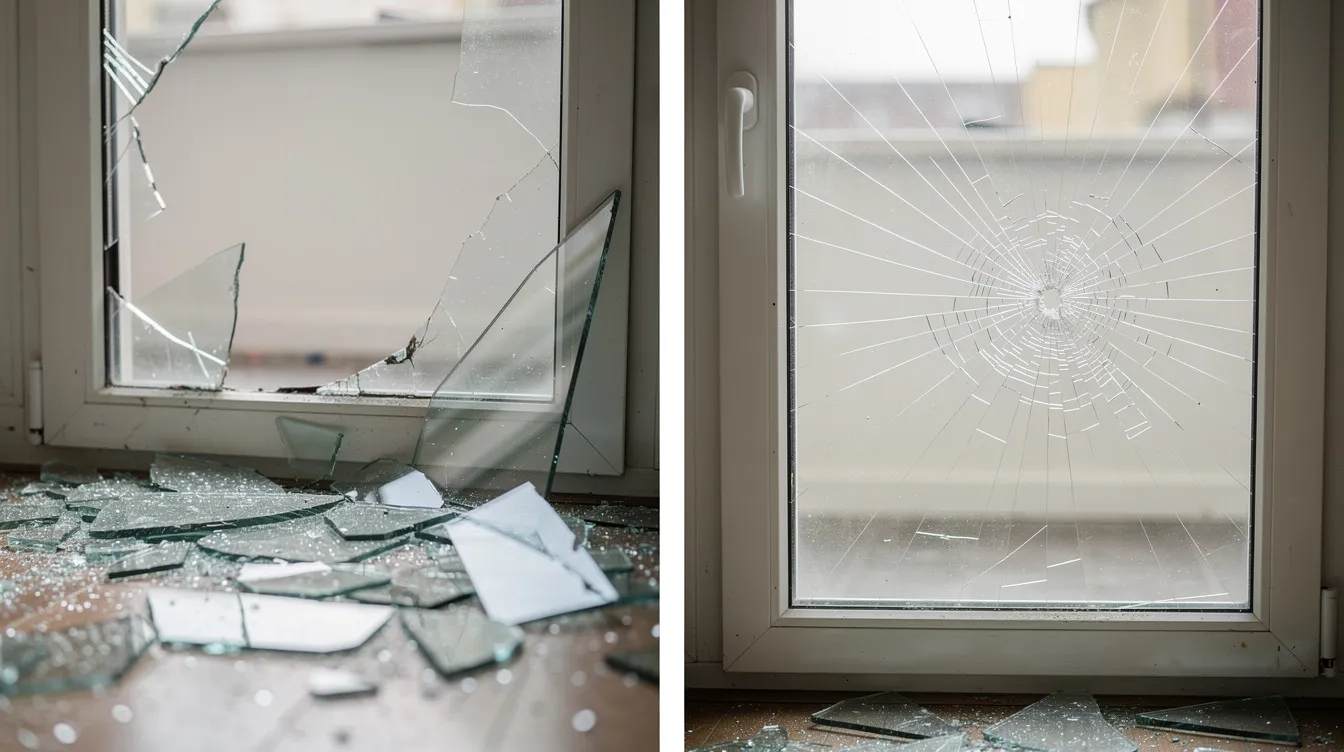
Shatter proof window film is a polyester-based protective coating comprised of multiple layers bonded together with high-strength adhesives. Anti shatter film, a type of window security film, bonds to glass and prevents flying glass shards by holding broken pieces together upon impact. When applied to glass windows, this safety film creates a composite structure that transforms dangerous broken glass into a contained, manageable hazard. The film keeps broken shards from flying, which significantly reduces cuts and serious injuries during accidents or storms.
This protective technology differs fundamentally from regular window tinting and decorative films. While tinted films primarily reduce light transmission or add visual appeal, safety and security film is engineered specifically for impact resistance and fragment retention. The added layer of film helps prevent flying glass shards, reducing the risk of injury by absorbing energy and redistributing it across a larger surface area, preventing the explosive shattering that makes broken glass so hazardous.
How Shatter Proof Film Works
A high-strength adhesive bonds the film tightly to the glass, creating a unified structure that responds to impact very differently from untreated glass. When struck, the glass may crack or break, but the film holds shattered shards together to prevent them from flying inward. The multi-layered polyester construction of security film absorbs and redistributes energy from a strike across a larger area, reducing the intensity of the break.
This technology shares principles with automotive windshield laminated glass, where a plastic interlayer holds glass fragments in place during collisions. In side-impact collisions, properly installed film can mitigate injuries by holding shattered tempered glass in place, just as architectural applications use security window film with reinforced glass systems to reduce injury and delay forced entry. Shatterproof window film acts like a steel curtain, holding shattered glass in place and helping to protect people and property from damage caused by broken glass, but it’s important to remember that even the best films create shatter-resistant rather than truly unbreakable glass.
Primary Safety Benefits
Protection against accidental breakage represents the most common residential application for safety window film. Children playing indoors, pets bumping against a sliding glass door, or simple household accidents can turn ordinary glass windows into injury hazards. When glass breaks with film installed, the fragments remain adhered to the protective layer rather than scattering across floors and furniture, which is especially beneficial for sliding glass doors that are common points of accidental breakage.
The film provides a safety net during high winds, hurricanes, or earthquakes by containing glass that would otherwise blow out. In hurricane-prone regions, windborne debris striking unprotected windows creates secondary projectiles that cause extensive interior damage and personal injury. While safety film doesn’t prevent glass from breaking under severe impact, it maintains the building envelope and minimizes injury risk to occupants.
Security window films are a cost-effective solution used to strengthen and enhance the safety of regular glass, protecting against break-ins, vandalism, and natural disasters. This makes safety film a bridge between basic glass protection and comprehensive safety and security glass upgrades, offering immediate benefits while complementing broader property security strategies. Shatter proof window films are also designed to reduce cleanup time by keeping broken glass adhered to the film, minimizing the risk of injury from flying shards and making post-incident cleanup much easier.
Types and Specifications of Shatter Proof Films
Building on the safety benefits discussed above, selecting the right shatter proof window film requires understanding performance specifications that match your protection requirements. The thickness of window film is measured in mils, with 1 mil being equal to 1/1000 of an inch, and thicker films generally provide better protection and performance.
Film Thickness Options
4 Mil Film: Basic Protection A thickness of 4 mil is considered standard for safety window films, providing adequate protection against accidental breakage in residential settings. This entry-level option works well for homes, apartments, and low-risk commercial spaces where the primary concern is preventing injury from everyday accidents rather than forced entry or severe weather. Clear security film at this thickness provides shatter resistance without changing the window’s appearance.
8 Mil Film: Enhanced Security An 8 mil thickness is regarded as security-grade, offering enhanced impact resistance suitable for commercial applications and higher-risk residential properties. Thicker window films, such as those measuring 8 mil, can significantly delay forced entry by holding shattered glass together, making break-ins harder and slower. The film makes windows 2-3 times stronger, delaying a “smash-and-grab” entry by up to several minutes.
12 Mil and Above: Maximum Protection For institutional settings, government buildings, and properties in high-crime areas or severe weather zones, films measuring 12 to 14+ mil provide maximum protection when integrated with broader bullet-resistant windows and doors strategies. Clear security film ranges from 4 mil to 14+ mil, with the thickest options designed for blast mitigation and extreme forced entry resistance. Blast mitigation film is specifically engineered and tested to withstand extreme pressure from explosions, making it essential for high-security facilities and a useful complement to ballistic window film solutions in active-threat scenarios.
Performance Features
UV Protection Capabilities Shatter proof window film offers UV protection, with safety window films able to block up to 98% of harmful ultraviolet rays, helping to prevent fading of carpets and furniture. Premium formulations can block up to 99% of UV rays, preventing dashboards and upholstery from cracking or fading when applied to vehicle glass. This UV protection offers significant secondary value beyond safety, preserving interior investments and reducing sun damage to occupants’ skin.
Optical Clarity and Light Transmission Quality protective window film reduces hazards without sacrificing natural light or views. Modern manufacturing techniques, including microlayered construction with dozens of alternating polyester layers, maintain exceptional optical clarity while providing robust protection. High visible light transmission (VLT) ensures rooms remain bright and inviting, addressing concerns that safety film might darken living or working spaces.
Heat Rejection Properties Many security films include solar control technology that can reduce cooling costs by up to 30% in summer by blocking infrared heat. Solar security film combines shatter protection with solar control technology, reducing heat gain and glare while blocking up to 99% of UV rays, though some facilities may opt for DefenseLite instead of traditional security film when maximum forced-entry resistance is required. This dual functionality makes security film an attractive investment for properties in warm climates where energy efficiency matters as much as safety.
Application-Specific Films
Residential Films Home applications typically use 4-8 mil safety films that balance protection with affordability. These films work well on standard glass windows, sliding glass doors, and mirrors, providing fragment retention for everyday accidents while offering UV protection that preserves furniture and flooring.
Commercial Grade Films Office buildings, retail storefronts, and commercial properties benefit from 8-12 mil films that deter smash-and-grab theft. Intruders must repeatedly strike the window to create a hole large enough to enter, often buying 60 to 90 seconds of critical response time. This delay allows alarm systems to alert authorities and makes forced entry difficult enough to discourage opportunistic criminals.
Institutional Films Schools, hospitals, and government buildings require films meeting rigorous testing standards, including ASTM F3561 for forced entry resistance and ASTM F1642 for blast load performance, and many places of worship now pair these products with bullet-resistant glass security solutions for churches to address active-threat risks. These installations typically require edge anchoring to the window frame for maximum effectiveness, ensuring the film and glass remain secured even under extreme stress. Anti-graffiti film is used to cover windows, absorbing scratches or acid etchings, and can be peeled off and replaced cheaply if vandalized, which is especially useful where tempered glass has safety but not security benefits. This feature reduces cleanup time and maintenance costs, providing an additional layer of protection for institutional properties.
| Film Type | Thickness | Primary Use | Key Benefits |
|---|---|---|---|
| Basic Safety | 4 mil | Residential | Injury prevention, UV blocking, and affordability |
| Security Grade | 8 mil | Commercial/Residential | Forced entry delay, enhanced impact resistance |
| Maximum Security | 12-14+ mil | Institutional/High-risk | Blast mitigation, maximum entry delay |
| Solar Security | 4-12 mil | All applications | Dual safety/energy savings, heat rejection |
| When selecting film for your property, consider both immediate security needs and long-term value. Installing film is significantly cheaper than replacing standard windows with expensive laminated safety glass, making it an accessible upgrade for properties at various risk levels. |
Installation Process and Professional Services
With film specifications understood, proper installation becomes the critical factor determining whether your security window film performs as intended. Even the highest-quality protective window film fails to deliver its rated protection when poorly installed, making the installation process as important as product selection.
Professional Installation Process
Professional installation is recommended for security-grade films (8 mil and above), large glass surfaces, and any application where warranty coverage and certified performance matter. Our certified installation team follows industry best practices that ensure optimal adhesion and long-term durability.
Surface Preparation and Cleaning Requirements The process begins with thoroughly cleaning the glass surface to remove all dust, oils, fingerprints, and residue. Clean glass is essential for proper adhesion—even microscopic contaminants can cause air bubbles or prevent the high-strength adhesive from bonding correctly. Professional installers use specialized cleaning solutions and lint-free tools to achieve the pristine surface required.
Film Measurement and Cutting Procedures. Precise measurement ensures the film covers the complete glass surface with minimal gaps at edges. The film is cut slightly larger than the glass opening, then trimmed precisely after application. This technique prevents edge lifting while maintaining clean sight lines around the window frame.
Application Technique and Bubble Removal. To install window film, it is recommended to apply it when the sun is not shining directly on the glass to avoid issues during the application process. The installation process involves cleaning the window thoroughly, trimming the film to size, and applying it to the wet glass to ensure proper adhesion. Professionals use slip solutions that allow repositioning before the adhesive activates, then systematically squeegee from the center outward to eliminate air bubbles.
Curing Time and Post-Installation Care. After applying window film, it can take up to 30 days for the film to fully bond to the glass, during which time cleaning the window should be avoided to ensure optimal adhesion. During this curing period, small haziness or water bubbles may be visible—this is normal and resolves as the adhesive fully activates. Our team provides specific care instructions and schedules follow-up inspections to ensure complete bonding.
DIY vs Professional Installation Comparison
| Factor | DIY Installation | Professional Installation |
|---|---|---|
| Initial Cost | Lower (film only) | Higher (labor + materials) |
| Time Investment | Several hours per window | Efficient same-day completion |
| Quality Outcome | Risk of bubbles, uneven edges | Consistent, professional finish |
| Warranty Coverage | Often limited or voided | Full manufacturer warranty |
| Edge Sealing | Difficult without tools | Proper frame integration |
| Complex Windows | Challenging for curved/specialty glass | Experience with all types |
| DIY installation may work for basic 4 mil safety film on small, simple windows in low-risk applications. However, security-grade films require professional expertise, specialized tools, and proper edge attachment techniques to deliver rated performance. |
Why Choosing Our Professional Installation Services Ensures Optimal Results
Our certified installers bring experience with every glass type, including double-pane windows, tempered glass, and specialty glazing that requires particular handling. We guarantee proper edge sealing that maximizes security performance—without secure attachment to the window frame, even excellent film can fail under forced entry attempts. Every installation includes full warranty coverage, documented certification, and post-installation inspection to verify proper curing.
For properties where security film is protecting occupants and assets from genuine risks, professional installation isn’t an upgrade—it’s essential to achieving the protection you’re paying for.
Common Challenges and Solutions
Understanding common installation and performance concerns helps property owners recognize normal behavior versus problems requiring attention. Most issues stem from improper installation or unrealistic expectations about curing timelines.
Bubble Formation During Installation
Small air bubbles appearing during or shortly after installation typically indicate trapped air or moisture between film and glass. Prevention requires meticulous surface preparation—any contamination prevents uniform adhesion. Humidity control during installation matters significantly; professional installers monitor conditions and reschedule when humidity levels compromise bonding. Minor bubbles often disappear during the curing process as the adhesive activates and the moisture evaporates.
Film Peeling or Lifting at Edges
Edge lifting occurs when the film isn’t properly sealed to the glass perimeter or the window frame. Without adequate edge sealing, moisture infiltrates the film boundary, weakening adhesive bonds over time. Solution: proper wet-glaze silicone sealing or mechanical frame attachment systems that secure film edges rather than leaving them exposed. This edge attachment is especially critical for security applications where the film must hold shattered glass within the frame under force.
Cloudy Appearance After Installation
Haziness or cloudiness immediately following installation is normal and expected. The slip solution used during application takes time to evaporate, and the adhesive requires full curing to achieve optical clarity. After applying window film, it can take up to 30 days for the film to fully bond to the glass—this same period allows complete clearing. Avoid cleaning or touching the film during curing, which can interrupt adhesive activation.
Compatibility with Window Types
Different glass types require specific installation approaches:
- Double-pane insulated windows may develop thermal stress from film absorbing heat; verify manufacturer compatibility ratings before installation
- Tempered glass works well with safety film, but requires careful edge work to prevent stress concentration
- Low-E coated glass may affect adhesion depending on coating type and location
- **Sliding glass doors benefit from film but require robust edge sealing, given frame movement, and should be evaluated alongside other sliding glass door security options like upgraded locks and bars
Professional installers evaluate glass type, coating, age, and condition before recommending specific film products, preventing compatibility failures that compromise protection or void warranties.
Conclusion and Next Steps
Shatter proof window film transforms ordinary glass windows from potential hazards into protective barriers that minimize injury and secure property against multiple threats. Windows are often the weakest point in a building’s security, making them a prime target for break-ins. Shatter proof window film helps reinforce this vulnerability, making your windows more resistant to forced entry. From blocking harmful UV rays that fade furnishings to holding shattered glass together during break-ins or natural disasters, safety and security film delivers measurable protection at a fraction of the cost of full glass replacement.
The right film thickness depends on your specific risk profile: 4 mil for basic residential safety, 8 mil for security applications that make forced entry difficult, and 12+ mil for institutional settings requiring blast mitigation or maximum intrusion delay. In every case, professional installation with proper edge attachment maximizes film performance and ensures warranty coverage.
Immediate next steps:
- Assess your property’s vulnerabilities—consider both accidental breakage risks and security concerns
- Identify priority windows: ground-floor glass, sliding glass doors, and areas accessible from outside
- Schedule a consultation to evaluate glass types, frame conditions, and appropriate film specifications
Related topics to explore: Security camera integration with entry delay strategies, decorative privacy films that combine aesthetics with protection, and annual maintenance programs that extend film lifespan and performance.
Ready to protect your property with professional-grade shatter proof window film? Contact our certified installation team for a personalized assessment. We’ll evaluate your glass, recommend appropriate specifications, and provide a complete quote including full warranty coverage and post-installation support.
Frequently Asked Questions
How long does shatter proof window film last? Quality safety window film typically lasts 10-15 years with proper installation and care. Manufacturer warranties commonly cover 10+ years for commercial installations. Lifespan depends on UV exposure, climate conditions, and installation quality—professionally installed films with proper edge sealing consistently outlast DIY applications.
Can the film be removed without damaging windows? Yes, professional removal techniques using heat and careful peeling preserve glass surfaces in most cases. Some adhesive residue may remain but can be cleaned with appropriate solvents. Removal is significantly easier than with permanent laminated glass, making film an attractive option for rental properties or buildings anticipating future glass replacement.
Does shatter proof film work on all types of glass? Security window films work on most glass types including annealed, tempered, and many insulated units. However, effectiveness varies with glass age, coatings, and frame conditions. Certain specialty glazing—including some low-E coated or heavily tinted glass—may have compatibility limitations. Professional assessment before installation prevents problems.
Will the film affect my window warranty? Glass manufacturer warranties vary regarding applied films. Some explicitly allow compatible safety films; others may require specific products or professional installation. Check both glass and window warranties before installation, and choose films from manufacturers who provide compatibility documentation.
How much does professional installation cost? Professional installation costs vary by film quality, glass area, edge attachment requirements, and location. However, installing film is significantly cheaper than replacing standard windows with expensive laminated safety glass—often 5-10 times less expensive while providing comparable fragment retention. Request a detailed quote based on your specific property needs.
Can shatter proof film prevent break-ins completely? While security window films do not make glass unbreakable, they significantly delay forced entry by holding shattered glass together, making break-ins harder and slower. Intruders must repeatedly strike the window to create a hole large enough to enter, often buying 60 to 90 seconds of critical response time. Film works best as part of a layered security strategy, including alarms and surveillance.
Does the film reduce natural light in rooms? Clear safety films maintain high visible light transmission—often 80% or higher—preserving natural daylight while providing protection. Solar security hybrids may have a slight tint that reduces heat and glare but still transmit substantial light. Modern manufacturing techniques ensure minimal optical distortion.
What maintenance is required after installation? Maintenance is minimal: clean gently with non-abrasive cloths and mild soap or manufacturer-approved cleaners. Avoid ammonia-based products or abrasive tools that can scratch the protective coating. Periodically inspect edges for lifting and maintain frame seals. Many scratch-resistant films allow normal cleaning with appropriate techniques.
Is shatter proof film suitable for vehicles? Automotive applications require specifically rated films compatible with curved glass and vehicle flexing. The film can block up to 99% of UV rays in vehicles, preventing dashboards and upholstery from cracking or fading. Thicker security films for vehicles make it much harder for thieves to quickly reach inside, even if they break the glass. Ensure any automotive film meets local tinting regulations.
How do I clean windows with protective film? Wait until the full curing period completes—up to 30 days after installation. Then use soft microfiber cloths with mild, non-abrasive soap solutions. Avoid razor blades, abrasive pads, or harsh chemical cleaners. Work gently near edges to prevent lifting. Most films include manufacturer cleaning guidelines specific to their protective coating.