When unrest moves through a commercial district, damage can happen faster than most businesses can react. Storefront windows break, doors are forced open, inventory is stolen, and even a short disturbance can lead to weeks of repair work and lost revenue.
This article explains how retailers, restaurants, pharmacies, banks, and other street-facing businesses can prepare before the next large protest, civil disorder, or riot risk reaches their block.
Table of Contents
- Introduction: Why Storefront Protection During Civil Unrest Can’t Wait
- Understanding the Risk of Civil Unrest for Storefront Businesses
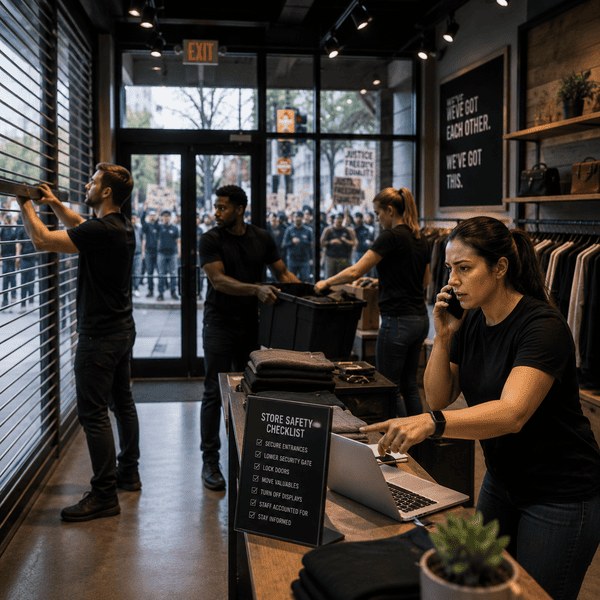
- Immediate Steps to Protect Your Storefront When Unrest Is Expected
- Physical Security Solutions and Security Gates for Storefront Protection
- Planning, Training, and Coordination for Civil Unrest Events
- Why Choose Our Team for Physical Security and Security Gates
- FAQs: Civil Unrest and Storefront Physical Security
- Conclusion: Turn Uncertainty Into Preparedness
Introduction: Why Storefront Protection During Civil Unrest Can’t Wait
From Minneapolis in 2020 to Philadelphia in 2020 and Washington, D.C. in 2021, recent events showed how quickly demonstrations can shift from peaceful protests to broken glass, looting, fires, and extended closures. Across the country, the 2020 unrest generated more than $2 billion in insured losses, according to reporting summarized by the World Economic Forum.
Civil unrest can erupt with little warning. A large protest may be announced days ahead, or a crowd may form suddenly after a court decision, election result, police incident, or local controversy. When streets are blocked and police are stretched thin, business owners cannot rely on a last-minute response to protect a storefront.
Civil unrest storefront protection means using proactive planning, physical security, and staff readiness to keep doors secure, safeguard inventory, and reduce the likelihood of property damage. Security cameras and alarm systems still have value, but physical security is often more reliable than alarms and CCTV alone during large protests and riots because barriers keep opportunists out instead of only recording what happened.
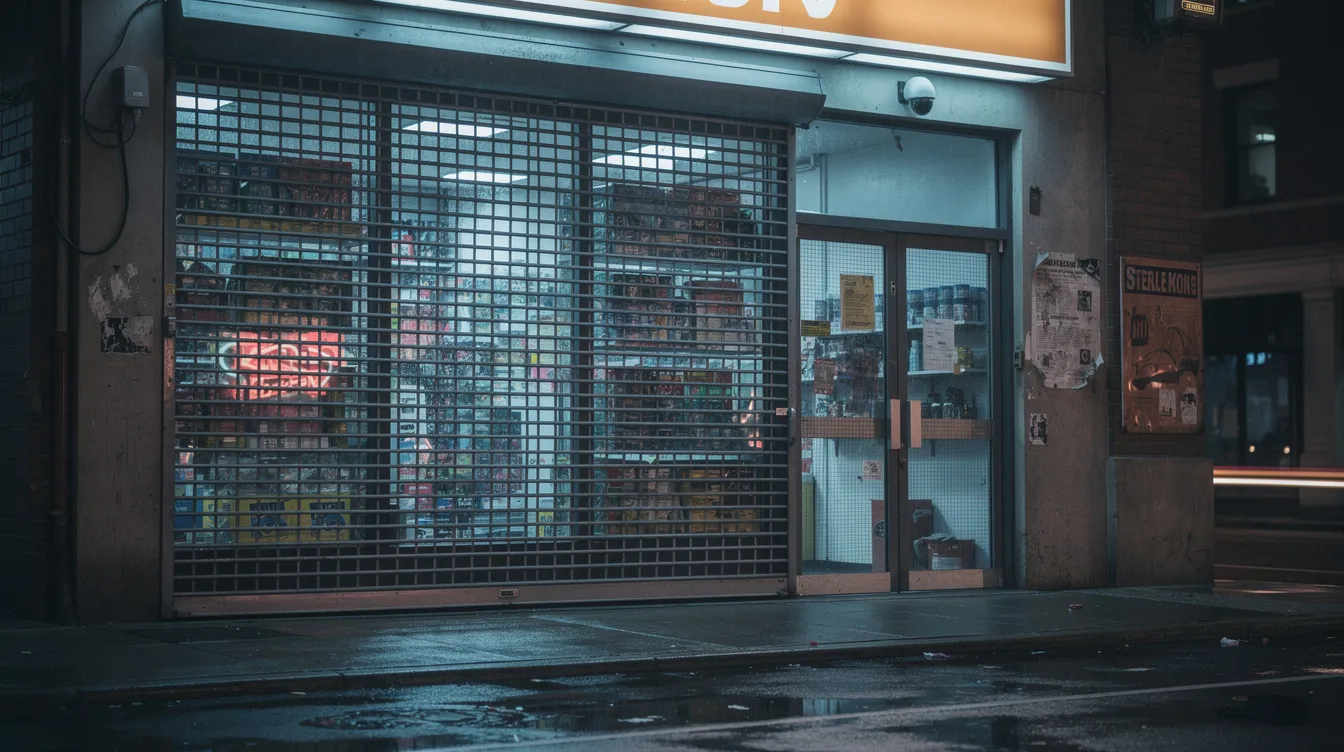
Understanding the Risk of Civil Unrest for Storefront Businesses
Even peaceful demonstrations can change nature when a small group of criminals uses the crowd as cover. Between 2020 and 2024, cities such as Chicago, Portland, Los Angeles, and Washington, D.C. saw incidents where vandalism, looting, arson, and street-level destruction affected nearby businesses.
Civil unrest can cause serious property damage anywhere. Civil unrest can occur in both large and small cities, including large cities, mid-sized cities, small towns, and suburban commercial corridors. A business in new hampshire, maryland, chicago, or any other part of the country may face exposure if protests, riots, or crowd activity occur near its location.
Key risks include:
- Typical damage patterns include smashed glass, broken windows, forced doors, stolen high-value goods, interior fire damage, graffiti, damaged equipment, and destruction of signage or displays. Storefronts with street-level public access are particularly vulnerable to opportunists because public access gives vandals a direct line to the building envelope.
- Dense downtown cores, properties near government buildings, and storefronts along a large protest route face higher exposure. Crowd flow can block police access, and a single break in the glass can quickly turn into looting if no physical barrier is in place.
- Indirect losses often exceed the first repair bill. Businesses may need to close for repairs after civil unrest, leading to business interruption, missed deliveries, supply chain disruption, lost wages for employees, and long-term reputation damage in the neighborhood.
- Insurance can be complicated. Review insurance policies for coverage against civil commotion damages before events occur. The applicable policy may include exclusions, deductibles, waiting periods, or limits that affect coverage after a claim.
- Physical barriers significantly reduce property damage risk during unrest because they delay forced entry, discourage casual vandalism, and make a storefront a harder target at any given time, especially when part of a comprehensive forced entry protection strategy.
Once you understand the risk, the priority is to prepare concrete steps before a warning becomes an emergency.
Immediate Steps to Protect Your Storefront When Unrest Is Expected
If protests, elections, high-profile trials, or other public events are expected near your site, speed matters. The following tips are designed for the first 24–48 hours.
- Set a decision trigger. Decide in advance when the storefront plan activates, such as when protests are publicly planned within one or two blocks, when curfews are announced, or when neighboring retailers begin closing early.
- Lock down access points. Locking down access points can prevent unauthorized entry during unrest, especially rear doors, service corridors, roof hatches, loading docks, vestibules, and interior doors leading to offices or cash rooms.
- Move money and valuables. Secure cash, data, jewelry, electronics, prescriptions, firearms, luxury goods, and other small high-value items in a vault, offsite safe, or upper secure room away from glazing and doors. Signage stating that cash and valuables have been removed deters theft by reducing the perceived reward.
- Backup critical records. Backup critical business records to secure locations to protect data, including payroll records, customer files, inventory lists, lease documents, insurance policies, and point-of-sale exports.
- Document the premises. Documentation of premises is essential before potential civil unrest occurs. Photograph and video the current condition of windows, doors, signage, inventory layout, lighting, gates, and exterior areas for potential insurance claims.
- Reduce looting incentives. Minimizing visible assets reduces incentives for looting. Clear display windows of tempting merchandise and replace products with low-value, empty, or non-removable displays.
- Remove outdoor hazards. Clearing debris can prevent its use as projectiles. Loose items around a business can inflict damage during unrest, including patio furniture, trash cans, sandwich boards, planters, pallets, tools, and unsecured advertising materials.
- Add temporary protection if needed. Emergency boarding involves covering windows and doors with thick plywood. This is not as strong or attractive as installed gates, but it can be useful when permanent systems are not yet in place.
- Improve visibility. Installing motion-activated security lighting enhances visibility around storefronts. Cutting back trees may reduce hiding places for looters and improve camera sight lines near entrances.
- Communicate clearly. Post temporary schedule changes on the website, social media, voicemail, and window signage. Customers and employees should know whether the business is open, closed, or operating with limited hours.
- Consider guarding. Coordinate with a licensed security provider for on-site guarding if necessary, especially for pharmacies, banks, cannabis retailers, electronics stores, or locations with repeated incidents.
These quick measures help, but effective storefront protection requires physical reinforcement and proactive planning.
Physical Security Solutions and Security Gates for Storefront Protection
Security cameras, alarm systems, and active monitoring all play a role. Active monitoring provides real-time awareness and evidence for insurance claims. But during civil unrest, detection alone is not enough.
Alarm systems are often ineffective during large-scale civil unrest because dispatch centers may be overwhelmed, police response may be delayed, and masked faces reduce the value of video identification. Alarm systems lose effectiveness during large-scale civil unrest when dozens of calls are coming from the same area and responders cannot safely reach the property.
That is why physical security solutions matter. Physical barriers are more effective than alarms during unrest because they create a hardened delay between the crowd and the storefront interior. Physical security tools provide the best protection during civil unrest when they are properly selected, installed, and supported by a plan.
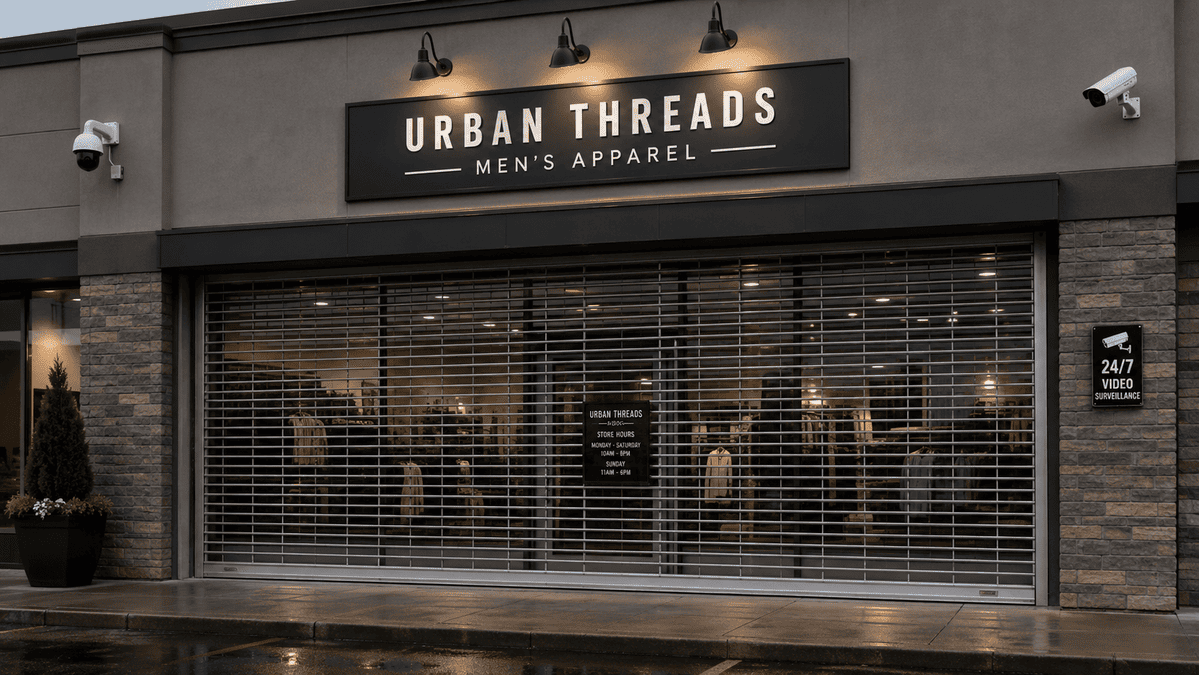
Security gates can deter property damage during civil unrest. Security gates deter property damage during civil unrest by making glass harder to reach, doors harder to force, and looting slower and riskier. Security gates can deter property damage during civil unrest when opportunists are looking for the easiest target on the block. Security gates deter property damage during civil unrest situations by adding a visible defense layer before damage starts.
Common physical security solutions include:
- Exterior gates and shutters create a hardened barrier for storefronts. Exterior gates, shutters, and grilles can protect doors, large windows, and vulnerable street-level openings.
- Security gates, roll-down shutters, and reinforced doors act as primary defense points. They do not just alert the owner after a break; they physically resist entry, especially when combined with storefront security solutions for glass doors and windows.
- Gate types include fixed folding gates in wall pockets, rolling steel grilles, side-folding systems, roll-down shutters, and portable gates stored offsite and deployed before events.
- Material choices matter. Galvanized steel offers strength and durability. Aluminum can reduce weight and corrosion concerns. Solid shutters provide maximum concealment, while perforated or grille designs preserve visibility.
- Design integration improves adoption. Security gates can be concealed during business hours. Concealed tracks, powder-coated finishes, and advertising bins can help hide equipment during the day while keeping protection ready at night.
- Qualified installation is essential. Work with installers who understand load calculations, anchoring, fire code egress requirements, accessibility rules, and emergency exit regulations.
| Protection layer | What it does | Best use case |
|---|---|---|
| Security gates | Blocks access to glass and doors | Street-facing retail, banks, pharmacies |
| Roll-down shutters | Covers openings quickly | High-risk corridors and nightly protection |
| Reinforced doors | Resists forced entry | Rear doors, front entries, service areas |
| Security glazing | Delays shattering and breach | Large display windows and lobbies |
| Bollards or planters | Blocks vehicle approach | Wide sidewalks, corner locations, high-risk streets |
Permanent vs. Portable Security Gates
Many retailers use a mix of permanent and portable gates depending on location, budget, lease restrictions, and exposure.
- Permanent gates include side-folding gates, roll-down shutters, and grilles installed above, beside, or within storefront openings. Permanent security gates can be used for daily protection, and permanent security gates can be used for everyday storefront protection after closing hours.
- The main advantages of permanent gates are fast deployment, strong anchoring, integrated locking hardware, and no need for offsite storage once installed.
- Portable security gates are accordion-style barriers that can be stored in a back room, warehouse, trailer, or storage facility. Gates can be stored offsite and deployed as needed before planned protests, trials, elections, or other events.
- Portable options are useful when a tenant cannot modify the building, when multiple stores share equipment, or when sales support teams need flexible deployment across a region.
- A simple decision framework helps: high-risk corridors, flagship stores, and locations near government buildings usually favor permanent systems; lower-risk or leased spaces may start with portable gates.
For many businesses, the best defense is layered. A roll-down shutter may secure the main storefront, while portable gates protect secondary openings or interior merchandise zones.
Beyond Gates: Doors, Glazing, and Perimeter Protection
Comprehensive physical security goes beyond gates. The strongest storefront protection strategy considers the full envelope: doors, glass, lighting, approach paths, and surrounding objects.
- Upgrade doors to reinforced steel or aluminum storefront doors with heavy-duty hinges, multi-point locks, tamper-resistant hardware, and protected cylinders, or consider forced entry resistant doors with integrated shielding for higher-risk locations.
- Shatterproof window modifications can significantly delay forced entry. Options include laminated safety glass, polycarbonate panels, glass-clad polycarbonate, and security film designed to hold broken glass together, along with specialized storefront glass protection systems for riots and looting and broader safety and security glass solutions.
- Physical barriers can block vehicle ramming into storefronts. Bollards, large planters, structural benches, and rated barriers can reduce the chance that a vehicle is used to break into a building when combined with forced entry security glazing for doors and windows.
- Improve exterior lighting. Motion-activated lighting, brighter façade lighting, and clear sight lines reduce hiding places and increase the chance that suspicious behavior is noticed.
- Review the property after changes. A remodel, new tenant layout, construction project, or changing neighborhood condition can create new vulnerabilities.
The goal is not to turn a business into a fortress. The goal is to protect people, slow forced entry, reduce damage, and help the company recover faster if incidents happen.
Planning, Training, and Coordination for Civil Unrest Events
Even the best hardware can fail if employees do not know when to use it. A gate that is left open, a safe that no one can access, or an exit that becomes blocked can create new risks.
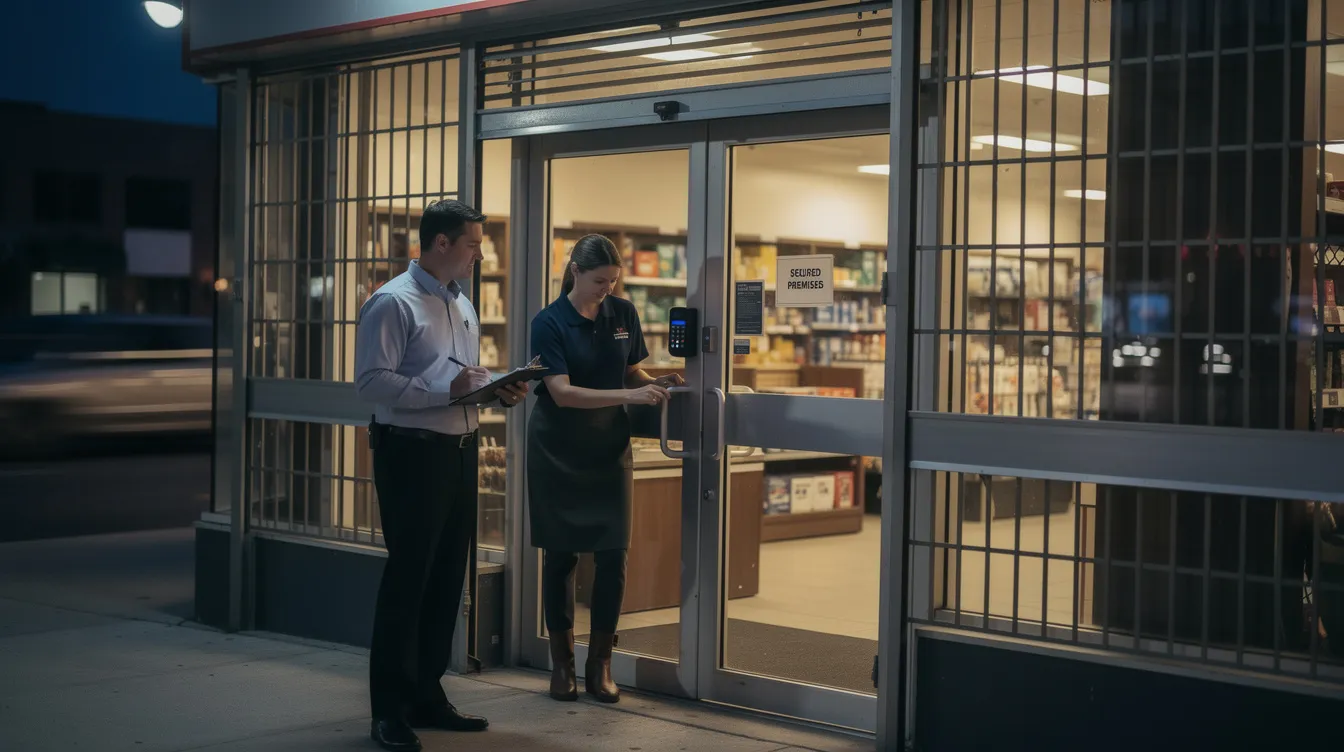
Build a practical civil unrest plan around the following actions:
- Create a written security plan. Assign roles for who closes gates, who secures cash, who backs up data, who contacts employees, who updates customers, and who speaks with building management.
- Establish early closure protocols. Decide how much lead time is needed to close registers, remove visible assets, deploy gates, secure inventory, and get employees home safely.
- Train employees briefly and often. Staff should know emergency exits, safe rooms, evacuation paths, alarm procedures, and what to do if a crowd moves onto the street.
- Coordinate with others. Building management, neighboring businesses, local business associations, and property owners can share information and align protection steps before a disturbance reaches the block.
- Keep key contacts current. Maintain updated numbers for police, fire, emergency management, your landlord, your insurer, your gate company, your locksmith, and your licensed security provider.
- Use monitoring intelligently. Security cameras are still useful when paired with barriers. Video can help verify whether gates were closed, whether windows were intact before damage, and whether a claim reflects a single event or multiple incidents.
Planning and training turn physical security products into a complete protection system. Without a plan, equipment may sit unused when it is needed most.
Why Choose Our Team for Physical Security and Security Gates
Our company helps businesses choose, install, and maintain physical security solutions that fit real storefront conditions. We focus on practical protection that works during daily operations and during higher-risk events.
Here is how we support business owners and property managers:
- We assess the site first. A storefront on a quiet side street does not need the same approach as a bank near a courthouse or a retailer on a downtown protest route.
- We recommend the right mix of gates, doors, glazing, and barriers. The goal is not to oversell equipment; it is to match the defense to the risk, the budget, the building, and the timeline.
- We understand business continuity. Our crews work to minimize disruption to trading hours and help owners stay open whenever practical.
- We support both permanent and portable systems. Some locations need daily protection, while others need equipment that can be deployed before specific events.
- We consider appearance. Smooth operation, durable materials, powder-coated finishes, concealed designs, and thoughtful integration help protection blend with the storefront.
- We provide responsive after-sales support. Maintenance, adjustments, repairs, and operational guidance help keep the system ready.
If you are unsure where to begin, request a no-obligation site review or quote through our contact page. A dedicated physical security specialist can reduce guesswork and help you prepare before the next warning period.
FAQs: Civil Unrest and Storefront Physical Security
Retailers often ask the same questions when evaluating security gates, alarm systems, and civil unrest protection strategies.
Are security gates really necessary if I already have cameras and an alarm system?
Yes, in many exposed locations. Cameras and alarms help document activity, but they do not physically stop entry. During a large crowd event, police may be delayed, dispatch may be overloaded, and offenders may be masked. Physical barriers create actual resistance.
Will security gates make my storefront look unwelcoming to customers?
Not necessarily. Many systems retract, fold into wall pockets, roll overhead, or sit concealed during business hours. Open grille and perforated designs allow visibility, while powder-coated finishes can match the storefront.
How quickly can security gates be deployed before a planned protest or major event?
Once installed, many permanent gates can be closed in minutes. Portable gates take longer because they must be transported, positioned, and locked. New installation lead times vary based on measurements, materials, permitting, and crew availability, so it is best to plan before a warning is issued.
Are there building code or fire safety rules I need to follow when adding gates or shutters?
Yes. Gates and shutters must not block required exits, emergency egress, panic hardware, or fire department access. A qualified installer should review local building and fire rules before installation.
Can physical security improvements lower my insurance premiums or help with coverage?
Possibly. Speak with your insurer or broker. Many carriers view robust physical security positively, especially when the business can show documentation, active monitoring, secure storage practices, and reasonable mitigation steps. Always review the applicable policy for civil commotion, riots, vandalism, theft, fire, and business interruption coverage.
What should I do if my storefront has already been damaged?
Prioritize safety first. Do not enter if there may be structural damage, fire hazards, broken glass, or active police activity. Photograph the damage, contact your insurer, secure the opening, and arrange repairs. Temporary boarding may be needed before permanent protection is installed.
Have a question about your specific location? Reach out through our consultation page and we can help you identify the next best step.
Conclusion: Turn Uncertainty Into Preparedness
Civil unrest is unpredictable, but your response does not have to be. With the right planning, storefront protection can reduce damage, protect employees, and shorten the time it takes to reopen after a disturbance.
The core pillars are straightforward:
- Understand the risk at your location, including crowd routes, nearby targets, police access, and prior incidents.
- Take immediate precautions by removing cash, backing up records, documenting the premises, clearing debris, and reducing visible assets.
- Invest in strong physical security solutions, including security gates, reinforced doors, improved glazing, lighting, and perimeter barriers.
- Train employees so protection steps happen quickly and safely.
Practical upgrades can often be installed with limited disruption to daily operations. Security gates, reinforced doors, and shatter-resistant glass are not just emergency measures; they are everyday investments in resilience.
If you want to protect your property before the next period of unrest, schedule a site assessment or request a quote today. Protecting your storefront now helps your business stay open for the employees, customers, and communities that rely on it tomorrow.