When an active shooter attack compromises building glass, what happens next determines whether occupants survive. ASTM F3561 level 8 glazing represents the highest available performance rating for fenestration systems tested under combined ballistic weakening and forced entry conditions-keeping damaged openings intact long enough for lockdown, evacuation, and law enforcement response. This article breaks down exactly what the standard requires, where Level 8 applies, how it compares to other test methods, and how to plan a retrofit.
Table of Contents
ASTM F3561 and Level 8 Glazing Explained
Why Level 8 Matters for Forced Entry and Active Shooter Scenarios
Real‑World Applications of ASTM F3561 Level 8 Glazing
How ASTM F3561 Relates to Other Forced Entry and Ballistic Standards
Planning an ASTM F3561 Level 8 Retrofit with Impact Security
FAQs About ASTM F3561 Level 8 Glazing
Why Choose Impact Security for ASTM F3561 Solutions
ASTM F3561 and Level 8 Glazing Explained
ASTM F3561-22 is a standard test method published by ASTM International titled “Standard Test Method for Forced-Entry Resistance of Fenestration Systems After Simulated Active Shooter Attack.” Unlike standards that evaluate glass alone, it tests complete fenestration systems-glazing, framing, hardware, locks, and anchorage-as a unit. The standard applies to doors, windows, storefronts, and curtain walls.
The test simulates an active shooter scenario in two phases:
- Ballistic weakening. Ten rounds of M193 5.56×45 mm ammunition are fired in a defined compass pattern around the panel, plus center shots. For door systems, five additional repetitive shots target the lock area. The standard uses a 10-shot ballistic weakening pattern and assumes the glass is perforated-this is not a bullet resistance test.
- Forced entry. A 100-pound pendulum impactor simulates repeated human-led forced entry attempts during testing. Two impacts are delivered at each level’s drop height, and the system must prevent a six-inch test shape from passing through any opening.
ASTM F3561 performance levels range from 1 to 8. Performance levels are based on impact resistance after ballistic damage, with each level increasing the drop height and energy. Level 1 requires withstanding impacts from a drop height of 0.5 feet, while Level 8 requires 4 feet. Level 8 requires withstanding over 400 foot-pounds of force per impact, with cumulative energy across all levels reaching approximately 3,600 ft-lb.
ASTM F3561 level 8 glazing is the highest classification under the ASTM F3561-22 standard. It is designed to address post-ballistic forced-entry resistance and is not a bullet-resistant standard like UL 752. For ballistic protection, separate ratings are needed. Window film or glazing alone cannot claim compliance without tested framing-the standard requires testing glazing and framing as a complete system.
Why Level 8 Matters for Forced Entry and Active Shooter Scenarios
Active shooter incidents, smash-and-grab crime, and targeted violence at schools, healthcare facilities, and retail locations remain a growing concern across the United States. Standard tempered or annealed glass offers almost zero forced entry resistance once compromised. ASTM F3561 fills this gap by measuring how well a system can resist forced entry after an active shooter attack has already damaged the glass.
In practical terms, Level 8 glazing systems are designed to withstand prolonged physical attacks by intruders. They prevent an attacker from creating an opening large enough to reach locks, manipulate hardware, or crawl through-even after the glazing has been compromised by gunfire. ASTM F3561 level 8 provides enhanced security to delay unauthorized entry even after the glazing has been damaged. This buys critical minutes. Level 8 glazing helps provide critical time for occupants to shelter and for law enforcement to respond.
ASTM F3561 tests school doors and windows for forced entry resistance, making it directly relevant to educational facilities. Level 8 offers roughly 2.5 times more impact resistance compared to Level 3, which is why security consultants reserve it for the most vulnerable areas: main entrances, vestibules, first-floor corridors, and glazing adjacent to door hardware. A Level 8 rating ensures the system remains difficult to breach even after being shot.
Specifying Level 8 for critical openings fits into a layered physical security strategy. It addresses safety concerns unique to large glass lites in storefronts, curtain walls, and sidelites that can fail catastrophically and turn access points into liabilities. Evolving state and federal school safety guidelines issued between 2022 and 2026 increasingly reference forced entry protection, and Level 8 performance helps facilities align with those mandates.
Real‑World Applications of ASTM F3561 Level 8 Glazing
Common applications for Level 8 include K-12 schools, government buildings, and courthouses-anywhere delayed forced entry is mission-critical.
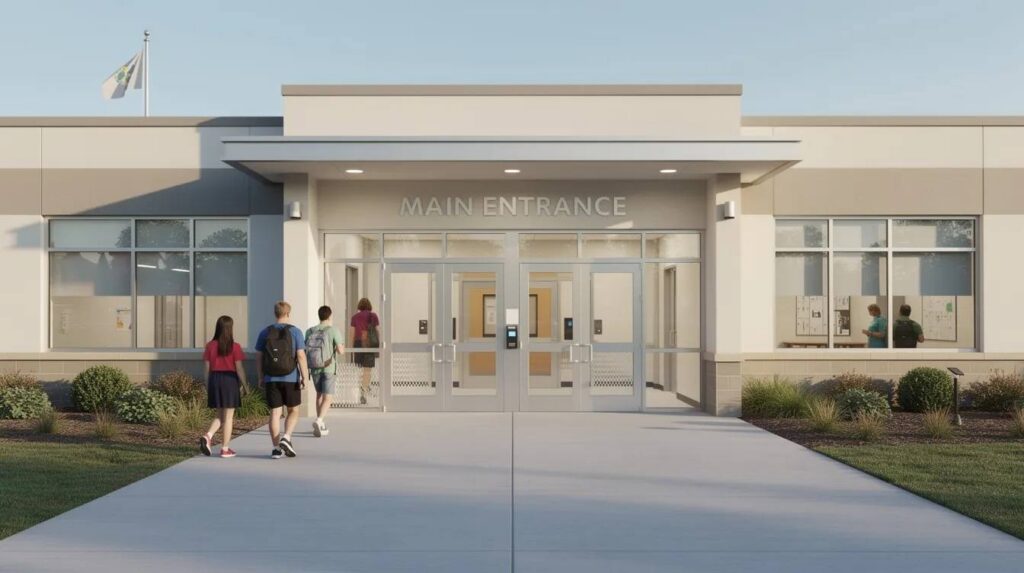
- K-12 schools and universities. Schools are increasingly mandated to implement forced-entry protection. School districts are using state safety grants (many issued 2023–2025) to upgrade secure vestibules, classroom doors with sidelites, and ground-floor windows. Riot glass and polycarbonate shield systems tested to Level 8 are being specified for new construction and retrofit projects alike, reflecting evolving school security requirements for reinforced window and door glass.
- Healthcare facilities. Emergency department entrances, behavioral health units, and pharmacy windows must allow natural light and visibility while resisting active shooter attack and riot-type forced entry events.
- Retail, banking, and commercial. Storefront glass, ATM lobbies, jewelry counters, and cannabis dispensaries face both ballistic and heavy-impact threats. Level 8 DefenseLite security glazing systems replace roll-down grilles while maintaining an inviting appearance.
- Government and municipal buildings. City halls, court facilities, police lobbies, and permit counters balance public access with staff safety. Level 8 door systems and glazing permit day-to-day transparency but deny an intruder the ability to gain entry during threats or civil unrest.
- Corporate offices and tech campuses. Visitor lobbies, shared atriums, and executive suites combine architectural fenestration with concealed Level 8 protection-no visible “fortress” details.
How ASTM F3561 Relates to Other Forced Entry and Ballistic Standards
Architects and security consultants rarely specify a single standard in isolation. Here’s how the key test methods compare:
| Standard | What It Tests | Key Difference from F3561 |
|---|---|---|
| UL 752 | Bullet resistance (stopping projectiles) | Focuses on ballistic protection only; no forced entry phase |
| ASTM F1233 | Multi-threat glazing (blunt, sharp tools, ballistic) | ASTM F1233 evaluates both ballistic and forced-entry resistance but lacks the post-ballistic pendulum sequence |
| ASTM F3038 | Timed forced entry (5–60 min with hand tools) | ASTM F3038 measures timed resistance to forced entry attacks without ballistic weakening |
| ASTM F3561 | Entry resistance of fenestration after simulated active shooter attack | Combines ballistic weakening + pendulum impacts; rates systems Level 1–8 |
ASTM F3561 fills the gap between pure ballistic ratings and classic forced-entry tests. High-risk facilities often combine Level 8 forced entry resistance with UL 752 and related ballistic standards for total security solutions that address both bullet resistant glazing and post-ballistic breach prevention. The National Glass Association has published guidance citing ASTM F3561 as a benchmark for specifying security glazing in educational facilities and public buildings.
Planning an ASTM F3561 Level 8 Retrofit with Impact Security
Impact Security, a specialized security glazing manufacturer (parent company of DefenseLite) helps B2B and B2G clients determine which fenestration systems need Level 8 forced entry protection versus lower levels, based on actual threat profiles rather than guesswork.
Assessment process:
- Site visit or virtual review to identify critical access points
- Review of existing framing, substrates, and hardware condition
- Threat profile discussion covering active shooter scenarios, riot risk, and smash-and-grab patterns with facility managers and security consultants
Retrofit approach: Rather than wholesale window replacement, Impact Security mounts engineered polycarbonate or hybrid security shields-such as DefenseLite Pro advanced impact security glazing-over existing glass. These systems test as complete assemblies (glazing, framing, anchors) so the ASTM F3561 rating applies to what’s actually installed, not just the materials, similar in principle to the RiotLite window film system tested to ASTM F3561. This supports compliance with the standard’s requirement that the systems test as a whole unit.
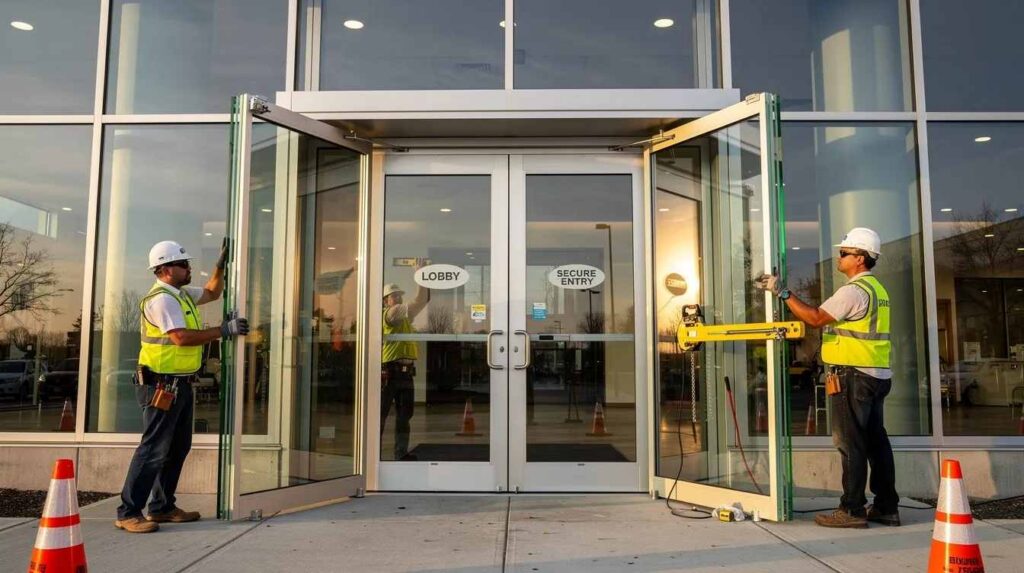
Key retrofit benefits include minimal downtime, preservation of existing storefronts or curtain walls, reduced disruption to school or business operations, and the ability to simulate forced entry conditions during design to verify performance before fabrication, aligning with broader retrofit approaches for advanced ballistic protection in workplaces. Engineering, fabrication, and installation are coordinated from Impact Security’s facilities in Marietta, GA and Glendale, AZ, with certified dealers and installers across the U.S., and can be integrated with SafeSuite interior protection systems where comprehensive ballistic and forced-entry mitigation is required. Documentation support-shop drawings, submittals, and test results-helps architects make informed decisions when specifying Level 8.
FAQs About ASTM F3561 Level 8 Glazing
Does ASTM F3561 require bullet-resistant glass? No. ASTM F3561 is designed to address post-ballistic forced-entry resistance and assumes test projectiles penetrate the glazing. For ballistic protection that stops bullets, you need a separate rating such as UL 752. Combining both standards significantly improves overall protection for high-risk openings.
Can existing windows be upgraded without full replacement? In many cases, yes. Impact Security’s retrofit systems mount over existing glass and framing. However, frame condition, anchorage capacity, and hardware must support the loads. Any deviation from the tested assembly can affect the rating, so engineering review is required.
How does ASTM F3561 compare to F1233 and F3038? Each standard applies to a different facet of physical security. ASTM F3561 specifically addresses forced entry resistance of fenestration systems after simulated active shooter attack. F1233 covers multi-threat scenarios including sharp tools. F3038 provides time-based ratings under coordinated assault. Many facilities specify combinations based on their threat assessment.
Where should Level 8 be used versus lower levels? Reserve Level 8 for the most critical and vulnerable areas: main entrances, vestibules, ground-floor classroom glazing, and sidelites adjacent to locks. Lower levels (3–5) may be appropriate for upper floors, secondary entrances, or areas with reduced threat exposure.
What about maintenance and lifespan? Inspect polycarbonate shields and laminate interlayers periodically for scratches, crazing, UV degradation, and sealant integrity. Clean with non-abrasive products. Most systems carry multi-year warranties when maintained properly. Schedule professional inspections after any impact event or severe weather.
How do I verify a product truly meets Level 8? Request the full test report showing ASTM F3561-22 designation, specimen size, glazing system configuration (glass + frame + hardware + anchors), and confirmation that the complete assembly passed Level 8. Vague claims of “forced entry protection” without system-level documentation should raise immediate safety concerns.
Why Choose Impact Security for ASTM F3561 Level 8 Solutions
Impact Security has focused exclusively on security glazing since 2016-not as a side business, but as its sole mission. With U.S. manufacturing in Marietta, GA and Glendale, AZ, the company controls product quality from fabrication through installation. Products like DefenseLite Pro, BulletShield, and RiotLite are developed to protect facilities without compromising aesthetics or natural light.
The company provides turnkey services: threat and vulnerability assessment, engineering and design support, custom fabrication, professional installation, and ongoing warranty. This reduces the coordination burden on facilities managers and architects and helps align glazing upgrades with current building codes and school safety funding opportunities.
If your facility has unprotected glass at critical entry points, the path forward starts with understanding your risk. Request a free consultation through the DefenseLite contact form to identify which openings need Level 8 performance, share your drawings for review, or schedule a walkthrough, and determine whether DefenseLite versus traditional security glass film is the right approach for your project. Impact Security’s team can help you create a prioritized plan that fits your budget, timeline, and compliance requirements-so your building is ready for the future, not just reacting to the past.