Table of Contents
- Introduction: Why Schools Are Focusing on Glass Security
- What “Bullet Proof” Film Really Is (and Isn’t)
- How Security Film Works on School Glass
- Key Benefits of Bullet Resistant Film
- Limitations: What Film Cannot Do
- Where to Install in Your School
- Cost, Budgeting, and Timeline
- Compliance and Testing Standards
- How Film Fits Into Layered Security
- FAQs
- Why Choose Our Company
- Conclusion
Jump directly to FAQs or Why Choose Us for quick answers.
Disclaimer: The term ‘bulletproof glass’ is often misleading, as no glass or film combination can completely withstand every physical or ballistic attack. Instead, school and safety officials rely on high-grade bullet-resistant protective glazing and films designed to absorb severe impact, which can help slow, disrupt, or prevent forced entry during active shooter situations and buy vital time for first responders.
Introduction: Bullet Proof Window Film for Schools
Since Sandy Hook in 2012 and Uvalde in 2022, school administrators across the country have taken a hard look at their buildings’ physical security. One vulnerability stands out repeatedly: glass. Standard windows and door glass can be breached in seconds, giving intruders immediate access to hallways and classrooms.
This has driven many schools toward window film for schools as an active shooter mitigation measure. But here’s what you need to know upfront: the term “bullet proof” window film is misleading. No film applied to standard glass will stop all bullets. What security window film actually does is hold broken glass together, creating a barrier that delays forced entry by 30 seconds to 2 minutes or more—enough time for lockdowns and first responders to act.
This article will explain exactly what security film can and cannot do, how it’s installed on existing glass, realistic cost expectations, and how to choose a qualified installer. Our company specializes in school security glazing retrofits, working with districts to prioritize entrances, sidelites, and ground-level classroom windows where risk is highest.
What “Bullet Proof” Window Film Really Is (and Isn’t)
Let’s start with myth-busting: no film by itself turns standard classroom glass into true bulletproof glass. Security professionals avoid the term “bulletproof” entirely because it creates unrealistic expectations that can lead to poor purchasing decisions.
Here’s the terminology that matters:
| Term | What It Means |
|---|---|
| Bullet resistant | Provides some resistance to ballistic threats, but not absolute protection |
| Security window film | Polyester laminate that holds glass together after impact |
| Ballistic glazing | Purpose-built glass systems tested to stop specific calibers |
| Ballistic window film | Marketing term—requires context about what it’s applied to |
| Security films are polyester or nano-ceramic laminates, typically 8–15 mil thick for basic applications and up to 21–41 mil in advanced constructions. They’re applied to existing glass to hold it together under impact. Security window films, often referred to as ballistic window films, are designed to hold glass in place when broken, creating a barrier that delays access during an attack. |
To achieve a UL 752 ballistic rating, film must be paired with properly tested glass or shield systems. Film alone on annealed glass will not pass formal ballistic tests.
Consider the difference: a typical classroom door lite with 1/4” tempered glass plus 8–15 mil film will delay forced entry, while a purpose-built UL 752 Level 3 ballistic window system in a secure vestibule can actually stop bullets. The takeaway is clear: security film is about time and delay, not guaranteed bullet stoppage.
How Security & Bullet Resistant Window Film Works on School Glass
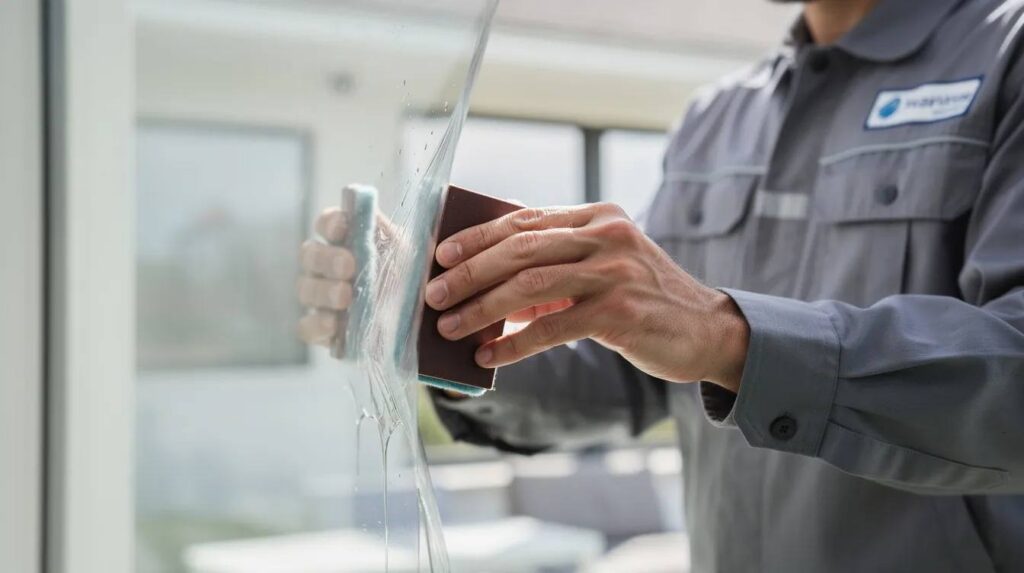
The retrofit process is straightforward. Installers clean the existing glazing, apply the film to the interior surface, anchor the edges to the window frame, and allow proper curing time. Most work can be completed over a weekend with minimal disruption to classes.
Safety film construction typically includes:
- Multi-ply polyester layers
- Scratch-resistant coating
- Pressure-sensitive or dry adhesive
- UV inhibitors for longevity
The critical component most people overlook is edge anchoring. Using structural caulk or mechanical caps (typically 3/4 to 1 inch thick), the filmed glass is secured to the existing glazing frame. Without proper anchoring, the entire panel can pop out of the frame on impact—defeating the purpose entirely.
Here’s what happens during an attack: bullets or blunt force crack and shatter the glass, but the filmed pane remains as a spiderwebbed barrier. Fragment retention prevents the dangerous spray of glass shards toward building occupants when a window is hit by a projectile. Forced-entry delay keeps shattered glass intact in the frame, potentially giving an intruder an extra 2-3 minutes to break through.
Common thickness ranges for schools:
- 8–14 mil: Basic anti-shatter protection
- 15–21 mil: Higher forced-entry resistance
- 30–40 mil: Multi-layer systems for demanding conditions
Properly installed films can also mitigate blast damage, vandalism, and windborne debris—relevant for districts in hurricane or tornado-prone regions dealing with natural disasters, especially when paired with glazing that meets published blast resistant performance standards.
Key Benefits of Bullet Resistant Window Film for Schools
The primary benefit is straightforward: slowing an intruder gives staff and law enforcement more time. The effectiveness of ballistic and security window films in protecting schools is recognized, as they can help slow down an intruder’s access, providing critical time for law enforcement to respond.
Core security benefits:
- Delayed forced entry provides an additional layer of protection (30–120 seconds can be lifesaving)
- Injury prevention from safety film can reduce glass fragmentation by up to 90% in incidents involving blasts, storms, or accidents
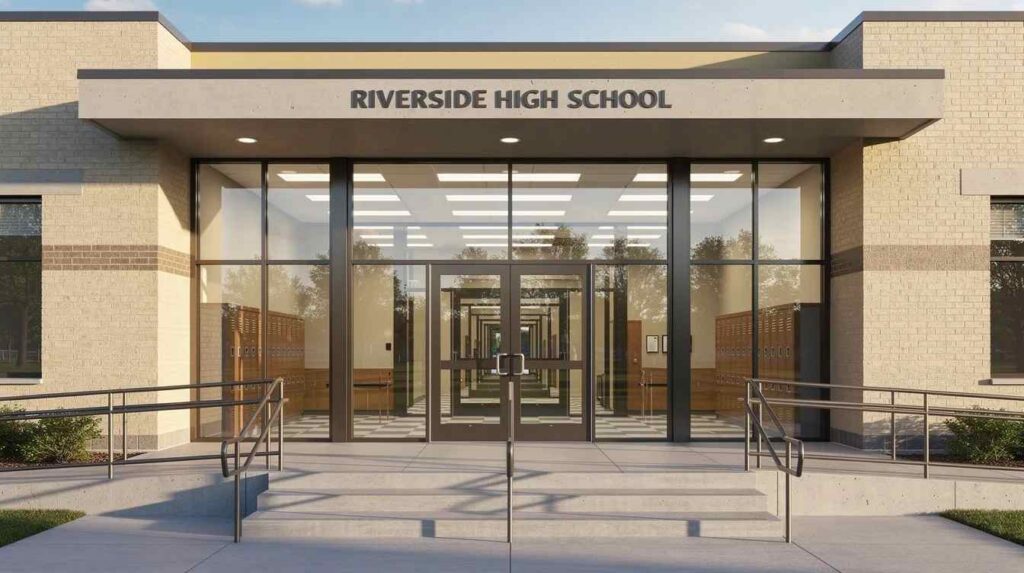
- Enhanced protection at entrances and sidelites where potential intruders typically attempt to gain entry
- Improved security for sensitive areas (IT rooms, offices, nurse’s station) against smash-and-grab theft and break ins
Secondary benefits:
- UV reduction protecting classroom furnishings and student health
- Optional tinted or reflective films enhance privacy in counseling offices
- Sun control films can improve energy efficiency and reduce glare
- High-quality safety films are transparent and do not alter the appearance of the building
Clear safety films are virtually invisible, helping maintain a welcoming environment while enhancing protection. Unlike bars or grates, film retrofits preserve the appearance important for elementary and community schools.
The practical advantage: schools can upgrade protection on existing windows without replacing entire window systems, reducing disruption when scheduled over breaks or weekends. Safety film installation is significantly cheaper than replacing windows with ballistically rated glass and can often be completed over a weekend with minimal disruption.
Limitations: What Bullet Proof Film Cannot Do
School administrators need realistic expectations to make informed, defensible decisions. Here’s what film cannot do:
Critical limitations:
- No window film can guarantee to stop bullets from repeated rifle fire (AR-15, AK-47) on standard classroom glass
- At best, film keeps a broken window intact and delays entry—it does not stop bullets
- While security window films can enhance safety by containing glass fragments and delaying entry, they are not bulletproof and do not stop bullets unless installed on ballistically rated glass
- Films installed on old, weak window frames or rotted sashes will not perform as intended
- Long, concentrated attacks with heavy tools (sledgehammers, pry bars) can eventually breach filmed glass
Film is one layer in a comprehensive physical security plan. It does not replace controlled access vestibules, visitor management policies, locked glass doors, or staff training in lockdown procedures, or more advanced school glass reinforcement solutions where ballistic resistance is required.
Red flags to avoid:
- Vendors promising “bulletproof” performance without specific test data
- Products lacking UL 752, EN 1063, or forced-entry standards like ASTM F1233 certification
- Installers who skip edge anchoring or use inadequate structural caulk
- Any product claiming bulletproof performance without being independently tested
Where to Install Bullet Resistant Film in a School
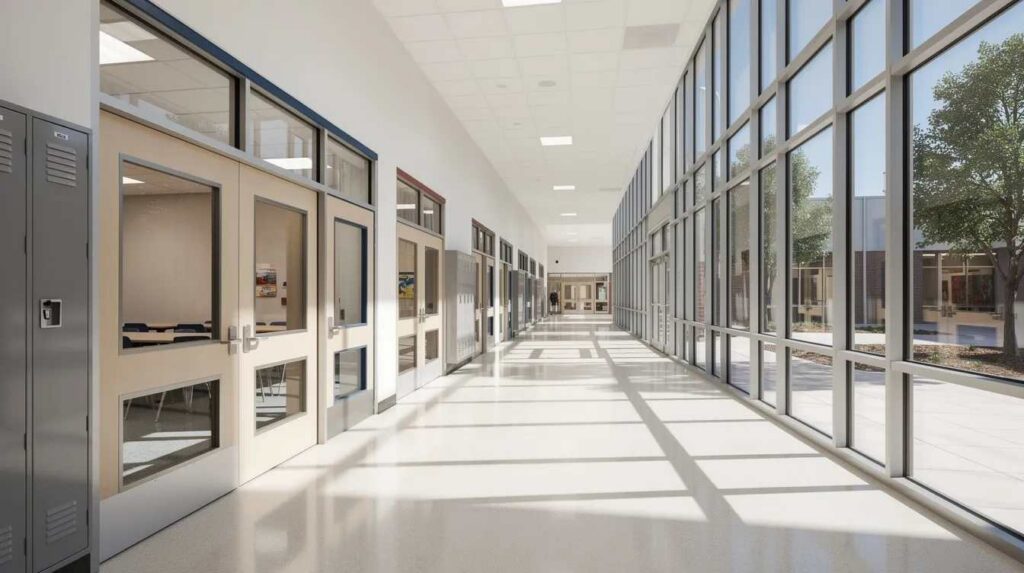
Don’t try to film every window on day one. Conducting a site assessment is crucial for identifying weaknesses in school security, such as unlocked doors and vulnerable glass, which can be exploited during an active shooter incident. Prioritizing high-risk glass helps stretch budgets and maximize protection.
Priority locations (Phase 1):
- Main entry doors and sidelites
- Vestibule glass between exterior and interior doors
- Ground-level classroom windows facing parking lots or public streets
- Administrative offices and reception areas
- Nurse and counseling offices with sensitive records
- Glass around gym or auditorium entrances used for community events
Secondary locations (Phase 2-3):
- Lower stairwell windows
- Cafeteria glass
- Media center windows
- Specialty labs with high-value equipment
Our team conducts on-site assessments and creates phased implementation plans aligned with bond cycles and budgets. We recommend including security film planning in larger renovation or HVAC upgrade projects to minimize disruption and leverage scaffolding or lifts already on site.
Cost, Budgeting, and Installation Timeline
Cost is a major factor for public, charter, and private educational facilities operating within tight budgets. Here’s what to expect.
Installed cost ranges (2024–2026):
| Film Type | Approximate Cost per Sq Ft |
|---|---|
| Basic security (8-14 mil) | $8–$12 |
| Enhanced forced-entry (15-21 mil) | $12–$16 |
| Premium multi-layer systems | $16–$20+ |
| Primary cost drivers: |
- Total square footage of glass
- Accessibility (1st floor vs. high atrium glass)
- Condition of existing frames
- Edge anchoring requirements
- Film type (clear vs. tinted vs. solar-security hybrid)
- After-hours or vacation scheduling
Typical project timeline:
- Assessment and proposal: 1–2 weeks
- Material ordering: Within days of approval
- Installation: Small campuses completed in several days; larger districts scheduled building-by-building over breaks
Funding options schools commonly use:
- State and federal security grants (grant funding availability varies by state)
- ESSER funds where still available
- Local bonds approved in recent election cycles
- Phased budgeting over 2–3 fiscal years
Our company provides detailed, itemized quotes and helps schools create multi-year security plans that board members can easily understand and approve. Film remains a cost effective solution compared to full ballistic glass replacement, especially when compared with engineered overglaze systems like DefenseLite that provide even greater forced-entry resistance.
Compliance, Testing Standards, and School Safety Guidelines
School leaders should base security needs decisions on standards and data, not marketing claims. Here are the relevant benchmarks.
Key standards to reference:
| Standard | Application |
|---|---|
| UL 752 (Levels 1–8) | Ballistic resistance ratings |
| ANSI Z97.1 | Safety glazing performance |
| CPSC 16 CFR 1201 | Consumer safety glazing |
| ASTM F1233 | Forced-entry resistance |
| ASTM F1642 | Glazing blast resistance |
| GSA/ISC criteria | Government building blast standards |
| Safety films are tested against standards like UL 752 for bullet resistance and ASTM F1233 for forced entry. However, most security films are not individually UL 752 rated. Instead, full glass + film assemblies must be tested together, with results documented in manufacturer reports. |
Schools should coordinate film projects with local fire marshals, building inspectors, and law enforcement to ensure compliance with egress and life-safety codes. Many state departments of education now publish school safety guidelines that specifically mention glass reinforcement and secure vestibules.
Our company uses products from manufacturers with published test data and provides documentation packets schools can keep on file for audits and board review.
How Bullet Resistant Film Fits into a Layered School Security Plan
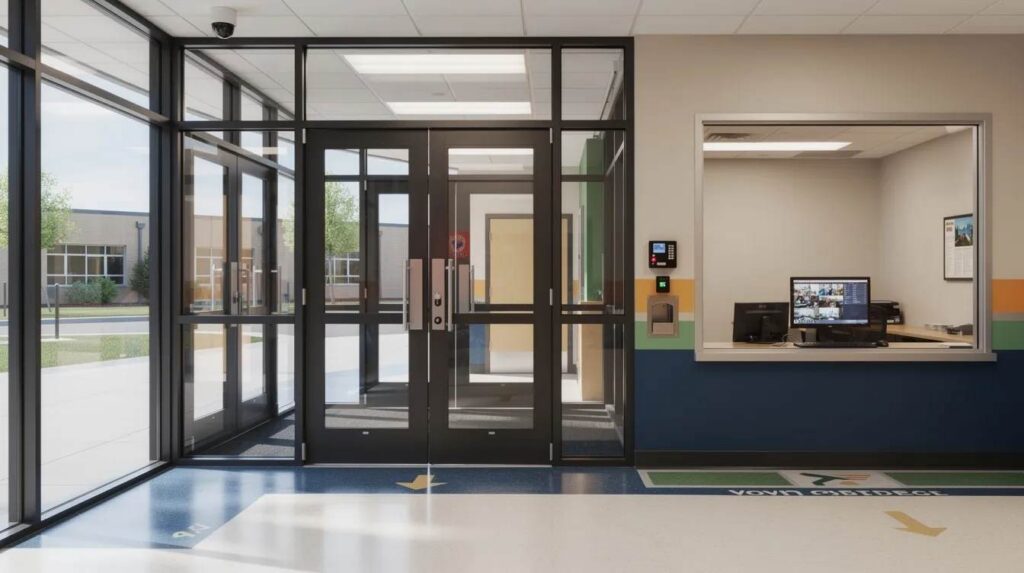
School safety experts and law enforcement promote a “layered security” or “concentric rings” approach. Security film is one ring—not a standalone solution.
How film complements other safety measures:
- Access control systems and electronic locks
- Door hardware upgrades
- Video surveillance
- Visitor management protocols
- Staff and student lockdown drills
Schools should implement a closed campus policy, ensuring that doors are locked during school hours and that visitors are screened before entering, to enhance security against potential active shooter threats.
Example scenario: An intruder reaches the front door. The filmed door glass or a retrofit bullet-resistant panel system does not give way immediately, buying critical time. Staff receive an alert and initiate lockdown procedures. Law enforcement gains response time that could prevent active shooter situations from escalating.
Pair film installations with updated lockdown training and communication plans so the extra delay is fully utilized. Our team coordinates with existing security integrators and other glass security solutions for windows and doors to ensure film is part of an integrated solution—not just a standalone purchase trying to improve safety in isolation.
FAQs: Bullet Proof Window Film for Schools
These questions come up most frequently from superintendents, facility directors, and school security committees.
Is there truly bulletproof window film for schools?
No. There is no such thing as 100% bullet proof glass or film. Security film creates a barrier that holds shattered glass together and delays entry. To achieve actual bullet resistance, film must be combined with ballistically rated glass or laminated glass systems. Film alone on standard school windows delays forced entry but does not stop bullets.
How long can security film delay an intruder?
Delayed forced entry is achieved by holding glass shards in place after an impact, delaying an intruder by 30 seconds to 2 minutes or more, allowing time for lockdowns and first responders. The exact delay depends on the system, tools used, and attacker persistence. Every second counts when building occupants need to reach safety.
Can we install security film on existing classroom windows and doors?
Yes, in most cases. Film installs directly onto existing glass surfaces. Exceptions include severely damaged frames, failing seals, or windows with code compliance issues. A professional assessment identifies any exceptions before work begins.
Will the film make classrooms darker or change how the building looks?
Clear security films preserve natural light—some products allow up to 89% of visible light through. They’re virtually invisible from a normal viewing distance. Optional tinted or reflective films are available for areas requiring privacy but will affect light transmission.
How do we know the film works?
Look for third-party test data (UL 752, ASTM F1233), manufacturer certifications, and documentation of the complete assembly being tested. Professional installation with proper anchoring is essential. Avoid vendors who cannot provide independently tested performance data.
How long does security film last?
Quality interior-applied films typically last 10–15+ years. Factors affecting durability include sun exposure, cleaning practices, and installation quality. Films installed on government buildings have functioned for decades with proper maintenance.
Can this help with tornadoes or severe storms?
Film is not a storm shelter, but it helps hold glass together and reduces injuries from flying shards during high winds or tornado events. This is an effective solution for schools in hurricane and tornado-prone regions seeking additional protection beyond active shooter scenarios, though some campuses may opt for stronger overglazing systems than security window film where higher impact resistance is needed.
Why Choose Our Company for School Security Window Film
We focus exclusively on school and campus security glazing—not generic residential tinting or sun control. Since 2018, we’ve completed security film projects on over 200 campuses, working with K–12 districts and higher education institutions across the region and leveraging proven bulletproof window and door security systems.
What sets us apart:
- Site-specific risk assessments that prioritize glass by threat level and student traffic patterns
- Phased implementation plans aligned with your budget cycles
- Tested, name-brand security films and anchoring systems with published impact and forced-entry data
- Factory-trained, background-checked installers
- Familiarity with local code officials and school safety officers
Value-added services we provide:
- After-hours and holiday installation to minimize disruption
- Coordination with other trades during renovations
- Staff briefings on how barriers behave during emergencies
- Complete documentation packages for board review and insurance purposes
We understand that school administrators need solutions that are both professionally installed and defensible to boards and community members.
Ready to take the next step? Schedule a no-obligation security glass assessment with our team. Contact us before summer 2026 to complete work before the next school year starts.
Conclusion: Making School Glass Safer, One Layer at a Time
Security window film is a practical, cost effective way to harden school windows and delay entry. But it’s not a magic, bullet proof solution. Understanding the difference between marketing claims and realistic performance helps school leaders make informed decisions they can defend to boards and communities.
Delaying an attacker by even 30–60 seconds can save lives when combined with proper training and law enforcement response. Film is a smart, immediately actionable step within a broader safety strategy—not a one-time fix.
Contact our team today for a customized assessment and written proposal for your specific campus or district. Your students deserve every layer of protection we can provide.