Table of Contents
- Understanding Commercial Security Door Systems
- Types of Commercial Security Door Systems
- Implementation and Selection Process
- Common Challenges and Solutions
- Conclusion and Next Steps
- Frequently Asked Questions
Introduction
Commercial security door systems provide comprehensive protection for business facilities through integrated door hardware, access control, and monitoring components. These engineered solutions offer benefits such as enhanced safety, security, and the protection needed for commercial properties by combining reinforced physical barriers with electronic security technology to protect employees, customers, and assets from unauthorized entry and other threats.
A reliable company provides comprehensive security solutions and ongoing support for commercial buildings, ensuring that all safety and operational needs are met with professionalism and expertise.
Direct answer: Commercial security door systems combine reinforced door construction with electronic access control, monitoring sensors, and alarm integration to create multi-layered protection for commercial properties. Security cameras and access control systems act as proactive measures to monitor activity and prevent unauthorized access, playing an active role in safety management. Heavy-duty materials like steel and reinforced frames delay or prevent forced entry, providing critical time for authorities to respond, while electronic systems manage access and create audit trails that record every entry attempt.
Key outcomes from this guide:
- Understanding core system components and how they work together
- Selecting appropriate door types based on security requirements and facility needs
- Planning implementation with proper compliance considerations
- Integrating door systems with existing security infrastructure
- Ensuring regulatory compliance for fire codes and ADA requirements
Understanding Commercial Security Door Systems
Commercial security door systems are integrated solutions combining physical barriers with electronic security components. Interior security doors are specifically designed to control access to sensitive spaces within a site, ensuring only authorized personnel can enter restricted areas. The structure of each door should match the level of protection required for the specific space, supporting both security and operational needs. These commercial security door systems are tailored to the unique structure and site requirements of each commercial property, providing optimal protection for different types of sites and spaces.
Commercial access control systems are designed to manage access by identifying, validating, authorizing, and recording each individual entering a building or a specific restricted area. These systems require users to present access credentials at a security door reader to identify them from a database of authorized users, granting or denying access accordingly.
Core System Components
The foundation of any commercial security door system begins with physical door construction. This includes reinforced frames engineered to withstand significant force, heavy-duty hinges rated for constant use, and impact-resistant materials selected to protect against break-in attempts. Hollow metal doors are commonly used in commercial security applications due to their heavy-duty construction, which includes a metal outer surface and a hollow core designed to absorb impact. Wood security doors are also valued for their durable, layered construction, providing resilience against environmental conditions and long-lasting protection.
Electronic locking mechanisms form the second layer of protection. Options include:
- Magnetic locks (maglocks): Use powerful magnets that hold a door closed with significant force, commonly used with automated doors
- Electric strike locks: Allow a door to be unlocked remotely via an intercom or keypad
- Grade 1 commercial locks: The strongest manual locks available, designed for high durability and usage
Access control readers complete the electronic security layer. Biometric access uses fingerprints, facial recognition, or iris scans for secure access, eliminating the risk of lost or stolen credentials. Mobile access control allows employees to unlock doors via smartphone apps using Bluetooth or Wi-Fi, offering convenience and security. Keyless entry systems use RFID cards, fobs, or keypads, allowing businesses to easily issue or revoke access and track entry. These systems ensure that only individuals with the necessary permission can gain entry, enhancing physical security.
These components work together to create a defense system where each element reinforces the others, making your facility significantly more difficult for intruders to compromise. Security doors and access control systems also help protect against unauthorized use of tools or devices intended to breach or sabotage your facility.
Integration Capabilities
Modern commercial security doors integrate seamlessly with building management systems and central security platforms. Video intercom systems allow staff to visually confirm visitors before unlocking the door remotely, adding a visual verification layer to access control. These systems monitor activity throughout the site and act as vigilant eyes, detecting and responding to threats in real time.
Integrating access control systems with commercial security doors enhances situational awareness and strengthens the overall security posture of a building. To achieve a comprehensive security posture, it is essential to combine commercial security doors with systems such as video cameras, alarms, and access control systems, which act to prevent unauthorized access, monitor activity, and improve situational awareness and response capabilities as part of a broader forced entry protection strategy. The benefits of integrated security systems include improved incident response, better management of movement within the premises, and enhanced protection for commercial properties.
Remote management allows owners to lock or unlock doors from anywhere, which is crucial for emergency situations. A single integrated security system allows for a holistic view of all activity within a building, which is crucial for effective incident management and response. Electronic systems can create audit trails that record every entry attempt, aiding security investigations.
Different door types and applications require specific system configurations, which is why understanding the variety of available systems is essential for proper selection.
Types of Commercial Security Door Systems
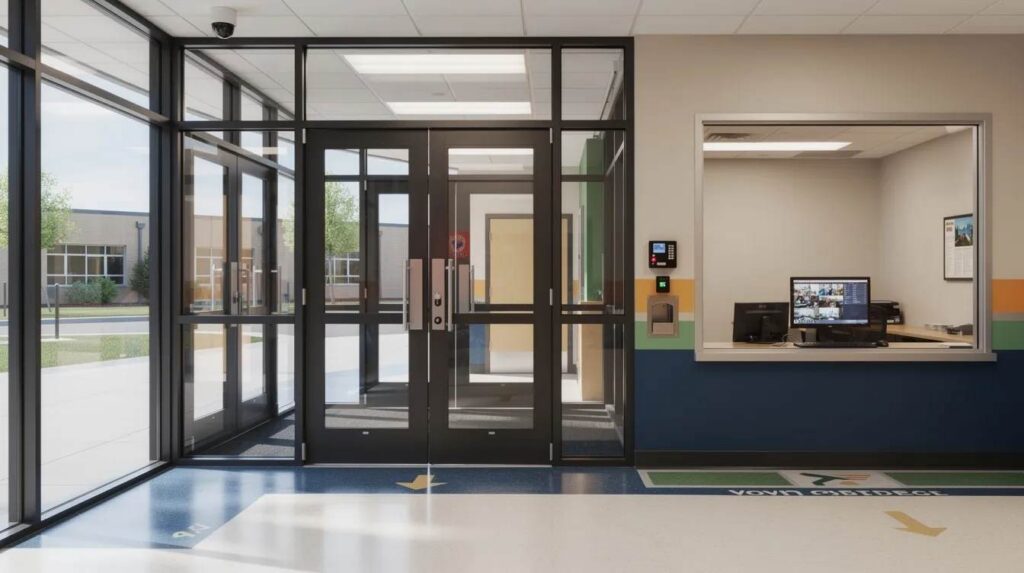
Commercial security doors are available in various materials including wood, metal, and reinforced glass, each offering unique benefits for security, durability, and suitability for different spaces, and retrofit systems like AccessShield door security can upgrade existing glass doors for more robust protection. Choosing the right door system depends on the protection needed for each space and site within a commercial property, taking into account the specific security requirements and intended use. Metal security doors provide robust protection and are ideal for high-risk sites, wood security doors offer a balance of aesthetics and security for office spaces, and reinforced glass doors allow visibility while maintaining safety. Heavy-duty security doors include specialized types such as fire-resistant doors, bullet-proof doors, and doors designed to shield against radiation, catering to specific security requirements in various environments.
Steel and Metal Security Door Systems
Metal security doors offer significant benefits for commercial security doors systems, including enhanced safety, security, and protection for a wide range of sites and structures. Their durable construction ensures long-lasting performance and makes them ideal for securing both exterior and high-security interior areas. Steel doors deliver maximum physical protection and forced entry resistance, making them the preferred choice for perimeter security, data center physical security, and vulnerable areas requiring the highest level of defense.
Metal security doors can help reduce maintenance costs and increase energy efficiency in commercial buildings, contributing to the overall value of the property. Their ability to withstand extreme weather makes them ideal for exterior applications where environmental resilience is crucial.
Key applications for steel and metal doors:
- Exterior entrances and perimeter access points
- Loading docks and warehouse entries
- Server rooms and secure storage areas
- Control access to high-security spaces within a site
- High-traffic commercial buildings
Forced entry resistance certifications, such as ASTM F1233, measure how long a door can withstand manual attacks, providing a quantifiable standard for security performance, and retrofit solutions like forced entry resistant doors with Access Shield can help existing openings meet higher protection levels. Steel doors with proper frames and hardware can achieve fire ratings from 20 to 180 minutes.
Wood Security Door Systems
Commercial wood doors are primarily used for interiors where appearance is important and offer moderate impact resistance and natural soundproofing due to their durable, multi-layer structure. The benefits of wood security doors include their ability to withstand daily use, provide long-lasting protection, and be tailored to the specific requirements of each interior space. These doors balance security requirements with aesthetic considerations, making them suitable for office buildings, executive suites, and customer-facing areas.
Wood security door systems integrate effectively with smart locks and access control systems while maintaining a professional appearance that complements existing architecture. Their natural sound dampening properties make them valuable for conference rooms and private offices where acoustic privacy matters.
Best applications for wood security doors:
- Interior office partitions and private offices, chosen based on the structure and function of each space
- Conference rooms requiring sound isolation
- Reception areas balancing security with welcoming aesthetics
- Environments where design coherence is a priority
While wood doors offer substantial protection for interior applications, they require more maintenance than metal alternatives and are less suitable for exterior use or extreme weather exposure.
Smart Glass and Advanced Door Systems
Automatic and glass doors are used for primary storefronts to balance accessibility with security and can be reinforced with strong frames and secure glazing to resist break-ins. These systems combine transparency and modern aesthetics with sophisticated security technology. Smart glass systems offer the benefit of balancing robust security with visual appeal, making them ideal for high-visibility spaces where both protection and design matter, especially when paired with bulletproof windows and doors in higher-risk environments.
Smart glass security doors offer:
- Bullet-resistant and impact-resistant glazing for ballistic protection
- Electronic privacy controls that switch between transparent and opaque states
- Biometric integration and advanced access control capabilities
- Fire-rated options meeting code requirements
- Tailored solutions to match the protection needs of each site and space, ensuring optimal safety for every area
Specialty high-security doors include fire-rated doors, ballistic-resistant doors, and hurricane doors, designed to resist fire, gunfire, and extreme winds, respectively. Ballistic resistance is rated by UL 752 standards, measuring doors’ effectiveness against various threats.
Comparison of Commercial Security Door Types:
| Criterion | Steel/Metal Systems | Wood Systems | Smart Glass Systems |
|---|---|---|---|
| Security Level | Highest forced entry resistance | Moderate protection | High with reinforced glazing |
| Cost Range | $1,500–$8,000+ | $800–$3,000 | $3,000–$15,000+ |
| Installation Complexity | High (heavy frames required) | Moderate | High (specialized hardware) |
| Maintenance Requirements | Low (periodic inspection) | Moderate (finish upkeep) | Low to Moderate |
| Best Application | Exterior, high-risk areas | Interior, aesthetic-focused | Executive, storefronts |
| Lifespan | 30–100 years | 20–60 years | 25–50 years |
| Industrial roller shutters and sectional doors provide heavy-duty protection for warehouses and loading docks, acting as a physical shield against vandalism and theft. These overhead security doors are essential for facilities with large access points requiring secure closure during non-operational hours, while storefront security solutions for glass doors and windows address similar smash-and-grab risks in retail environments. |
Implementation and Selection Process
Selecting the right commercial security doors requires systematic planning that accounts for threat profiles, facility characteristics, compliance requirements, and integration needs. Working with a professional security company ensures the right protection needed for each site and space, as they can help assess the unique requirements of every area during the selection process. A comprehensive approach ensures your investment delivers maximum protection and long-term value.
Security Assessment and Planning Steps
Before selecting any security door system, conduct a thorough evaluation of your facility’s unique requirements:
- Conduct facility vulnerability assessment: Identify all entry points and evaluate current protection levels. Assess the structure of each space and site to determine the protection needed, considering how the design and integrity of each area impact security. Map vulnerable areas where unauthorized entry poses the greatest risk to people, assets, or operations.
- Analyze threat profiles: Consider the specific risks relevant to your commercial property—forced entry, vandalism, environmental threats, or insider access concerns. Recognize that different spaces and sites may require different levels of protection, and that the protection needed can vary based on the function and utilization of each area. Different threats require different protective measures.
- Evaluate existing infrastructure: Assess current doors, frames, electrical capacity, and network connectivity. Determine whether retrofitting existing openings is feasible or if complete replacement offers better value.
- Determine compliance requirements: Doors must comply with ADA regulations, requiring accessible hardware and specific mounting heights. Fire ratings for commercial doors typically range from 20 to 180 minutes to prevent the spread of smoke and flames. Panic bars must be installed on doors in path-of-travel areas to permit immediate exit with a single push.
- Establish budget and ROI expectations: Factor in installation costs, ongoing maintenance, energy costs savings, and the value of prevented losses. Steel doors often deliver superior ROI through lower maintenance and longer lifespan despite higher initial investment.
System Comparison and Selection
Exterior commercial security doors are typically designed to withstand extreme weather conditions and provide additional protection against environmental elements, while interior security doors focus on access control and are generally lighter. Matching your commercial security doors systems to the specific needs of each site and space maximizes safety, security, and operational efficiency by ensuring the right solution is used for each area.
Selection criteria by application:
| Application | Recommended System | Key Considerations |
|---|---|---|
| Main entrance | Steel with biometric access | Forced entry resistance, visitor management |
| Executive offices | Wood or smart glass | Aesthetics, sound dampening, advanced access control |
| Loading docks | Industrial roller shutters | Heavy-duty protection, frequent operation |
| Server rooms | Fire-rated steel | Environmental controls, restricted access |
| Storefronts | Reinforced glass | Visibility, customer access, after-hours security |
| Emergency exits | Fire-rated with panic hardware | Code compliance, immediate egress |
| Interior restricted spaces | Interior security doors | Control access to sensitive or restricted areas |
| Environmental resilience is crucial in storm-prone regions, necessitating the use of impact-rated hurricane doors and hurricane-resistant window systems. Consider climate factors when selecting exterior security doors to ensure durability under local conditions. |
Deterrence measures such as visible security systems signal to potential intruders that a facility is a difficult target. The visual presence of robust commercial security doors combined with security cameras and access control readers creates a powerful deterrent effect.
Common Challenges and Solutions
Implementing commercial security door systems presents predictable challenges that proper planning can address effectively. Proactively addressing these challenges delivers significant benefits, such as enhanced safety, security, and protection for commercial properties. Integrated systems act to prevent threats by controlling access and responding automatically to suspicious activity. Monitoring activity is also essential for ongoing security management, ensuring that movement within the premises is tracked and incidents can be responded to swiftly. Understanding these obstacles in advance helps ensure smooth deployment and optimal system performance.
Integration with Legacy Systems
Many commercial buildings have existing security infrastructure that wasn’t designed for modern electronic access control. Older doors may lack reinforced frames capable of supporting electromagnetic locks, and legacy access control systems may use outdated protocols.
Solution: Adopt a phased implementation approach. Begin by assessing which existing doors can accept retrofitted electronic hardware and which require complete replacement. Electric strike locks often integrate with existing door frames more readily than maglocks. Choose access control systems supporting multiple protocols to bridge legacy and modern components. Upgrading to modern access control systems provides significant benefits, including improved ability to control access to sensitive areas and monitor activity throughout the premises. Prioritize high-risk entry points for immediate upgrades while scheduling lower-priority areas for subsequent phases.
Compliance and Code Requirements
Fire codes, ADA requirements, and local building regulations create a complex compliance landscape. Installing the wrong hardware or modifying fire-rated doors improperly can void certifications and create liability.
Solution: Work exclusively with a certified company and installers experienced in commercial security applications to ensure safety and full compliance with all regulations. Fire ratings for commercial doors typically range from 20 to 180 minutes—ensure selected doors meet required ratings for their locations. Doors must comply with ADA regulations, requiring accessible hardware and specific mounting heights. Verify that all panic bars, closers, and electronic components are part of tested and labeled assemblies. Document compliance for inspection purposes.
User Adoption and Training
Even the most sophisticated security system fails if occupants circumvent controls or misuse hardware. Employees may prop open secured doors, share credentials, or bypass biometric readers.
Solution: Select user-friendly technology that minimizes friction. Mobile access control offers convenience that encourages compliance. Establish clear policies for credential management, visitor access, and prohibited behaviors. Conduct training sessions demonstrating proper use, highlighting the benefits of comprehensive training in reducing errors and misuse, and explaining how security systems act to prevent unauthorized access and misuse. Use audit trails to identify and address misuse patterns promptly.
Integrating various security measures with commercial security doors enhances the overall protection of property and individuals by creating multiple layers of defense against intruders and other risks, especially when combined with advanced safety and security glass for windows and glazed doors. When your team understands this comprehensive approach, adoption improves significantly.
Conclusion and Next Steps
Commercial security door systems deliver significant benefits by enhancing safety and providing the protection needed for various sites and spaces within commercial properties. These systems combine reinforced door construction, electronic access control, monitoring sensors, and alarm integration to create a multi-layered defense that safeguards employees, customers, and assets while ensuring compliance with safety standards and regulatory requirements. Matching the right security solution to each space and site is essential for optimal protection.
Immediate actionable steps:
- Conduct a security assessment of your facility, identifying all entry points and their current protection levels
- Consult with a professional company specializing in commercial security door systems to ensure ongoing safety, compliance, and maintenance across your site
- Evaluate system options based on your threat profile, budget, and integration needs
- Plan phased implementation starting with the highest-priority access points
- Establish maintenance schedules and training programs before system activation
Related topics to explore: Ongoing maintenance programs ensure long-term system reliability and preserve fire ratings. System upgrades incorporating emerging technologies like advanced biometrics and AI-powered monitoring enhance protection over time. Comprehensive staff training transforms security infrastructure into an effective daily practice.
For businesses seeking a wide selection of commercial security doors with expert guidance on system selection and integration, working with an experienced company ensures your investment delivers maximum safety, protection, and long-term value for every site and space.
Frequently Asked Questions
What is the average lifespan of commercial security door systems?
Steel and metal security doors typically last 30 to 100 years, depending on the environment, usage, and maintenance, thanks to their durable construction. Wood doors, also known for their durable layered build, have an expected lifespan of 20 to 60 years with proper care. Electronic components such as access control readers, locks, and sensors generally require replacement or upgrade every 10 to 15 years as technology advances.
How do commercial security door systems integrate with existing building management systems?
Modern commercial access control systems connect through standard protocols including Wiegand, OSDP, TCP/IP, and cloud-based platforms. Integration typically requires network connectivity, a power supply for electronic components, and compatible software. Integrated systems monitor activity throughout the building and can act to prevent threats by triggering alarms or restricting access, providing a holistic view of all activity for effective incident management and response.
What are the key differences between steel and wood security door systems?
Metal security doors provide greater durability and are suitable for both exterior and high-security interior applications in commercial settings. They offer superior forced entry resistance, enhanced safety features, and weather durability with lower maintenance requirements. The benefits of metal doors include long-lasting protection and compliance with safety standards. Commercial wood doors are primarily used for interiors where appearance is important and offer moderate impact resistance, natural soundproofing, and durable, reinforced construction for added safety.
How much do commercial security door systems typically cost to install?
Costs vary significantly based on door type, security level, and electronic components. Basic commercial steel doors range from $1,500 to $4,000 installed, while high-security or bulletproof doors can exceed $8,000. Electronic components add to costs: magnetic locks typically run $150 to $400, electric strikes $100 to $300, and biometric readers $500 to $2,000. Complete system integration, including wiring, controllers, and software increases total investment.
What maintenance is required for commercial security door systems?
Regular maintenance includes inspecting hinges, closers, and frames for wear; testing electronic locks and readers; verifying sensor operation; checking weather seals; and confirming fire-rated doors maintain their certifications. Electronic systems can create audit trails that record every entry attempt, aiding security investigations and identifying maintenance needs. Working with a professional company ensures maintenance is thorough and that all safety and security standards are met, maximizing the benefits of your investment.
Do commercial security door systems require special electrical connections?
Yes, electrified hardware requires low-voltage power supplies, typically 12V or 24V DC. Installations may need power transfer hinges, dedicated circuits for access control panels, and battery backup systems for fail-safe operation during power outages. Remote management capabilities require network connectivity via wired Ethernet or secure wireless connections.
How do fire codes affect commercial security door system selection?
Fire ratings for commercial doors typically range from 20 to 180 minutes to prevent the spread of smoke and flames. Fire-rated doors must maintain their certifications through proper installation and avoiding unauthorized modifications. Panic bars must be installed on doors in path-of-travel areas to permit immediate exit with a single push. All hardware on fire doors must be part of tested and labeled assemblies.
Can commercial security door systems be retrofitted into existing buildings?
Often yes, though feasibility depends on existing frame construction, wall reinforcement, and electrical infrastructure. Electric strike locks frequently retrofit into existing door frames more readily than magnetic locks. However, retrofitting must preserve fire ratings and ensure frame strength supports new hardware. Professional assessment determines whether retrofit or replacement delivers better value for each opening.
How do commercial security door systems control access?
Commercial security door systems are designed to control access by requiring permission for entry, using credentials such as keycards, PIN codes, or biometrics. These systems restrict or manage entry to sensitive or restricted areas within a building, ensuring only authorized personnel can enter.
How do commercial security door systems monitor activity and act as a deterrent?
Integrated security systems monitor activity using cameras, sensors, and alarms to track movement and enhance situational awareness. These systems act as vigilant eyes, can automatically respond to threats, and act as a deterrent to unauthorized access, improving overall safety and protection for your property.