If your commercial building still relies on doors installed decades ago, those openings may be your biggest security gap. Here is how strategic commercial door retrofits can turn aging door systems into modern, code-compliant entry points-without the cost and disruption of full replacement.
Table of Contents
- Understanding Commercial Door Security Retrofits
- Key Components of a Commercial Door Security Retrofit
- Common Retrofit Upgrades for Different Facility Types
- Energy Efficiency, Safety, and Code Compliance in Door Retrofits
- When to Retrofit vs. Opt for Full Replacement
- Planning a Successful Commercial Door Security Retrofit Project
- FAQ: Commercial Door Security Retrofit
- Why Choose Our Team for Commercial Door Retrofits
- Next Steps: Schedule Your Commercial Door Assessment
Understanding Commercial Door Security Retrofits
Many commercial doors in buildings constructed between 1980 and 2010 still function-they open and close-but no longer meet modern standards for door security, access control, or energy efficiency. Commercial hollow metal doors with mechanical locks were standard then, but today’s threats, codes, and operational demands have changed significantly.
A commercial door security retrofit means upgrading commercial door hardware, frames, access control systems, glazing, and seals on existing commercial doors rather than demolishing the full opening. Retrofitting avoids extensive demolition and installation costs while enhancing door performance without full replacement. Most retrofits can be completed in hours to a single day per opening, meaning minimal disruption for occupied facilities.
Consider a 1998 office building with hollow metal doors and outdated locks. In 2026, that building can receive electronic access control, reinforced frames, and modern closers, bringing every opening up to current standards. This is why property owners and facility managers favor retrofits: lower cost, phased scheduling by floor or wing, and immediate security gains. A professional assessment is essential first-site assessments identify vulnerabilities in existing doors and hardware and confirm the frame and wall are structurally sound enough for upgrade.
Key Components of a Commercial Door Security Retrofit
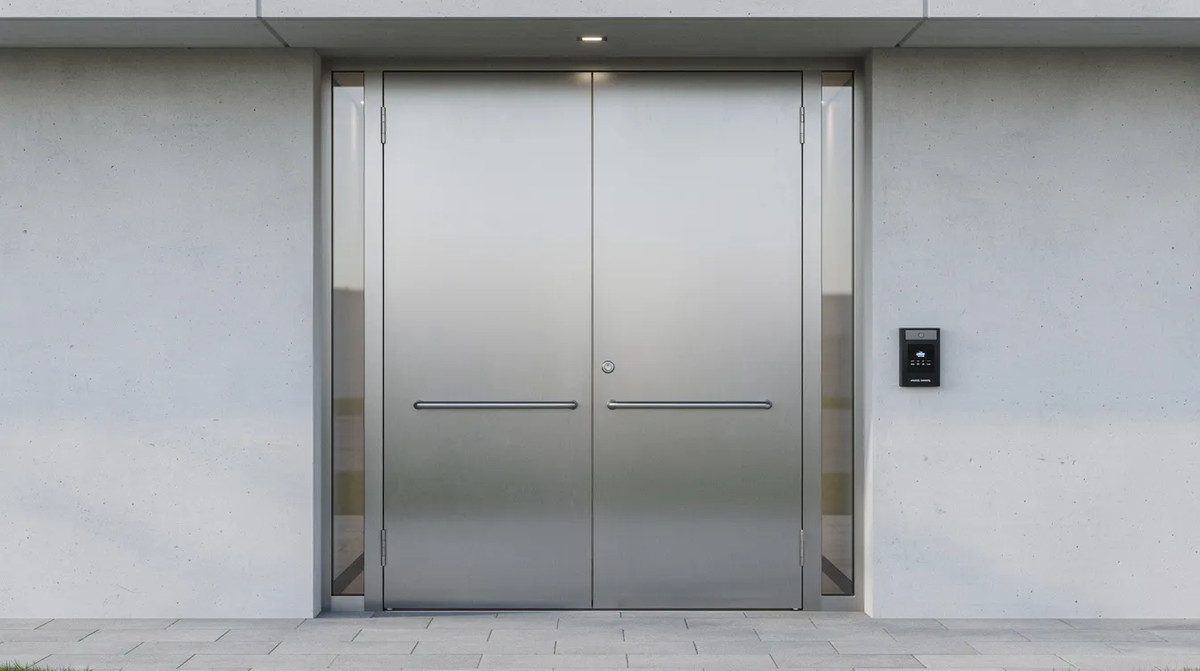
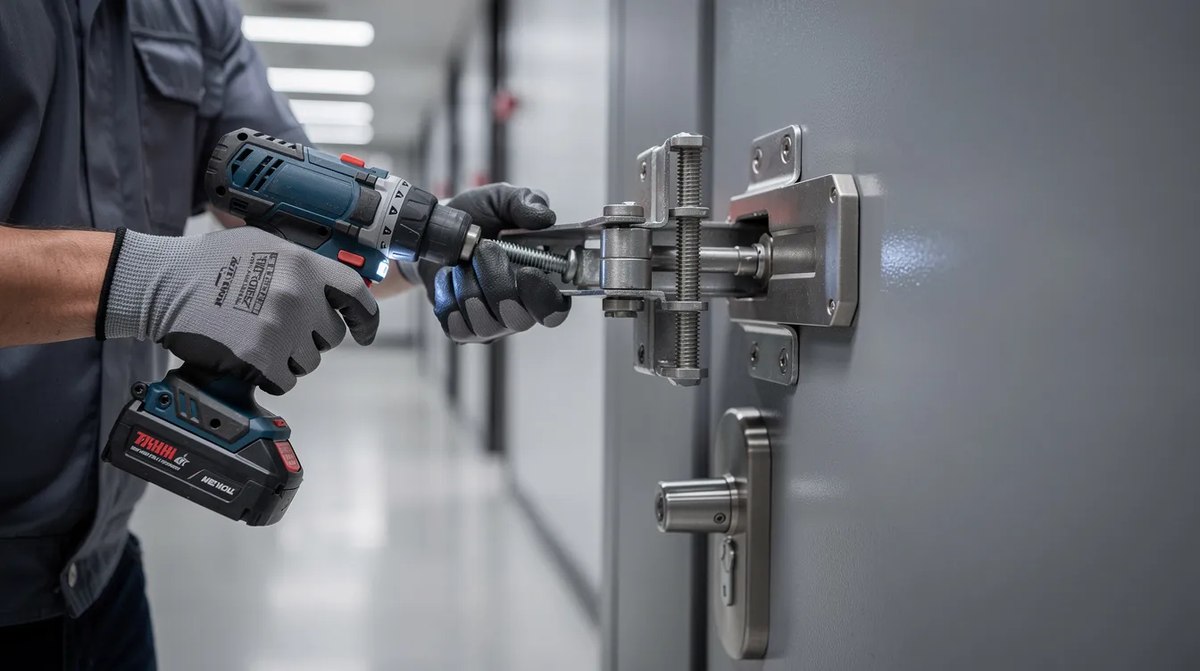
Most security and performance gains come from upgrading components-not replacing the entire door opening. Retrofitting can include adding physical and electronic reinforcements to entryways through a multi-layered defense strategy. During a retrofit, specialists evaluate the door leaf, frame, hinges, closers, locks, strike plates, thresholds, weatherstripping, and glazing.
Physical reinforcements:
- Reinforced strike plates reduce the threat of kick-ins
- Heavy-duty metal plates can block prying tools and crowbars
- Security hinges can be replaced with tamper-resistant versions to secure doors-tamper-resistant security hinges prevent door removal by intruders
- High-security cylinders and multipoint locks prevent manual prying and support forced entry resistant door retrofits
Electronic upgrades:
- Electronic access control enhances door security and monitoring, replacing traditional key systems that are vulnerable to duplication and theft
- Electromagnetic locks use a strong magnetic field to secure doors-the Securitron DEM680E, for example, has a holding force of 1,200 pounds
- Electric strikes allow doors to remain locked until an electrical signal is received
- Keypad locks, card readers, and mobile credentials integrate with controlled access systems
Retrofitting can integrate new technologies into existing door systems, and businesses must implement a multi-layered defense strategy for facility protection. Modern features meet today’s rigorous security standards when combined with lever hardware, compliant hardware, and properly calibrated automatic operators.
Common Retrofit Upgrades for Different Facility Types
Common retrofit upgrades vary by sector because risks, codes, and traffic patterns differ across healthcare facilities, educational facilities, commercial properties, and industrial doors, and some projects also incorporate advanced ballistic protection retrofits for workplaces. Below are specialized retrofit applications for each environment-all focused on targeted upgrades that avoid unnecessary replacement.
Healthcare and Medical Facilities
Hospitals and medical facilities searches for security solutions often center on controlled entry points to pharmacies, behavioral health units, and staff corridors. Outdated hospital doors can be retrofitted with electrified hardware, card readers, delayed egress devices, and antimicrobial commercial doors reflect infection-control priorities. Antimicrobial commercial doors paired with automatic operators allow hands-free access in ICU and isolation rooms.
Panic bars enable immediate egress during emergencies without physical agility, which is critical in healthcare providers’ environments. Industry healthcare projects require phased scheduling-night and weekend work by wing-to keep operations running. All upgrades must align with NFPA 101 Life Safety Code requirements and local healthcare facility guidelines.
Schools and Educational Facilities
Since roughly 2018, schools modernize entrances with heightened focus on lockdown capability. Many K–12 buildings still rely on aging door systems with non-reinforced classroom doors. Durable school doors benefit from intruder-resistant locks, reinforced frames, ballistic and forced entry security glazing for vision panels, and access control at main entrances.
Funding realities for educational facilities often depend on public funding cycles and bond measures, making phased commercial door retrofits more practical than full replacement. A smarter retrofit strategy works well here: one district completed a hardware upgrade across 40 buildings over three consecutive summers, balancing fast egress for evacuation with secure lockdown capability without interrupting the school year.
Offices, Retail, and General Commercial Buildings
Multi-tenant offices, commercial storefronts, and mixed-use commercial properties need front-of-house aesthetics alongside back-of-house security, especially in communities facing organized retail crime and smash-and-grab risks. Commercial property door solutions typically include electronic access control for staff entrances, suite doors with audit trails, and storefront lock upgrades. Seven oaks commercial doors and similar high-traffic entries benefit from insulated glass, automatic closers that fully latch, and threshold upgrades to cut heating and cooling losses.
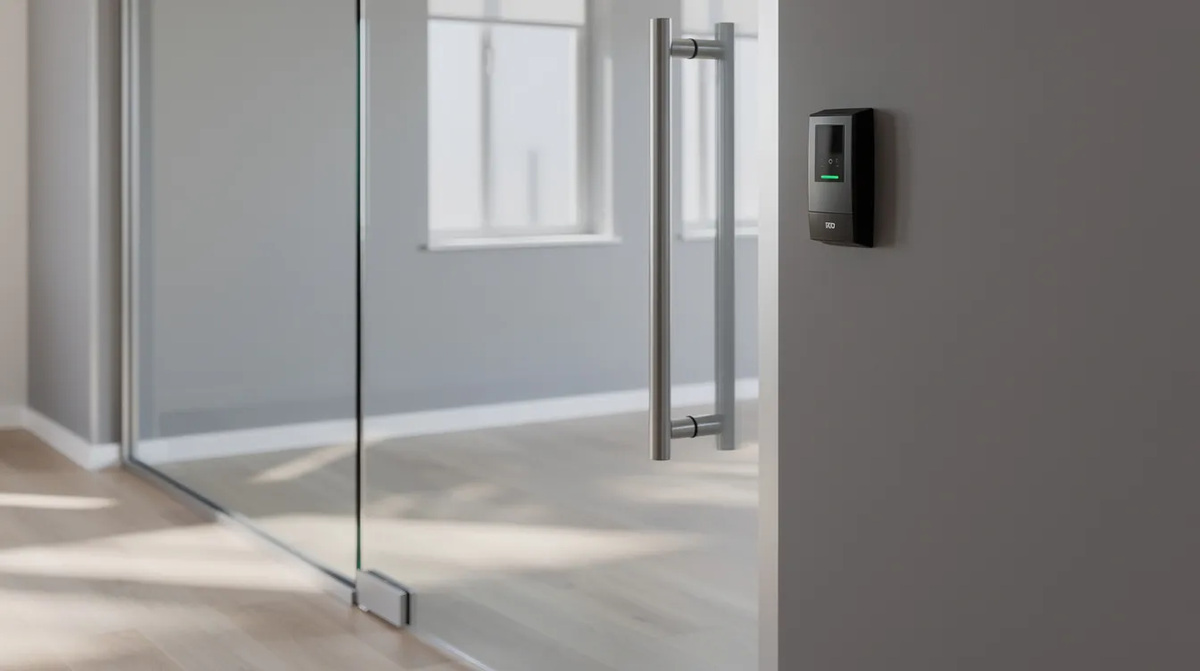
Owners of commercial properties operating on fixed budgets often coordinate retrofits with lease renewals. In 2025–2026, mobile-credential access and cloud-based management are trending in multi-tenant environments, making it easier to upgrade commercial doors incrementally. Oaks commercial doors and lobby entries gain the most from these updates.
Industrial, Warehouse, and Back-of-House Doors
Warehouses and manufacturing plants present unique demands: forklift traffic, large overhead openings, and critical personnel doors for emergency egress. Industrial doors and air doors near loading docks often need heavy-duty frames, tamper-resistant hardware, and access control readers tied to time-and-attendance systems, while facilities with exterior sliders should consider dedicated sliding glass door security enhancements. Panic devices and illuminated exit hardware address code gaps surrounding older buildings.
Door status monitoring integrated into building management systems gives operations teams better situational awareness. Even upgrading from light-gauge to heavier durable doors without altering the surrounding wall delivers measurable improvements when the frame remains sound.
Energy Efficiency, Safety, and Code Compliance in Door Retrofits
Modern commercial door retrofits rarely focus on security alone. Retrofitting can dramatically improve energy efficiency in commercial doors-energy-efficient air infiltration sealing reduces air leakage significantly, insulated curtains can reduce thermal transfer in commercial doors, and upgrading to secure, energy-efficient commercial security windows and glass doors lowers utility costs year-round. Proper door alignment can enhance energy efficiency in commercial doors as well.
Retrofitting helps meet current accessibility and safety standards. Doors must meet ADA compliance standards for accessibility, and it is important to ensure compliance with ADA and safety mandates during retrofitting. Fire doors must comply with NFPA 80 standards. Local building codes dictate specific door compliance requirements, so confirm which editions your authority having jurisdiction enforces.
A compliance-focused door assessment should review: fire ratings, labeling, closer operation, latch engagement, clear opening width, handle height, and door’s capabilities for egress. Bringing doors into code compliance through retrofits reduces liability and supports insurance requirements. Commercial doors Summerville SC or any jurisdiction-local codes always govern.
When to Retrofit vs. Opt for Full Replacement
Not every door qualifies for a retrofit. A professional evaluation determines whether a retrofit strategy or full replacement delivers better value.
Retrofit is appropriate when: the door and frame are structurally sound, corrosion is minimal, and deficits center on hardware, security, or accessibility. Retrofitting can improve door security without full replacement in these cases.
Full replacement is better when: frames are warped or badly rusted, cores are delaminated, doors fail to latch repeatedly, or fire protection ratings are required where none exist. FRP doors, bullet-resistant door assemblies, or new commercial door installation may be necessary.
A hybrid approach-retrofitting 60% of doors and replacing 40% in poor condition-often proves most cost-effective. Commercial facility door upgrades should always start with a professional on-site survey. Retrofit door installation handles the viable openings while replacement addresses the rest.
Planning a Successful Commercial Door Security Retrofit Project
For facility managers planning a project in the next 6–12 months, here is a practical roadmap:
- Walk-through and inventory existing commercial doors, noting hardware sets, fire ratings, and condition
- Risk assessment to prioritize high-traffic and high-risk openings first
- Budget and schedule around operational needs-perform commercial door hardware upgrades during off-hours where possible
- Stakeholder coordination with security, IT, safety officers, and operations leadership
- Order early-electrified hardware and security glazing carry longer lead times in 2025–2026
- Post-install training so staff understand new access control, lockdown procedures, and daily door checks
Hardware unlike general contractors, a commercial door specialist documents every opening with photos, door numbers, and code requirements before installation begins.
FAQ: Commercial Door Security Retrofit
How long does a typical retrofit take per opening?
Most openings take a few hours to a single day depending on complexity. Electrified hardware or access control integration may add time, but rarely requires more than one business day.
Can I retrofit only the hardware and keep my existing door?
Yes. If the door leaf and frame are structurally sound, you can upgrade locks, hinges, closers, and access control while keeping the existing assembly. This is the core idea behind business door security retrofits.
Will my business need to close during the retrofit?
No. Work is phased to maintain safe egress. Enhanced security comes without shutting down operations-this matters for church door security, healthcare, and educational environments alike.
How do retrofits affect fire door labels?
Any modifications must comply with NFPA 80 listings. Only listed hardware and approved field modifications preserve fire ratings. Annual inspections remain required afterward.
Is retrofitting cheaper than full replacement?
Generally yes. Interior hardware upgrades can run significantly less per opening than full door-and-frame replacement, especially when factoring in wall repair, finishing, and downtime. Retrofitting can improve energy efficiency and reduce utility costs simultaneously.
Can retrofits integrate with existing security systems?
Absolutely. Controlled access systems, video, and visitor management platforms can unify with new readers and electrified locks. Automatic doors Virginia installations and multi-site rollouts both benefit from cloud-based management.
What energy benefits come from a door retrofit?
Upgrading seals, thresholds, and glazing reduces air leakage and thermal transfer, delivering measurable improvements in heating and cooling costs for commercial facilities.
Why Choose Our Team for Commercial Door Retrofits
We specialize in commercial doors, security hardware solutions, and access control-not general construction. Our team brings local expertise and direct experience with Division 8 scopes across offices, healthcare facilities, and educational facilities, with projects completed from 2023 through 2026.
Every project starts with a detailed on-site survey, clear documentation, and code-conscious recommendations. We coordinate with electricians, low-voltage contractors, and other trades so you don’t have to manage multiple vendors. Whether you need a single-door upgrade or a multi-building program, we handle planning, product selection, and ongoing maintenance.
We believe in responsive communication, realistic scheduling, and transparent pricing with no surprise change orders. Contact us for a professional assessment of your existing commercial doors and security needs.
Next Steps: Schedule Your Commercial Door Assessment
Strategic commercial door retrofits deliver enhanced security, life safety, energy efficiency, and code compliance-without the disruption of tearing out every opening. The first step is a professional evaluation to identify which openings benefit most from retrofit and which need full replacement.
Schedule a commercial door assessment by reaching out with your building type, approximate door count, primary security concerns, and any regulatory deadlines. We help property owners and facility managers turn aging door systems into modern, secure, compliant entries-ready for whatever comes next.