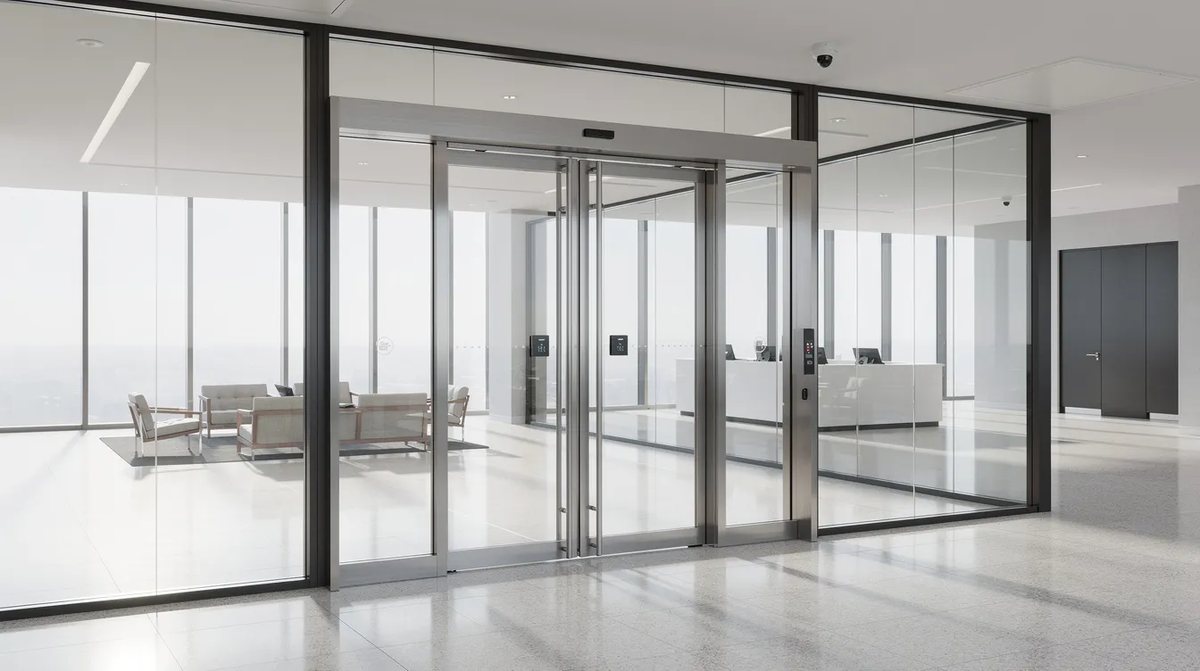
A glass entry can make a building feel open, bright, and welcoming. It can also become the weakest point in a wall if the door, glass panes, locks, hinge, and frame are not designed as one secure system. This guide explains how to choose glazing that supports safety, compliance, visibility, and real protection without sacrificing aesthetic appeal.
Table of Contents
- What Is Security Door Glazing? (Fast Answer)
- How Security Door Glazing Improves Safety and Security
- Types of Safety Glass Used in Security Door Glazing
- Safety Standards, Codes, and Labeling for Glazed Doors
- Designing Glass Doors to Resist Forced Entry and Impact
- Special Considerations: Wet Areas, Fire, and Interior vs. Exterior Doors
- Choosing the Right Security Door Glazing for Your Building
- Why Choose Our Team for Security Door Glazing Projects
- Frequently Asked Questions About Security Door Glazing
- Conclusion: Next Steps for Safer Glass Doors
What Is Security Door Glazing? (Fast Answer)
Security door glazing is the glass and glazing system used in a door that is engineered for safety, impact resistance, and, in high risk environments, ballistic protection. Security door glazing is designed to withstand intense physical impacts and transforms vulnerable glass into a protective asset.
It includes safety glass, tempered glass, laminated glass, polycarbonate, framing, edge retention, anchorage, hardware, and locks. Security door glazing is used in high-risk access points for robust protection, such as commercial entrances, schools, banks, police stations, healthcare facilities, retail storefronts, industrial sites, and secure lobbies.
Unlike decorative glass doors, these systems rely on tested materials, rigorous testing, compliance documents, and safety standards. For example, a 2024 retail retrofit after smash-and-grab incidents might replace a standard tempered panel with laminated security glazing so the glass cracks like a spiderweb when struck but stays in place long enough to delay entry.
How Security Door Glazing Improves Safety and Security
The main benefits are simple: fewer injuries, slower intrusion, better monitoring, and stronger protection. Glass security doors provide clear visibility and reinforced protection, help monitor entry points for potential threats, and allow natural light into interior spaces.
Security glazing can:
- resist impact from intruders using hammers, rocks, or pry tools;
- delay forced entry by absorbing impacts;
- remain intact within its frame after breakage;
- hold fragments in place during accidents, storms, or vandalism;
- minimize flying debris and reduce liability for property owners;
- deter casual break-ins where the target is a quick break and grab.
Safety glazing refers to glass tested primarily to reduce human injury. Security glazing goes further: it is engineered for deliberate attack, forced entry, and sometimes bullets or blast. Safety glazing reduces injury risks from broken glass, while security glazing minimizes injury risks during accidents and storms and helps prevent smash-and-grab incidents.
Do not assume a glass door is secure because it has film. Security window films are applied over existing glass to enhance security, and riot control glass often uses laminate film for added protection, but film alone does not make weak framing, poor anchorage, or a loose stop secure. The entire assembly must be tested.
Additionally, many modern systems block harmful UV rays to extend the life of indoor assets, maintain a natural line of sight for occupants, and can be customized to match various architectural styles.
Types of Safety Glass Used in Security Door Glazing
The right material depends on risk, budget, appearance, and safety requirements. Most projects use tempered, laminated, or advanced composite materials.
Tempered glass is heat-treated so it is stronger than ordinary glass. Tempered glass breaks into small fragments, reducing injury risks; tempered glass breaks into small pieces, minimizing injury risks. It is common in interior office glass doors, revolving doors, a sliding door, side lites, railings, guards, and residential entries where the primary concern is accidental impact rather than attack.
Laminated glass uses two or more layers bonded with PVB, SGP, or similar interlayers. Laminated glass retains fragments together upon breakage; laminated glass holds fragments together upon breakage. This makes laminated glass better for storefronts, schools, exterior entries, and other areas where someone may try to force a break. Smash-resistant glass often cracks like a spiderweb when struck instead of opening a clean gap.
Advanced composites combine laminated glass with polycarbonate or multiple interlayers. Polycarbonate is lightweight and offers high impact resistance. Multi-layered security glazing systems are tested against UL 752 standards, and specialized security glazing options, such as BulletShield retrofit bullet-resistant panels, provide ballistic and blast protection. Level 3 bullet-resistant glass withstands three shots of a .44 magnum, while higher levels address rifle threats in critical facilities.
These products can be clear, tinted, frosted, patterned, or placed in insulating glass units. That helps balance maximum protection with privacy, energy performance, a clear view, and architectural style, especially when using safety and security glass protection systems that are engineered for both intrusion resistance and visibility.
Safety Standards, Codes, and Labeling for Glazed Doors
Security glazing must first meet safety glazing rules, then any extra attack, blast, or ballistic standard. Safety glazing must meet ANSI Z97.1 and CPSC 16 CFR 1201 standards, and ANSI Z97.1 sets safety performance specifications for glazing materials.
The international building code is critical for design and inspection. Safety glazing must comply with IBC 2406 requirements, and safety glazing is required in hazardous locations per IBC 2406. Safety glazing is required in hazardous locations per IBC 2406.4, including many doors, sidelites, and low glazing near walking surfaces. Many glazed doors require safety glazing when a person could fall against the panel from the floor, stairs, shower, or adjacent walking area. See IBC Chapter 24 for code language.
Security ratings are separate. ASTM F1233 covers security glazing systems for forced entry and ballistic threats, while EN 356 classifies manual attack resistance. Ballistic systems may use UL 752 or EN 1063, and high-risk facilities may need additional blast-resistant glass and bomb protection panels when explosion hazards are part of the threat profile. Fire-rated glazed doors must also comply with IBC 716 and relevant fire tests; not all fire glass is attack-resistant.
Before approval, check the permanent label or mark. It should identify the manufacturer, standard, glass type, thickness, and safety category. Specifiers should ask for test reports, not just a product brochure, so the building can pass inspection.
Designing Glass Doors to Resist Forced Entry and Impact
Strong glass alone is not enough. A secure door system needs the glass, frame, wall anchorage, hinge side, locks, hardware, and construction details to work together.
Laminated glazing with a robust interlayer resists sledgehammers, pry bars, and repeated impact better than single tempered glass. It also helps the panel stay in the frame, which is essential because attackers often exploit the stop, frame, or hardware, rather than the center of the glass, and many facilities pair this with forced entry resistant door systems, like Access Shield, to strengthen the entire opening.
Use tested assemblies whenever possible. Door sets may be evaluated under standards such as ASTM F476, ASTM F1233, ASTM F3561, or EN 1627 depending on threat level. Glass security doors are engineered to withstand impact and ballistic threats only when the full assembly supports that rating.
Key design details include additional measures, such as ballistic-resistant window films that delay intrusion, when full replacement is not immediately feasible. Key design details include:
- reinforced steel or aluminum frames;
- tamper-resistant fasteners;
- continuous or protected hinges;
- multi-point locks;
- properly anchored thresholds;
- no avoidable gap at the glazing stop;
- compatible panic hardware for life safety;
- access control, card readers, electric strikes, cameras, and surveillance.
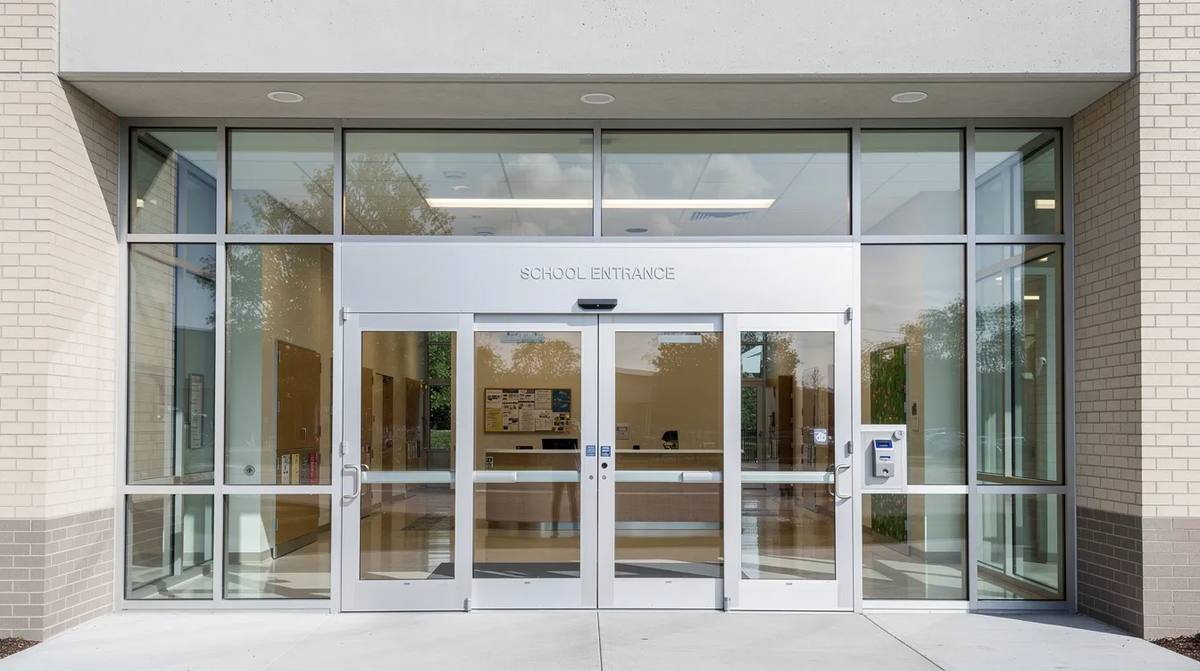
A practical school upgrade in 2023–2024 might add laminated sidelites, upgraded frames, and film overlays to existing windows and doors, similar to many commercial security window retrofit solutions used in retail, healthcare, and government facilities. The goal is not to make the opening impossible to breach forever; it is to delay intruders long enough for occupants to move and responders to arrive.
Special Considerations: Wet Areas, Fire, and Interior vs. Exterior Doors
Not every glazed door is exterior. Interior doors in wet areas, corridors, pool entries, stairwells, and locker rooms have different risks and code triggers.
Wet areas such as a shower, spa, tub room, pool entrance, or locker area often require safety glazing because slips are more likely. If a user falls against the door or adjacent glass, safety glass helps reduce severe cuts, and many of these locations rely on tempered glass and its safety-focused design. Hardware and framing also need corrosion resistance because moisture, chlorine, and cleaning chemicals can affect durability.
Interior and exterior openings differ. Exterior security door glazing must handle weather, UV, temperature swings, wind load, water, and sometimes insulated low-E glass. Interior systems may focus more on visibility, access control, acoustics, and impact resistance, but fire separation at corridors or stairs and the needs of vulnerable occupancies, like churches using bullet-resistant glass security solutions, can add another layer of compliance.
Fire doors with glazing need fire-rated glass plus safety glazing. If the same opening also needs security, confirm the product is dual-rated. Inspect regularly for delamination, seal failure, scratched polycarbonate, loose hinges, worn locks, or damaged edge seals, especially in humid areas.
Choosing the Right Security Door Glazing for Your Building
The “right” solution depends on threat level, occupancy, codes, and design goals. Start with the risk, not the product.
Use this simple framework:
- Identify the primary risk: vandalism, theft, active shooter, severe weather, accidental impact, or blast.
- Determine which codes and safety standards apply.
- Select the glass build-up, frame, hardware, and installation method.
- Document the required performance level in drawings and specs.
- Verify labels, test reports, and installation quality.
Retail storefronts usually benefit from laminated glass that resists smash-and-grab attacks. Schools and public buildings often need human-impact safety plus forced entry delay. Banks, government buildings, and police stations may require bullet resistant glass and blast-rated materials. Residential doors may use upgraded safety glazing, laminated panels, and film where a house has a vulnerable half-lite or sliding glass door that needs additional security, or a dog that jumps against the panel.
Avoid vague phrases like “secure glass door.” Specify the actual rating, materials, dimensions, and hardware so the installed system matches the intended protection.
Why Choose Our Team for Security Door Glazing Projects
Our team helps property owners, architects, and facility managers choose security glazing solutions for doors, sidelites, and high-risk openings. Since 2018, we have supported commercial, educational, healthcare, residential, and government projects with practical guidance around codes, glass selection, and installation details.
We look beyond the panel. We help coordinate glass, framing, hardware, anchorage, documentation, and submittals so the system is designed for safety, compliance, and real-world use.
Clients work with us because we provide:
- clear recommendations without overbuilding the project;
- familiarity with current IBC and safety glazing requirements;
- support for new construction and retrofit work;
- transparent options for budget, appearance, and protection;
- responsive help when code officials or project teams need documentation.
If you are upgrading existing glass doors, sidelites, or high-risk entries, we can help assess the opening and recommend a realistic path forward.
Frequently Asked Questions About Security Door Glazing
What is the difference between safety glass and security glass?
All security glazing should function as safety glass, but not all safety glass is security glass. Tempered and laminated products can meet safety requirements, while security-rated systems are tested for forced entry, impact, bullets, or blast.
Is security film enough for existing glass doors?
Film can improve fragment retention and delay entry, especially on existing glass. However, film is not a substitute for laminated glass, tested framing, and proper locks when the risk is high.
How thick does bullet resistant glass need to be?
Thickness varies by ballistic level, material, and frame design. A UL 752 Level 3 assembly is different from a rifle-rated system, and the frame is just as critical as the glass.
What affects the cost?
Cost depends on glass type, door size, rating level, hardware complexity, framing, and whether the project is new construction or retrofit. Ballistic and blast-rated systems cost more because they use thicker engineered materials and more rigorous testing.
How long does security glazing last?
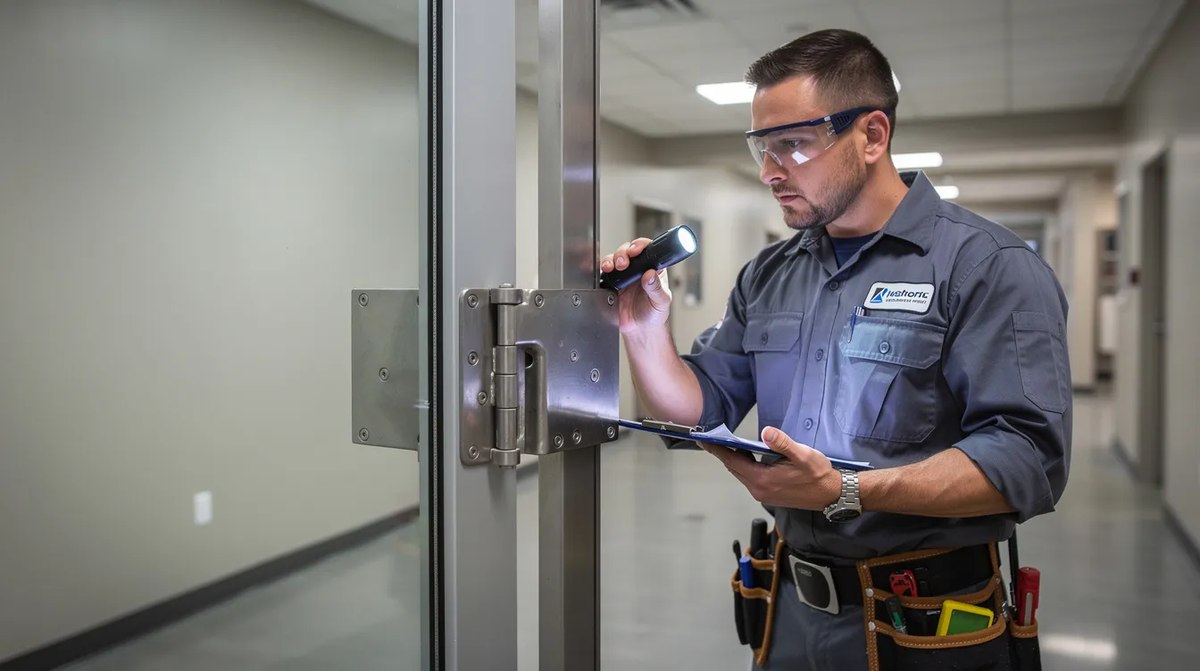
Routine cleaning and inspection help extend service life. Watch for chips, delamination, seal failure, loose hardware, and surface scratches on polycarbonate. Replace damaged glazing when performance or compliance may be compromised.
Conclusion: Next Steps for Safer Glass Doors
Properly specified security door glazing lets property owners keep the benefits of glass doors, including natural light, visibility, and aesthetic appeal, while meeting modern safety requirements. The key is choosing tested materials, verified ratings, and complete door systems that align with local codes.
Start by auditing main entrances, storefronts, schools, wet areas, sidelites, and other high-risk openings. If you need help evaluating risk, reviewing specifications, or planning an upgrade, contact our team for a site assessment or customized proposal.