Schools have invested heavily in door locks, visitor screening, and cameras, yet glass often remains the easiest path inside. The right window strategy can delay entry, protect students and staff from broken glass, and give first responders more valuable time when an incident occurs.
Table of Contents
Why School Window Security Systems Matter Today
Since around 2013, school safety planning has shifted from basic access control to more detailed preparation for on-campus violence, forced entry attempts, and rapid response. Many schools now have emergency plans, lockdown protocols, and security teams, but windows and sidelights still deserve closer attention.
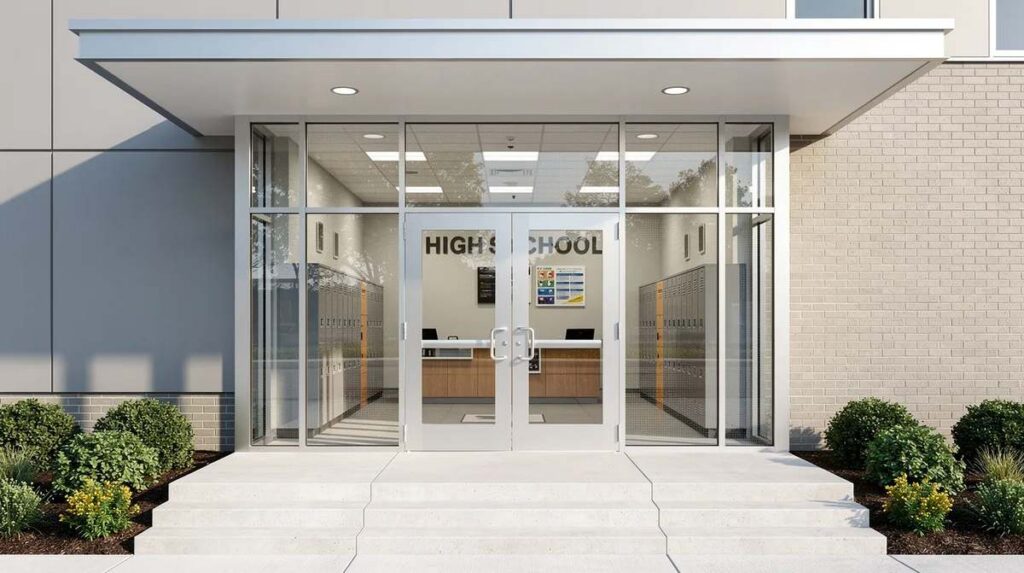
Windows are historically the most vulnerable perimeter entry points in a school. Glass beside exterior doors can let potential intruders break a pane, reach through, and operate interior hardware even when door locks and door access systems are in place. That is why school window security systems should be treated as a core part of modern school security, not an optional add-on.
Effective window security must balance safety and security with natural light, visibility, daily usability, and emergency egress. A layered security approach combines physical upgrades and protocols, using deterrence, delay, detection, and response. Effective window security systems delay forced entry and prevent unauthorized access, but the best plan starts with a professional security assessment before any products are purchased.
Understanding Entry Points, Risk, and Layered Security
Intruders usually exploit the fastest, least-resisted route into a building. In educational institutions, that often means glass at reception areas, vestibules, side entrances, ground-floor classrooms, or interior vision panels.
Important entry points include:
- Exterior doors and sidelights near handles
- Lobby and storefront-style glass
- First-floor classroom windows
- Interior door windows and corridor panels
- Windows near public sidewalks, parking lots, or fields
Layered security divides a secure campus into the outer perimeter, the building shell, and the interior layer. The building shell is where window security matters most because it connects physical security with access control, alarms, security cameras, and staff procedures.
For each layer, school administrators should review visibility, line of sight, time to breach, detection, evacuation routes, and emergency response. Bullet resistant glass, security window films, and smart technology all help, but no single security solution is a silver bullet. Systems work best as a layered defense that combines physical barriers, electronic alerts, communication systems, and trained people.
Before calling vendors, document current conditions. Take photos, mark simple floor plans, and note which windows are near door hardware, public access, or areas where students gather during school hours.
Types of School Window Security Systems and Components
School window security systems are usually combinations of glazing, films, coverings, sensors, and communication tools. Many schools blend window film, reinforced glass, bullet resistant materials, lockable covers, acoustic sensors, and video security depending on risk and budget.
According to federal school safety data summarized by Pew Research, 97% of U.S. public schools use access control systems, and 91% of U.S. public schools utilize video security devices. Access control systems are present in 97% of U.S. public schools. This means many campuses already have a foundation for integration; the next step is making windows part of that school security system.
Security Window Film and Shatter-Resistant Films
Window security film is a multi-layer protective layer applied to existing glass. Security-treated windows hold glass fragments together to prevent lacerations, and security window films delay forced entry by holding glass intact after impact.
Security window films are not bulletproof and do not stop gunfire. Their purpose is to delay forced entry, reduce flying shards, and make it harder for an attacker to quickly create an opening. Shatter resistant window film is often used on main entrances, sidelights, lobby glass, and first-floor classroom windows.
Installation of security window films is fast and minimally disruptive, often completed after school, on weekends, or during breaks. Security window films provide a protective layer against intruders while preserving a welcoming look. Schools report improved peace of mind after installing security window films, especially when film is paired with reinforced locking hardware, alarm contacts, and compatible frames.
Reinforced, Laminated, and Bullet Resistant Glass
Tempered glass breaks into small pieces. Laminated safety glass uses an interlayer to hold broken pieces together. Reinforced glass withstands significant impact and resists penetration, while bullet resistant glass or ballistic glass is engineered and tested for specific ballistic threats.
Impact and ballistic-resistant glass prevents glass shattering from repeated blows or ballistic threats. True bullet resistant glazing is commonly rated under standards such as UL 752, with levels based on projectile type and test conditions.
Bullet resistant materials are most often justified in reception areas, secure vestibules, administrative offices, and high-risk entry points facing streets or parking lots. Reinforced glass provides valuable time during emergencies, and schools are increasingly adopting reinforced glass for security upgrades.
Trade-offs include cost, weight, visibility, and frame requirements. Heavy-duty reinforced frames are constructed from reinforced steel or heavy-gauge aluminum, and the entire assembly should be evaluated, not just the pane. Ballistic glazing should be combined with video intercoms, secure transaction drawers, remote door release, and tamper-resistant locking mechanisms prevent unauthorized exterior operation.
Window Covers, Shades, and Concealment Systems
Window covers and shades protect privacy during lockdown procedures. Automated lockdown shades obscure lines of sight into classrooms during emergencies, while specialized window treatments block an active threat’s ability to scan a classroom for targets.
Manual shades are lower cost but require school staff to act quickly. Automated shades can close across multiple spaces at once, reducing human error. Classrooms require opaque, heavy-weight, fire-resistant fabric shades for security, especially where large windows face public areas.
These products provide concealment, not physical resistance. They should be paired with window security film, reinforced glass, or other security measures. Daily usability matters too: shades should support teaching, projection, and natural light when no emergency exists.
Smart Sensors, Alarms, and Integrated Window Monitoring
Magnetic contacts, vibration sensors, and glass-break detectors help detect unusual activity before or during forced entry. Acoustic glass-break detectors send immediate automated alerts when glass shatters.
Modern school security emphasizes a cohesive response integrating sensors with management systems. Integrated systems link alarms, cameras, and access control for efficiency and real time monitoring. Integrated security systems improve response times during incidents by sending alerts to administrators, pulling up nearby camera feeds, and helping emergency responders understand what is happening.
Alarm behavior can vary by time. During school hours, a silent alert may notify security teams and alert authorities without creating panic. After hours, audible alarms may deter potential intruders. Regular maintenance, testing, and documentation are essential.
Door and Window Combinations at School Entryways
Window systems should be designed with door access control. Access control manages who enters and exits the school premises, and keyless entry systems are a common form of access control. Cloud-based access control allows instant credential management, and access control systems can integrate with alarm systems for enhanced security.
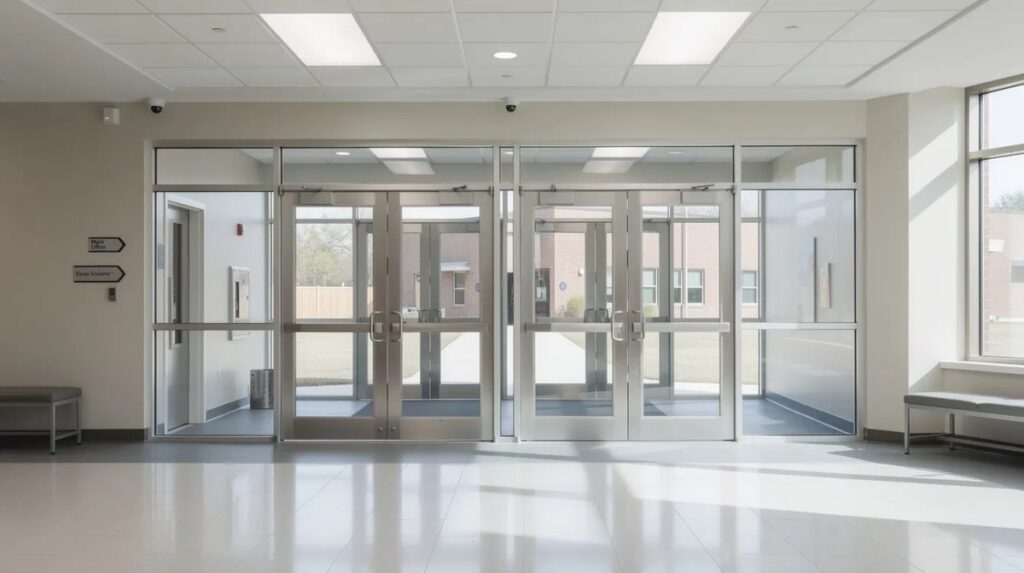
A secure entry may include two sequential locked doors, reinforced frames, protected sidelights, security cameras, intercoms, and transaction windows. Sidelights and transoms should have protection equal to the door; otherwise, a strong door can still be defeated through nearby glass.
Map visitor flow: entry, screening, check-in, and escort. Then design the door and window package to limit access without violating ADA or fire/life safety requirements.
Planning a Professional Security Assessment for Windows and Doors
A professional security assessment is the starting point for better decisions. Guessing can lead to expensive upgrades in the wrong places while obvious vulnerabilities remain open.
Public resources such as CISA’s K-12 School Security Guide can help school districts understand key factors to review. A strong assessment should include exterior grounds, all entry points, classroom windows, administrative offices, gyms, labs, portable classrooms, and college campuses when relevant.
Create a small team of administrators, facilities staff, safety officers, and teachers. Walk the site with the assessor, capture line-of-sight issues, and note where security threats are most realistic.
The assessment should produce priorities such as:
| Priority | Example concern | Possible response |
|---|---|---|
| Highest | Vestibule glass near door hardware | Film, reinforced glazing, access control |
| High | Ground-floor classrooms facing public areas | Film, shades, sensors |
| Medium | Interior vision panels | Covers, laminated glass |
| Ongoing | Aging frames or latches | Repair, replacement, inspections |
Ask for baseline improvements, recommended upgrades, and high-security options. This lets schools phase tailored solutions over several budget cycles.
Key Factors When Choosing School Window Security Solutions
Not every campus needs the same mix of security systems. Public schools, private schools, and educational environments vary by building age, local risk, staff capacity, and budget.
Consider these key factors:
- Specific threats: vandalism, burglary, forced entry, or ballistic risk
- Existing systems: access control, alarms, video security, and communication systems
- Building construction: frame strength, glass type, ventilation, and egress
- Daily operations: school hours, visitor traffic, and classroom use
- Training: staff safety, lockdown procedures, and emergency protocols
- Long-term ownership: cleaning, inspections, warranties, and replacement cycles
When renovations are planned, coordinate window upgrades with construction to reduce disruption. A leading provider should offer industry expertise, performance data, references, and innovative solutions rather than one-size-fits-all products.
Balancing Cost, Performance, and Layered Security
Compare options by time to breach and time to detection. Shades and covers are typically lower-cost. Window security film is often a mid-range upgrade. Ballistic glass and bullet resistant systems are higher-investment options for targeted areas.
A smart plan starts with the most exposed entry points, then expands to additional school campuses as funds allow. Grants can help, but schools should include maintenance, training, and inspections in the total cost.
Integration With Door Access, Video, and Communication Systems
Modern school security solutions connect window sensors, door access logs, security cameras, radios, PA tools, and mobile alerts into one management view. A forced-open window alert can pull up nearby video, notify school administrators, and support a rapid response.
Choose open, standards-based platforms when possible. IT and facilities teams should coordinate early so cybersecurity, network capacity, and physical security requirements are addressed together.
Staff Training, Drills, and Everyday Usability
Technology fails when people do not know how to use it. Training should cover when to close shades, how to move students away from windows, how to report damaged hardware, and how to follow lockdown protocols.
Include window actions in drills: deploy covers, check latches, move out of sight, and communicate problems. Post-drill debriefs help identify confusing procedures before an actual emergency.
Funding, Compliance, and Evolving Standards
The Bipartisan Safer Communities Act was passed in 2022, and federal grants support physical security upgrades in schools. Schools are adopting a layered security approach for better protection, and many programs prioritize projects that improve life safety, delay forced entry, and align with best-practice guidance.
Compliance includes building codes, fire codes, ADA rules, glazing standards, and state-specific school safety mandates. Improvised bars or boards may look secure but can create serious life-safety problems.
Maintain documentation for ratings, installation records, inspection reports, emergency protocols, and policy updates. Review window plans every 2–3 years or when enrollment, campus layout, or regulations change.
Grants, Bonds, and Budget Planning for Window Upgrades
Common funding paths include federal safety grants, state school safety funds, local bonds, and capital improvement budgets. Strong applications define scope, risk data, and measurable outcomes, such as securing all first-floor exterior windows within a set timeframe.
Bundle related work when practical: window film, improved door access, updated cameras, and communication upgrades. This shows a coherent plan for safer learning environments rather than isolated purchases.
Code Compliance, Life Safety, and Legal Considerations
Any change to glass, frames, locks, or shades must preserve emergency egress and accessibility. Consult local building officials and fire marshals early.
Specify tested products, verify installation quality, and inspect periodically. Safety improves only when hardware remains functional and procedures remain current.
FAQ About School Window Security Systems
Are window security films bulletproof? No. Security window films are not bulletproof and do not stop gunfire. They help hold glass together, reduce shards, and delay forced entry.
Where should schools prioritize upgrades first? Start with main entrances, sidelights near door hardware, reception areas, and ground-floor classrooms facing public access.
What is the difference between bullet resistant glass and standard safety glass? Standard safety glass reduces injury during breakage. Bullet resistant glass is engineered for ballistic threats and rated to specific performance levels.
How long do films and specialized glazing last? Lifespan depends on sun exposure, moisture, cleaning, and installation quality. Plan inspections and budget for eventual replacement.
How do window systems integrate with alarms and cameras? Sensors can trigger alerts, display nearby camera views, notify staff, and coordinate with access control for faster emergency response.
Conclusion and Next Steps
School window security systems are a critical part of comprehensive school safety. They help delay forced entry, reduce potential harm from broken glass, improve concealment, and give first responders more time to act.
Start with a professional security assessment, focus on the highest-risk entry points, and build a layered security plan over time. Review current windows, take photos, mark floor plans, and identify obvious gaps before speaking with a security partner.
If you are ready to evaluate options for your campus, request a tailored consultation on school security solutions. Thoughtful window upgrades can create greater security while preserving the open, welcoming feel that schools need.