For many schools, school glass protection is now a practical physical security priority, not a cosmetic upgrade. Windows and doors can be the fastest way for potential intruders to gain entry, especially during break-ins or active threat incidents.
This guide explains safety film, security glazing, laminated glass, and bullet resistant systems so school administrators and decision makers can improve safety without making school buildings feel like fortresses.
Table of Contents
- Why School Glass Protection Is an Urgent Priority
- Why School Glass Protection Matters in 2026
- Types of Glass Protection Solutions Commonly Used in Schools
- How Safety Film Helps Protect Glass for Schools
- Bullet Resistant vs “Bullet Proof” Glass in School Settings
- Planning a School Glass Protection Upgrade
- Cost, Funding, and Budget Strategies for School Glass Protection
- FAQs About School Glass Protection
- Why Choose Our Team for Your School Glass Protection Project
- Conclusion and Next Steps for Safer School Glass
Introduction: Why School Glass Protection Is an Urgent Priority
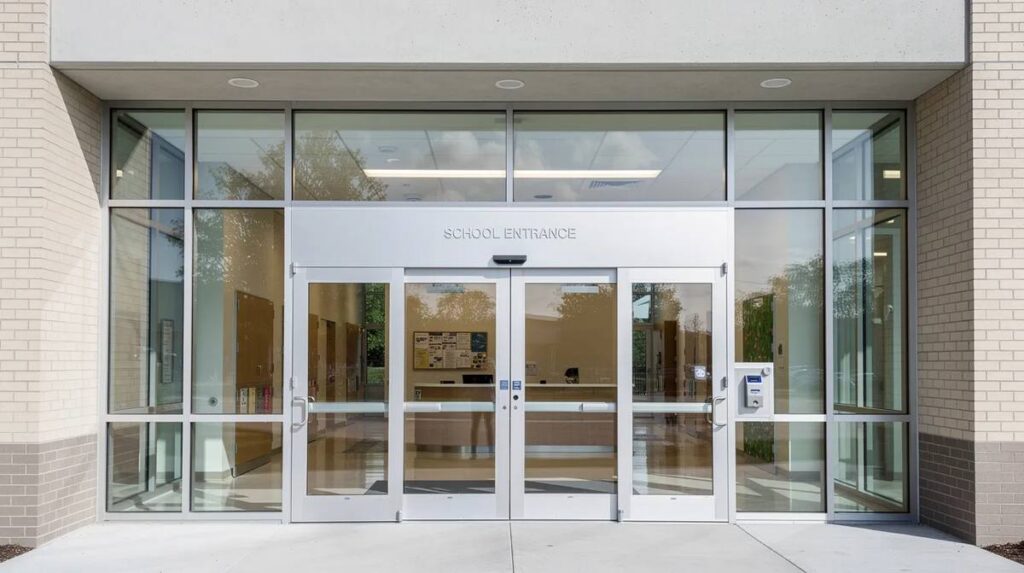
Glass is often the weakest layer in school security. Since 2020, many schools have reviewed front entrances, vestibules, and classroom windows because glass near locks and handles can be attacked quickly without specialized tools.
The goal is not fear-based design. The goal is safety and security that supports lockdown procedures, protects building occupants from flying shards, preserves natural light, and gives first responders more critical time.
Why School Glass Protection Matters in 2026
Windows are the most targeted entry point in a building because standard glass breaks fast. Protective systems delay intruders and contain glass fragments, buying critical time when lockdown protocols are underway during school shootings.
- Most classroom and vestibule glazing is standard tempered or annealed glass that can become shattered glass on impact.
- Intruders often strike glass beside doors, locks, and handles because it is the quickest path to gain entry.
- Even 1–3 minutes can matter when many emergency responses take 4–8 minutes or longer.
- Better protection also helps with accidents, vandalism, natural disasters, and storm debris.
- Reducing broken glass helps enhance safety in high traffic areas.
Types of Glass Protection Solutions Commonly Used in Schools
Most schools combine several security products rather than relying on one product everywhere.
- Security and safety film for schools: A retrofit film for schools applied to existing glass and existing windows to hold broken glass, delay entry, and reduce injury.
- Laminated safety glass: Laminated glass uses multiple layers bonded together, and laminated glass remains intact when subjected to aggressive physical force.
- Forced-entry-resistant systems: Specialized glazing upgrades prevent easy access to buildings and are often tested to ASTM F1233 or ASTM F3561.
- Bullet resistant systems: Ballistic-resistant glazing absorbs projectiles to enhance security in entrances, reception areas, and safe rooms.
- Supplemental safety measures: Screens, transaction windows, and interior panels can pair with security glazing.
How Safety Film Helps Protect Glass for Schools
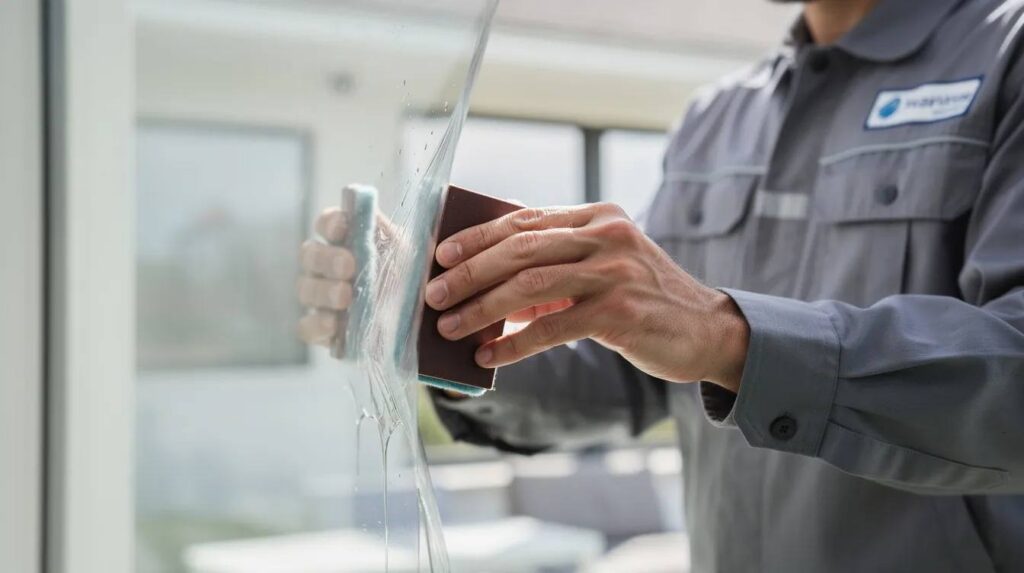
Safety film is often the most cost-effective solution for many schools that cannot replace every pane at once. Security films are applied to the interior surface of windows and bonded with adhesive to existing glass.
Security window film holds shattered glass together during impact events. Safety films mainly prevent accidental injuries rather than intrusion, but heavy-duty security films can absorb impacts and provide entry delays from kicks, thrown objects, or tools.
Security window film delays forced entry by 15 seconds to 3½ minutes, depending on glass type, film thickness, anchoring, and whether the installation is installed correctly. Films are commonly prioritized on entry vestibules, administrative offices, and ground-floor classrooms.
Security films can block up to 99% of harmful UV rays. Some sun control films and solar safety products also improve comfort, while reflective films can prevent visibility into classrooms during the day.
Key Performance Factors for School Safety and Security Film
For school security window film, specifications matter.
- Films of 8 mil to 14 mil are recommended for significant delays.
- Security film typically ranges from 8-15 mil thickness for protection.
- The film should be tied into the window frame with structural caulk or mechanical retention to keep the pane from popping out.
- Dedicated security film is different from decorative window film or basic sun control products.
- ANSI Z97.1 and CPSC 16 CFR 1201, including category i impact classifications, are common safety references.
A strong safety and security specification should define film, anchoring, glass type, cure time, and maintenance.
Advantages and Limitations Compared with Other Options
- Cost: Retrofit film may be far less expensive than replacement glass, often priced by square foot and total square footage.
- Speed: Installation can often be completed during summer, winter, or weekend breaks.
- Limits: Security window film does not stop bullets from firearms. No security window film meets UL 752 ballistic standards.
- Reality check: Security window film does not stop bullets but holds glass together.
- Best use: Use film as one layer alongside access control, alarms, cameras, staff training, and communication systems.
Bullet Resistant vs “Bullet Proof” Glass in School Settings
The phrase bulletproof glass is common, but bullet-resistant is more accurate. No system is truly bulletproof in every scenario.
- Bulletproof glass combines rigid and pliable materials to prevent shattering.
- Bulletproof glass can stop shots from commonly owned handguns when rated for that threat.
- Bulletproof glass is available in multiple levels of protection.
- Bulletproof glass is available in various levels of protection for different risks.
- Ballistic materials must be certified to UL 752 Standards for protection.
- UL 752 is the standard for testing bullet-resistant glazing.
True bulletproof protection may be appropriate at main entrances, secure vestibules, reception windows, or safe rooms. However, higher bullet resistance increases cost, weight, thickness, and building construction requirements. Bulletproof glass typically exceeds 2 inches in thickness for high protection.
How Bullet Resistant Glass Works to Enhance School Safety
Bullet-resistant glass for schools may combine glass, acrylic, and polycarbonate. Polycarbonate is approximately 250 times stronger than glass, and polycarbonate glazing maintains optical clarity while improving security.
When struck, outer layers may crack while inner layers stretch and absorb impact. The purpose is to stop bullets for the tested threat level and reduce penetration during ballistic attacks or other ballistic threats.
Bullet-resistant glass can stop intruders from gaining access at critical openings, but it should still support lockdown protocols and emergency planning in school settings.
Deciding When Schools Need Bullet Resistant Glazing vs Safety Film
Start with a risk assessment from law enforcement and security professionals.
Use safety film on lower-risk perimeter windows and doors. Consider bullet resistant glass for high traffic areas, public-facing offices, and exposed first-floor windows. Ask vendors for third-party reports, clear UL 752 documentation, and product limits in plain language.
Transparent communication helps decision makers explain why some areas receive film while others receive ballistic upgrades.
Planning a School Glass Protection Upgrade
Before buying security products, map the campus.
- Assess entrances, corridors, classrooms, offices, and exterior-facing glass.
- Inventory each glass type, window frame, size, age, and condition.
- Prioritize main lobbies, vestibules, nurse areas, counseling rooms, and classroom wings.
- Match protection to risk: safety film, forced-entry glazing, or bullet resistant systems.
- Coordinate upgrades with access control, visitor management, and lockdown procedures.
Installation Considerations for Safety Film and Security Glazing
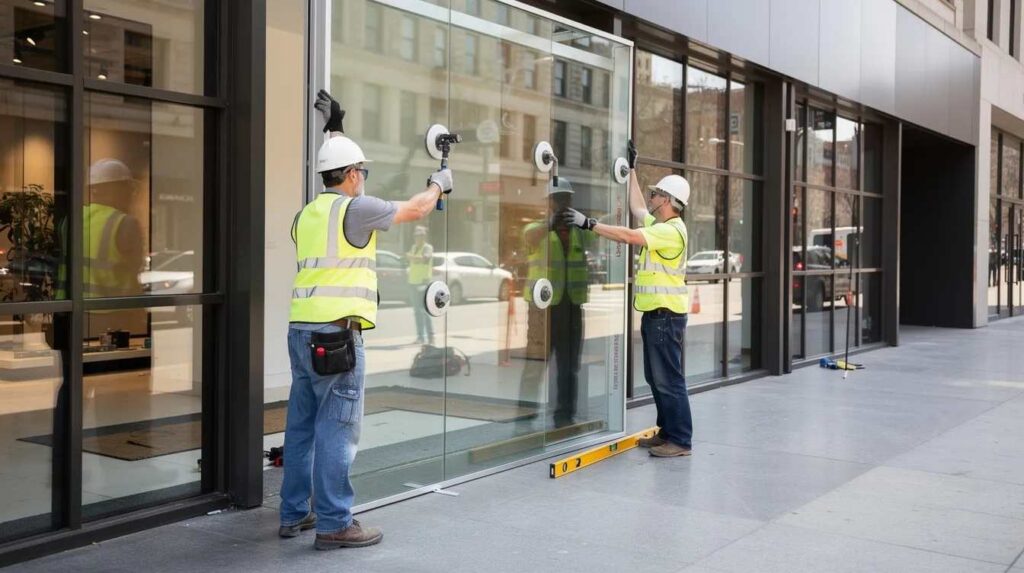
Professional installation is critical. Film performance depends on clean glass, correct adhesive, edge anchoring, curing, and inspection.
Heavier security glazing may require stronger frames, reinforced walls, or door hardware changes. Emergency releases must be included in permanent security installations. Windows must allow escape for students during emergencies, and fire-rated safety glass is required to contain smoke and heat where codes require it.
Schedule work during breaks, then document installed products, warranties, and inspection intervals. Many films need periodic review over a 10–15 year service life.
Balancing Safety, Natural Light, and Trauma-Informed Design
Good school safety should not make students feel confined. Clear films and modern glass for schools preserve natural light while adding invisible protection.
Decorative or privacy film can help counseling, nurse, or special education spaces. Transparent interior glass also improves supervision and helps staff monitor movement without sacrificing warmth.
Cost, Funding, and Budget Strategies for School Glass Protection
Cost is often the barrier, especially in older school buildings. Retrofit safety film is usually the lowest cost per square foot. Laminated glass costs more because it replaces the pane. Bullet-resistant systems cost the most because they may include frames, anchoring, doors, and structural work.
A practical approach is phased work: film broad areas first, then add ballistic systems at the highest-risk entrances. This improves protection while allowing schools to manage capital budgets.
Leveraging Grants and External Funding for Glass Upgrades
Grant funding from federal and state school safety programs often supports physical security improvements. Strong applications usually include threat assessments, vendor proposals, cost estimates, and product standards.
A pilot project, such as one secured main entrance, can help boards and communities see the benefits before expanding campus wide.
FAQs About School Glass Protection
Common questions from school administrators, facility teams, and parents:
- Is safety window film for schools actually bulletproof? No. It can delay forced entry and contain glass, but it is not bulletproof or rated bullet resistant.
- How long can safety film delay a forced entry attempt? Security window film delays forced entry by 15 seconds to 3½ minutes, depending on product, anchoring, and attack method.
- What’s the difference between security film and bullet-resistant glass? Security film is a retrofit layer. Bullet-resistant glass is engineered, multi-layer ballistic glazing.
- Will glass protection affect egress or fire codes? It can if poorly specified. Always coordinate with the Authority Having Jurisdiction.
- How long does school safety film last? Quality film can last 10+ years, but UV exposure, cleaning, and edge damage affect service life.
Why Choose Our Team for Your School Glass Protection Project
We help schools evaluate glass protection as part of a layered security plan, including school window security systems, not as a one-size-fits-all product sale.
- Experience with K–12 entrances, classroom wings, and administrative buildings.
- Guidance on safety film, forced-entry systems, and bullet-resistant glass.
- Site assessments that help prioritize windows and doors by risk.
- Transparent proposals for board review, budgeting, and grants.
- Practical recommendations designed to stop intruders where possible, delay forced entry where needed and protect people from broken glass.
Conclusion and Next Steps for Safer School Glass
School glass protection is one of the most visible ways to improve safety, but no single product solves every risk. Film can contain glass and delay forced entry. Forced-entry glazing adds stronger resistance. Bullet-resistant barriers protect the most critical points from active shooter threats.
Start with an assessment, identify vulnerable openings, gather quotes, and create a phased plan. If your team is reviewing doors, windows, timelines, or grant funding, schedule a walkthrough so you can choose the right protection for your campus.