Every school entry point tells a story about preparedness. Standard glass, aging hardware, and unlocked side doors send a clear message to anyone looking for a way in. This article walks through practical strategies for hardening doors, windows, and entryways so your school buildings buy the minutes that matter most.
Table of Contents
- What Is School Forced Entry Protection and Why It Matters Now
- Understanding Modern School Security Challenges
- The Entryway as Your First Line of Defense
- Doors, Glazing, and Hardware: Building Physical Barriers That Resist Forced Entry
- Protecting Existing Buildings vs. Planning for New Construction
- Access Control, Communication, and Smart Alerting
- Implementation, Staff Training, and Long-Term Maintenance
- Funding, Prioritization, and Phased Upgrades
- Why Choose Our Team for School Forced Entry Protection
- FAQs About School Forced Entry Protection
- Conclusion and Next Steps
What Is School Forced Entry Protection and Why It Matters Now
School forced entry protection focuses on delaying and denying intruders at doors, windows, and other entry points through engineered physical barriers. Forced entry means any physical attempt to breach doors, glazing, or locks using tools, blunt force, or weapons.
These physical barriers buy critical time for lockdown procedures, evacuation, and law enforcement response. Emergency response times typically average three to five minutes and forced entry protection serves as a first line of defense during those minutes. Effective school forced entry protection requires a layered physical security framework that covers entryway design, bullet resistant glass, classroom doors, retrofits for existing buildings, new construction planning, staff training, and funding strategies.
Since 2018, state-level mandates and updated standards have pushed schools to adopt stronger measures against active threat incidents. This article covers each layer in detail.
Understanding Modern School Security Challenges
Threats have evolved well beyond what simple lock-and-key systems were built to handle. Everyday issues like vandalism and break-ins remain common, but active threats demand that school security systems physically stop unauthorized individuals from reaching students and staff members.
Relying only on locked doors and video surveillance leaves gaps. Windows and glass doors are common vulnerabilities for forced entry. School glass protection can help address these weaknesses. Standard glass sidelights beside entry doors, ground-floor classroom windows, and glass doors at secondary exits give intruders easy bypass routes that cameras can only record, not prevent.
Industry data indicates that over 97% of public schools utilize controlled building access, yet controlled access alone does not address weak glazing or aging hardware. Modern state regulations may mandate glass hardening measures for schools, and standards like ASTM F1233 for forced entry glazing, ASTM F3561, and UL 752 for ballistic protection now serve as benchmarks districts can specify for bullet resistance and protection against ballistic attacks. Solutions must scale across K–12 campuses, community colleges, and universities with different traffic patterns.
The Entryway as Your First Line of Defense
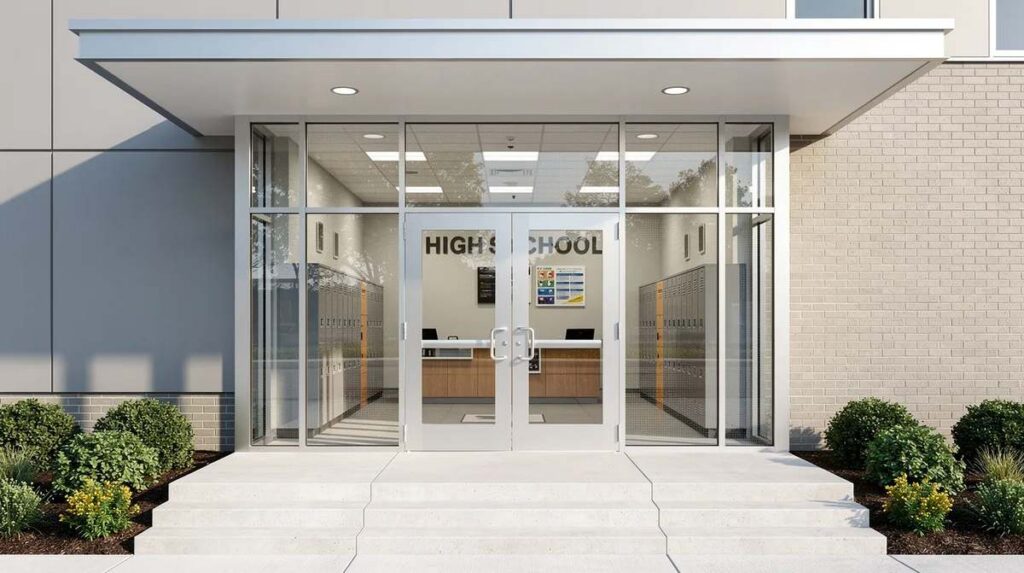
The main entrance is where forced entry protection starts for both existing buildings and new construction. A single point of entry maximizes school security by controlling access, and controlled access points reduce unauthorized building entry. Prioritize front entry points before side doors and secondary entrances.
Approach 1: Harden the Existing Exterior Entry
Many schools can keep their current layout and reinforce what is already there. Common upgrades include forced entry-resistant security glazing, bullet resistant glass where the threat assessment warrants it, stronger steel frames, and continuous hinges that resist prying.
Hardening entry points prevents intruders from bypassing locks by shattering glass. Heavy-duty steel frames and multi-point locking systems distribute physical force evenly across the door assembly. High-tensile security window films hold shattered fragments together to delay access, and window film reinforces existing glass, delaying forced entry without full replacement. Hardening the physical perimeter helps stop intruders before entering populated areas.
Use bullet resistant glass at the highest-risk entry points and non-ballistic forced entry glazing at secondary locations where budget is a concern. Retrofittable systems allow upgrades during weekends or breaks with minimal disruption.
Approach 2: Create a Secure Vestibule
A secure vestibule is a small lobby with two sets of locked doors and controlled access into the main building. A secure vestibule allows staff to verify visitor credentials via camera, intercom, and ID check before unlocking interior doors. Double-door setups create buffer zones for security verification.
Vestibules combine physical barriers with access control and alarm systems. Design goals include maintaining natural light, clear sight lines, and a welcoming atmosphere while adding forced entry resistance. Fire codes, ADA accessibility, and egress requirements must be factored into every vestibule design.
Approach 3: Protect the Front Office with Transaction Windows
Bullet resistant transaction windows between the vestibule and the main office reception area protect front office staff while preserving visibility. Features include speak-thru devices, document trays, and controlled pass-throughs that prevent direct access.
Before: visitors walk past an open counter directly into hallways. After: visitors enter the vestibule, interact with office staff through security glazing, and the inner door opens only after verification. This setup protects the front desk without isolating staff from the people they serve.
Doors, Glazing, and Hardware: Building Physical Barriers That Resist Forced Entry
Doors, surrounding glass, and hardware must work together as a system. Attackers target the weakest component, whether that is a sidelight, a transom, or a small glass lite in a door. Strong doors must withstand structural breaches and physical pounding, and solid-core and steel doors significantly delay forced entry attempts. Layered protection combines stronger materials, better hardware, and properly anchored frames. No solution is 100% invulnerable. The term “bulletproof doors” overpromises; “bullet resistant” accurately describes tested performance at specific threat levels.
Bullet Resistant Glass and Security Glazing
Bullet resistant glass is multi-layer glazing tested to UL 752 levels against handgun and rifle threats. UL 752 Level 3 certified glass protects against common handgun calibers, while higher levels address rifle rounds. Security glazing resists breakage and penetration from intruders, and security glazing can delay forced entry attempts significantly, even after ballistic impact. ASTM F1233 is the standard for forced-entry-resistant security glazing, while ASTM F3561 addresses resistance after simulated active shooter attack.
Security glazing can stop bullets from specific firearms, and security glazing can prevent access even if penetrated by bullets. Polycarbonate glazing offers superior strength compared to standard glass, and laminated glass-clad polycarbonate panels provide resistance against blunt-force impacts. Security glazing can delay intruders during forced entry attempts for minutes, not seconds.
| Feature | Ballistic Glazing (UL 752) | Forced Entry Glazing (ASTM F1233) |
|---|---|---|
| Stops bullets | Yes, at rated levels | Not designed for ballistic protection |
| Resists tools and blunt force | Yes | Yes |
| Typical placement | Main entrance, sidelights | Secondary doors, ground-floor windows |
| Relative cost | Higher | Moderate |
| Weight | Heavier, may need frame upgrades | Lighter than ballistic options |
Bullet Resistant and Forced Entry-Resistant Doors
Bullet resistant doors use reinforced cores, steel skins, and robust frames to slow or stop rounds and blunt-force attacks. Bullet-resistant doors can withstand specific firearm attacks, and ballistic-resistant doors can withstand specific firearm rounds. UL 752 Level 7 doors stop 5.56mm M193 ammunition. Ballistic doors delay attackers, providing critical response time, and are designed to absorb and disperse ballistic energy.
Continuous hinges, heavy-duty frames, and multiple locking points improve resistance over standard doors. Even non-ballistic security doors paired with strong glazing dramatically delay intrusion. Common applications include the main entrance, administration suites, and specific areas with elevated risk.
Classroom Doors and Interior Openings
Classroom doors are critical during lockdown protocols. Integrated classroom locks allow teachers to lock doors from inside without accessing the hallway. Compartmentalizing sections of a school with heavy-duty doors limits intruder access and protects school occupants in place.
Recommended features include solid cores, vision lites with forced entry-resistant glazing, and single-motion egress hardware that meets fire codes. Retrofits can include adding protective glazing over existing doors, upgrading locks to classroom or storeroom function, and installing barricade devices that comply with ADA and allow first-responder override.
5 questions to ask about your classroom doors:
- What standard does the glazing meet (UL 752, ASTM F1233)?
- Is the door solid-core or hollow?
- Are hinges continuous or standard three-knuckle?
- Can the lock be engaged from inside without a key?
- Is the frame anchored to the structural wall?
Protecting Existing Buildings vs. Planning for New Construction
Most districts start with existing buildings and phase upgrades over multiple budget cycles. Planning security upgrades early increases options and effectiveness. Collaboration between security experts, architects, and code officials early in planning prevents costly change orders.
Retrofitting Existing School Buildings
Older schools typically have aluminum storefront entries, hollow metal doors, and standard glass from the 1970s through 2000s. Retrofit options range from applying security film for lower-risk areas to installing full laminated or polycarbonate panels for high-risk zones. Riot glass and similar retrofit systems can be added over existing doors and frames without tearing out entire assemblies. Schedule major work during summer or winter break to avoid disrupting instruction.
Designing Forced Entry Protection into New Construction
New construction allows security integration from the blueprint stage: controlled entry points, secure vestibules, hardened cores, and bullet resistant doors and glazing specified from day one. Benefits include cleaner aesthetics, lower long-term cost, and better integration with electronic security systems and communication networks. Natural surveillance concepts like clear sight lines and limited blind spots support security staff and cameras.
Access Control, Communication, and Smart Alerting
Physical barriers must be paired with access control and communication tools to protect students and staff during active threats. Electronic access control systems eliminate vulnerabilities of traditional keys, and electronic systems log entry and regulate access to specific areas.
Controlled Entry Points and Door Management
Limit public access to one or two monitored doors during school hours while keeping other exits available for fire egress only. Use card readers, keypads, and mobile credentials for staff members. Door position sensors alert school staff when an exterior door is propped open. Policies against propping open exterior doors prevent unauthorized access risk. Daily perimeter sweeps verify that all secondary doors are latched and locked.
Visual Communication and Wayfinding for Responders
Exterior signage, door numbering, and color-coded zones help first responders and emergency responders locate entry points quickly. Reflective placards and large door labels visible from parking lots reduce confusion. Interior zone markers should match exterior coding. Coordinate signage plans with local law enforcement and fire agencies.
Lockdown Alerts and Communication Networks
Modern alarm systems tie together door sensors, glass-break detectors, panic buttons, and public-address alerts. Panic buttons instantly notify law enforcement and initiate lockdowns. Mobile apps let administrators see door status and trigger lockdown from anywhere on campus. Both audible and visual alerts serve different environments. Integration with local law enforcement dispatch speeds notification and situational awareness. Test these systems regularly and back them with clear procedures.
Implementation, Staff Training, and Long-Term Maintenance
Products alone are not enough. People and procedures make forced entry protection work. Maintenance and inspections prevent failures of locks, closers, and glazing over time.
Staff Training and Drills
Regular training ensures teachers, office staff, and custodians understand new doors, locks, and access control. Practice drills conducted with local law enforcement and fire agencies create realistic scenarios. Training should cover how to secure classroom doors, manage students during lockdown, and report hardware issues. Focus on empowerment rather than fear.
Inspection, Testing, and Maintenance of Security Components
Core inspection items: door closers, latch engagement, hinges, glazing seals, and access control devices. Document inspections and repairs for liability, audits, and grant reporting. Use qualified technicians for work on bullet resistant doors and security glazing. Review security plans and equipment performance annually after each school year.
Funding, Prioritization, and Phased Upgrades
Most school districts cannot afford all upgrades at once. A phased approach to upgrades is financially practical. Security assessments help identify funding needs and priorities. Funding programs exist to support school security upgrades through local bonds, state school safety grants, and federal programs.
How to Prioritize School Forced Entry Projects
Criteria include age of building, number of students, community use, incident history, and proximity to public access. Form a safety committee including administrators, facilities, security, and law enforcement. Start with quick wins like door hardware, signage, and basic access control while making larger glazing and vestibule projects a top priority.
Example three-year plan:
- Year 1: Risk assessment, front entry upgrades at three pilot schools
- Year 2: Secure vestibules and exterior door reinforcement at ten facilities
- Year 3: Classroom door retrofits and district-wide hardware standardization
Why Choose Our Team for School Forced Entry Protection
Our team specializes in school entryway and glazing security for K–12 and higher-education campuses. We bring direct experience with forced entry and ballistic standards including UL 752 and ASTM F3561, and we know how to work in occupied schools with minimal downtime.
From assessment through design, fabrication of bullet resistant doors and glazing, professional installation, and long-term support, we handle every phase. We prioritize maintaining natural light and a welcoming learning environment alongside robust security measures, with transparent project pricing throughout.
Ready to get started? Request an on-site assessment or send your floor plans for a preliminary review.
FAQs About School Forced Entry Protection
What is the difference between bullet resistant and bulletproof doors for schools? “Bullet resistant” means tested to stop specific calibers at defined velocities under standards like UL 752. “Bulletproof” implies total invulnerability, which no product delivers. Always ask for the UL level and what rounds it covers.
Can we upgrade forced entry protection on existing classroom doors without replacing them? Yes. You can add forced entry-resistant glazing over existing glass lites, upgrade locks to classroom function, install continuous hinges, and reinforce frames. These retrofits work on many existing doors without full replacement.
How long should a forced entry-resistant system delay an intruder? Testing under ASTM F1233 and F3561 measures delay in minutes under tool attack. Some systems resist concentrated entry attempts for over twelve minutes. The goal is to exceed typical emergency response times of three to five minutes.
Will bullet resistant glass make our school look like a fortress? Modern security glazing is highly transparent with slim frames. Projects like Candy Lane Elementary in Oregon City demonstrate that schools can combine fire-rated, bullet resistant glazing with large vision panels that preserve natural light and a welcoming feel.
How do we know which entry points need bullet resistant solutions vs. stronger glass? A threat assessment evaluates exposure, traffic, proximity to public areas, and incident history. High-traffic main entrances and ground-floor sidelights typically warrant ballistic protection, while secondary entry points may only need forced entry glazing.
What ongoing maintenance is required for security doors and glazing? Quarterly visual inspections of closers, latches, and seals. Semi-annual hardware checks. Annual reviews by qualified technicians. Document everything for compliance and grant reporting. Maintaining these components prevents degradation that turns strong barriers into weak ones.
Conclusion and Next Steps
Effective school safety combines physical barriers, access control, communication, and training into a single plan. Start with your main entrance, build outward to secondary entry points, and phase classroom upgrades over realistic budget cycles.
Walk your campus this week. Check every exterior door, note which glazing is standard glass, and identify where unauthorized individuals could gain access. Then take the next step: contact our team for a customized entryway assessment or send architectural drawings for upcoming projects. Your schools can be both secure and welcoming. The work starts at the front door.