In 2023, there were 351 school shooting incidents recorded; in 2023, there were 351 school shooting incidents in the U.S. While recent reports show some decline in school shootings, gun violence remains a serious school safety concern. For school administrators, school boards, architects, and facility decision makers, glass doors, school windows, door glass, and large windows are often the most exposed weak points in a school building.
Table of Contents
- Introduction: Why Ballistic Protection for Schools Matters Now
- What “Ballistic Protection” Actually Means in School Security
- Comparing Key School Glazing Options: Film, Security Glass, and Ballistic Systems
- Role of Windows, Doors, and Interior Barriers in School Safety
- Standards, Testing, and Honest Performance Claims
- Cost, Funding, and Phased Implementation Strategies
- Integrating Ballistic Protection into a Comprehensive School Security Plan
- Frequently Asked Questions About Ballistic Protection for Schools
- Conclusion: Building a Safer Future with Thoughtful Ballistic Protection
Introduction: Why Ballistic Protection for Schools Matters Now
Recent reporting counted 254 incidents in the 2024–25 school year, down from prior years but still significant. Ballistic protection means protection against bullets and ballistic attacks; forced entry protection means slowing potential intruders using blunt force, tools, or impact. This article focuses on real security products for schools, including bullet resistant glass, bulletproof windows, reinforced doors, ballistic doors, window film, panels, and entry protection-not vague bulletproof protection claims.
What “Ballistic Protection” Actually Means in School Security
Ballistic threats include bullets from handguns, rifles, and shotguns; non-ballistic potential threats include broken glass, hammers, pry tools, thrown objects, and blasts. “Bulletproof glass” is common language, but the accurate term is bullet resistant because no glass stops every weapon forever. UL 752 is the standard for bullet resistant glazing; UL 752 levels range from 1 to 8 for bullet resistance, and underwriters laboratories classify bullet-resistant glass from levels 1 to 8. In school security, UL Level 1–3 generally addresses commonly owned handguns, while Level 4+ addresses rifle rounds. Bulletproof glass can stop shots from commonly owned handguns, and bulletproof glass absorbs shock and prevents bullets from entering, but only when the tested assembly-glass, frame, anchors, sealants, and hardware-is installed correctly.
Comparing Key School Glazing Options: Film, Security Glass, and Ballistic Systems
Many schools compare three options. Security window film is a cost-effective solution for existing glass and existing glazing because security window film holds broken glass together during impact events, but security window film cannot stop bullets, and no security window film meets UL 752 ballistic standards. Laminated glass improves safety and forced entry resistance over standard window glass. Fully rated bullet resistant assemblies use multiple layers to stop bullets. Key solutions for school ballistic protection include specialized glazing and reinforced doors; ballistic protection systems for schools focus on hardening entry points and securing classrooms. Additional ballistic panels can be retrofitted inside existing walls to create safe zones, while new construction can incorporate these protections from the outset, and ballistic wall panels absorb energy and stop bullets from penetrating walls.
Security Window Film vs. Bullet Resistant Glazing
Bullet proof window film is often misunderstood. Security film typically ranges from 8-15 mil thickness for protection, and proper installation is crucial for security window film effectiveness. Security window film delays forced entry by 15 seconds to 3½ minutes, giving critical time for lockdown protocols. No retrofit film meets UL 752 ballistic standards, so “bulletproof glass for schools” should mean rated ballistic glazing, not film on standard window glass. Film retrofits offer 50-70% cost savings compared to bullet-resistant glass and can improve safety in secondary doors, sidelites, and high traffic areas.
Types of Bullet Resistant Glass Used in Educational Facilities
Bulletproof glass is available in four primary types: acrylic, laminated polycarbonate, glass-clad polycarbonate, and insulated glass. Bulletproof glass for schools may also include laminated glass, glass-clad polycarbonate, or all-polycarbonate systems. Ballistic glazing replaces standard glass to resist high-powered rifle rounds when specified to the right UL 752 rating; Riot Glass can resist high-speed attacks from AK-47 rifles. Trade-offs include weight, thickness, clarity, cost, and maintenance. Bullet-resistant windows, ballistic doors, and glass doors must use compatible frames and hardware, so the entire building opening performs as designed.
Role of Windows, Doors, and Interior Barriers in School Safety
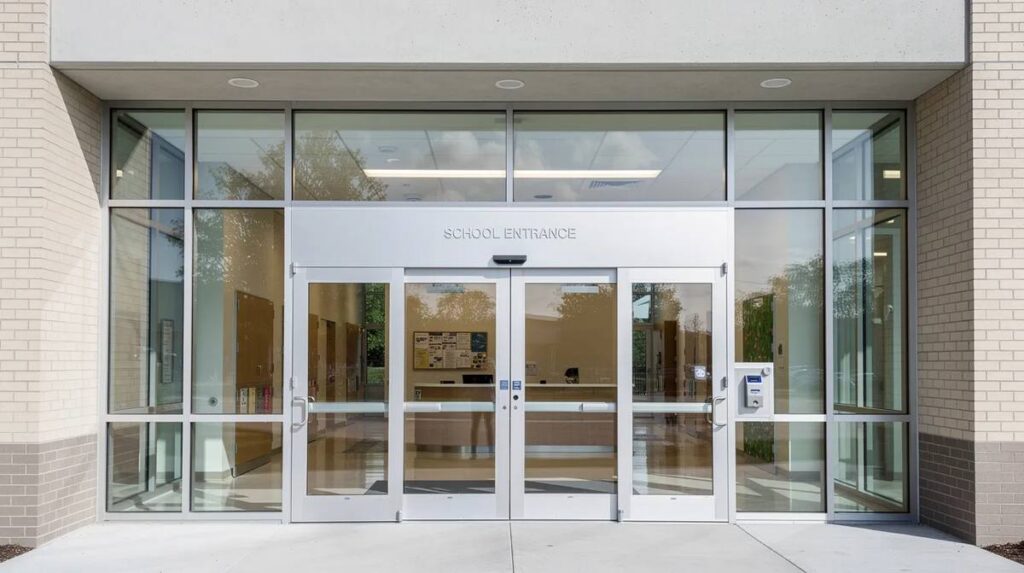
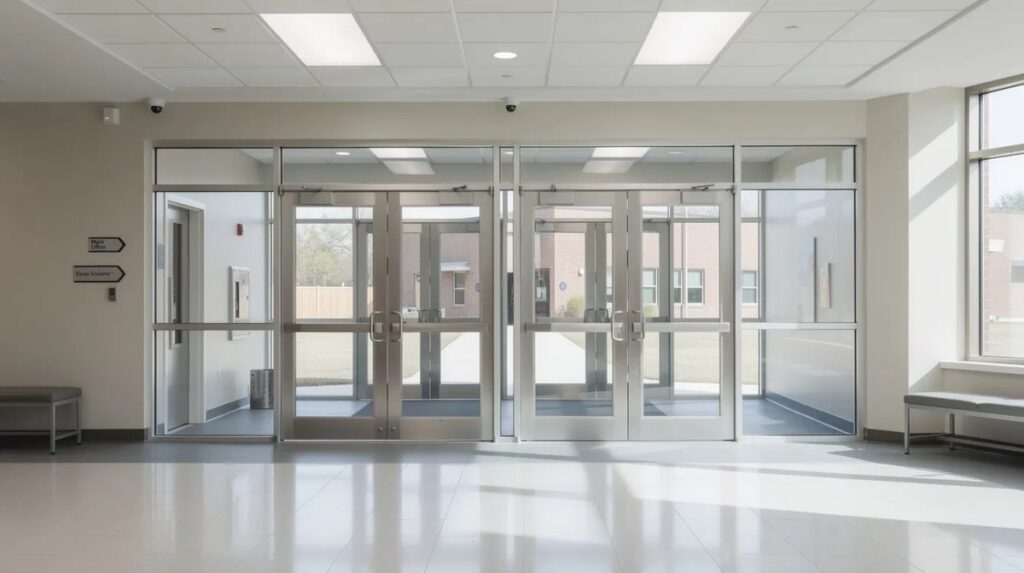
Glass at main entrances, reception areas, vestibules, and classrooms can expose building occupants during forced entry or ballistic threats. Reinforced doors and windows are designed to stop or slow down attackers, delay unauthorized access, providing time for lockdown protocols, and provide critical extra time for law enforcement response. Security vestibules use interlocking doors to screen visitors before entry. Ballistic doors can isolate intruders within specific areas of a school, while tactical shields can be deployed quickly during active threats. Combined with security cameras and surveillance systems, these security measures help protect students and create a secure learning environment where students and staff feel safe.
Priority Locations for Ballistic and Forced-Entry Upgrades
Start with main entrances, lobby glass, reception areas, adjacent sidelites, and public-facing doors. Then review ground-level school windows near parking lots, administration and nurse windows, internal secure doors, gyms, and side/service entries. High threat areas should receive ballistic protection first; lower-risk areas may receive security window film as a cost-effective layer. A professional threat assessment by security professionals should document vulnerabilities before products are selected.
Standards, Testing, and Honest Performance Claims
Marketing language is not enough. Ask for written third-party reports showing calibers, shot counts, velocities, glass thickness, framing, anchors, and sealant details. UL 752 standards classify bullet resistance levels from 1 to 8, and UL 752 standards classify bullet-resistant glass from levels 1 to 8. Procurement documents should specify the desired UL level, forced entry protection, and installation method. Schools should also involve code officials early so security upgrades do not interfere with egress, fire safety, or accessibility.
Key Ballistic and Forced-Entry Standards for School Glazing
UL 752 is the core standard for bullet resistance in windows, doors, and barriers. ASTM F3561-22 evaluates fenestration systems for forced-entry resistance. ANSI Z97.1 governs safety glazing standards for human impact protection, while CPSC 16 CFR 1201 also addresses safety glazing. UL 972 is useful for burglary-resistant glazing and vandalism. A typical UL 752 handgun test may involve multiple shots with no penetration; forced-entry tests may use impact tools to evaluate whether the assembly can delay entry.
Cost, Funding, and Phased Implementation Strategies
Ballistic protection is a capital project. Basic security film costs approximately $7-$10 per square foot installed, and high-performance security film ranges from $12-$19 per square foot. Bullet-resistant glass costs $125-$400+ per square foot, especially when framing, anchors, and labor are included. Older buildings may need structural reinforcement. Many school districts phase work: entrances first, then first-floor classrooms and high-risk areas, then broader campus upgrades. Federal and state grants may offset security improvement costs, providing valuable grant funding, along with bonds, capital budgets, and philanthropic support.
Budgeting Tips for Decision Makers
Begin with a glazing inventory of every door, sidelite, curtain wall, classroom opening, and exterior window. Separate budgets for forced entry and ballistic protection so funds match risk. Include maintenance, seal replacement, inspections, and product lifespans of roughly 10–20 years. Standardized products across schools reduce training, spare parts, and long-term costs.
Integrating Ballistic Protection into a Comprehensive School Security Plan
Ballistic glass and bulletproof windows are only one part of protecting schools. Glazing upgrades should align with access control, visitor management, radios, alerts, lockdown plans, security cameras, and surveillance systems.
Staff and students need drills that explain which areas are hardened, where to shelter, and how to use secure vestibules or safe rooms. Visible security measures can enhance psychological safety and reduce anxiety when communication is clear and age-appropriate.
Balancing Security, Code Compliance, and School Culture
The best school settings avoid a bunker feel. Clear bullet-resistant glass, low-profile frames, daylight, and thoughtful design help preserve a welcoming environment. Parents, teachers, and student groups should understand what has changed, why it matters, and what the limitations are. The goal is to enhance safety and improve safety without sacrificing learning, trust, or normal daily movement, an important factor when planning security upgrades.

Frequently Asked Questions About Ballistic Protection for Schools
Is bullet proof window film actually bulletproof for schools?
No. Current bullet proof window film and security window film products do not meet UL 752 ballistic resistance levels on typical school glass. No security window film meets UL 752 ballistic standards.
Film helps hold broken glass together and can delay forced entry, but it should not be sold as bullet resistance. Verify any claim with independent test data.
How long can ballistic glass and security glass delay an intruder?
Annealed glass may fail in seconds. Security window film delays forced entry by 15 seconds to 3½ minutes, depending on tools, attachment, and framing.
UL 752 Level 1–3 bullet resistant glass can stop specified handgun rounds, but attackers may still try tools. Locks, frames, and anchors matter.
What is the difference between bullet resistant glass and standard laminated safety glass?
Standard laminated glass is mainly designed for human impact safety and breakage behavior. Bullet resistant glass is thicker, engineered, and tested to UL 752.
The added layers help absorb and spread ballistic energy. Always check the rating instead of assuming laminated glass is ballistic.
How often do bulletproof windows and doors need to be replaced?
Bulletproof windows and ballistic doors may last 15–20 years in good conditions. Polycarbonate layers can yellow, craze, or delaminate, especially with UV exposure.
Annual inspections and periodic professional reviews help confirm clarity, seals, hardware, and continuing protection.
Will bullet resistant doors and windows affect emergency egress or fire codes?
Properly designed systems can maintain required egress widths, panic hardware, accessibility, and fire ratings. Poor retrofits can create hazards.
Work with the AHJ, fire marshal, architect, and manufacturer before installation, and request written code-compliance documentation.
Conclusion: Building a Safer Future with Thoughtful Ballistic Protection
Films slow forced entry; bullet-resistant glass stops specific ballistic and active-shooter threats; panels, reinforced doors, and procedures complete the system. The smartest approach is tested products, honest expectations, and a campus-specific threat assessment. If your district is considering adding bulletproof windows or other protection, start with a professional assessment and request a clear proposal that prioritizes risk, budget, and long-term safety.