Table of Contents
- Why School Security Glazing Matters Now
- How Glass Fails in Real Incidents
- The Value of Delay in School Security
- Key Types of Security Glazing for Schools
- Understanding ASTM F3561 and Other Relevant Standards
- Designing School Security Windows by Zone
- Balancing Forced Entry and Ballistic Protection
- Retrofit vs. New Construction
- Daylighting, Wellness, and Trauma-Informed Design
- Cost, Budgeting, and Common Pitfalls
- Integration with Overall School Security
- Choosing the Right Partner
- FAQ
- Conclusion and Next Steps
Introduction: Why School Security Glazing Matters Now
In most American schools, intruders target glass doors and windows first-not locks. Active shooter incidents in K-12 educational facilities have climbed sharply since 2000, with 332 school shooting incidents recorded in 2024 alone. Standard tempered or annealed glass fails in seconds under deliberate attack, making glazing the weak link in the building envelope even when doors and hardware are upgraded during an active shooter event.
School security glazing is a layered system engineered to delay forced entry, support lockdown procedures, and maintain natural light. Security glazing maintains an open atmosphere conducive to learning while providing critical response time. This article covers standards like ASTM F3561, forced entry and ballistic protection options, retrofit pathways, and zone-based planning for school buildings of any age.
How Glass Fails in Real Incidents
After-action reviews of K-12 incidents consistently show attackers breaching sidelites or vision panels rather than forcing locks. Regular glass is classified as safety glass but lacks security enhancement-it protects from accidental injury under ANSI Z97.1 and 16 CFR 1201, not deliberate intrusion. Standard tempered glass shatters into small cubes on impact, creating an opening within seconds. Basic laminated glass holds together longer but can still be pushed through with repeated blows. Heavy-duty laminated glass helps prevent severe laceration risks, yet most schools built between the 1960s and 2000s still use glazing never tested against targeted forced entry or bullets.
With 74% of school shootings having the first shot fired before any staff-initiated lockdown, and median law-enforcement response times of 3–5 minutes, broken glass that gives way instantly leaves students exposed during the most dangerous window.
The Value of Delay in School Security
You can’t make a building attack-proof, but you can buy time. Research from Purdue University shows the average attacker inflicts approximately three victims per minute-meaning even one or two minutes of delay saves lives. Security glass is designed to resist forced entry and remain intact in the frame after multiple strikes or shots.
DefendEd security glazing withstands attacks for over 14 minutes, extending breach time from seconds to several minutes without changing the look of the building. Security glazing can delay entry for over 14 minutes under attack, and security glass can delay entry for over 14 minutes during attacks when properly installed. Districts can design for specific time targets-5, 10, or 15 minutes-based on risk assessments, integrating glazing performance with lockdown drills, communication systems, and first responders planning.
Key Types of Security Glazing for Schools
Not all security solutions perform the same. Security glazing is a complex multi-layered sandwich of materials, and understanding the categories is critical for smart specification.
- Bullet resistant glass: Multi-layer laminated glass and polycarbonate stacks rated under UL 752. Bullet-resistant glass can withstand specific calibers based on industry standards. UL 752 rates glass based on the caliber of firearms it can stop. These systems are heavier and costlier but essential at high-threat entry points.
- Forced entry resistant glazing: Multi-ply laminated layers or glass-clad polycarbonate engineered to resist impact, kicking, prying, and tools-not just bullets. CHILDGARD® laminated glass resists forced entry and maintains visibility across classrooms and corridors.
- ASTM F3561-tested assemblies: Tested as complete systems-glass, frame, hardware-against gunfire followed by physical attack. Security glazing must pass rigorous destructive testing standards to earn this classification.
- Security films: Hold shards after breakage but generally do not strengthen frames or hardware and do not meet ASTM F3561 or forced entry standards.
No glazing is truly “bulletproof.” Ballistic protection stops specific rounds; forced entry resistance delays physical breach. Both matter, but they address different threats.
Understanding ASTM F3561 and Other Relevant Standards
Standards let schools compare products on objective testing instead of marketing claims. ASTM F3561 was developed after concerns from school shootings and is the first standard specifically focused on forced entry resistance of windows and doors in active shooter scenarios. Under this standard, forced-entry resistance is assessed after multiple gunshots, evaluated after gunshot impacts, and assessed after simulated active shooter attacks-using rifle-platform rounds followed by timed physical assault on the same opening.
ASTM F1233 is a standard for forced entry resistance testing of glazing under tool attack. DefendEd™ meets ASTM F1233 and ASTM F3561 standards, and DefendEd security glass meets ASTM F1233 standards for forced entry. The National Glass Association (NGA) provides guidelines on glazing levels that help the glazing industry align products with school security needs. Related references include ANSI Z97.1 and 16 CFR 1201 for safety, and UL 752 for ballistic protection. Always request test reports for complete systems-glass plus frame plus hardware-rather than glass coupons alone.
Designing School Security Windows by Zone
Not every opening needs the same level of protection. Zoning a campus based on threat and vulnerability analysis directs budgets where they matter most.
| Zone | Examples | Recommended Glazing |
|---|---|---|
| High-risk | Main entrances, vestibules, administration, first-floor classroom doors | ASTM F3561-tested systems with ballistic protection |
| Medium-risk | Corridors, cafeteria, gym entrances, guidance offices | High-performance forced entry glazing |
| Lower-risk | Upper-floor windows, interior courtyards | Reinforced frames, upgraded hardware, selective security glazing |
High-strength clear glazing provides excellent natural surveillance across all zones. Security glazing supports visibility and supervision in learning environments, allowing staff and cameras to maintain clear sightlines. A formal CPTED or threat-and-vulnerability assessment should inform which zones get which performance levels.
Balancing Forced Entry and Ballistic Protection
Budgets rarely support full bullet resistant glass everywhere, so tradeoffs are necessary. Many active shooter incidents rely on quick forced entry through doors and windows; delaying entry can be as impactful as stopping rounds in certain locations. The typical approach prioritizes ballistic protection at entry vestibules and main lobbies while relying on forced entry protection for classroom doors and sidelites. School security glass can be retrofitted into existing frames at many facilities, making phased upgrades practical. UL Level 1–3 ballistic systems are most common for schools. Honest communication with stakeholders about what each level can and cannot do avoids unrealistic expectations.
Retrofit vs. New Construction: Practical Pathways
Most schools are existing structures, making retrofits the realistic pathway for security upgrades. Retrofit solutions use over-glazing instead of window replacements in many cases, fitting laminated security glazing into existing frames and stops when structurally viable. Security glazing requires heavy-duty reinforced framing systems-lightweight aluminum mullions, rusted hollow metal, or poor anchorage to walls may require frame replacement. Some forced entry and bullet resistant units are engineered at thicknesses of roughly 1″ to 1.25″ to fit standard storefront or curtainwall pockets.
For new construction, integrate security glass early in school design so daylighting, energy performance, and security requirements align from the start. Phase your project by prioritizing main entrances and classroom doors first, then expanding to interior spaces during future bond or grant cycles.
Daylighting, Wellness, and Trauma-Informed Design
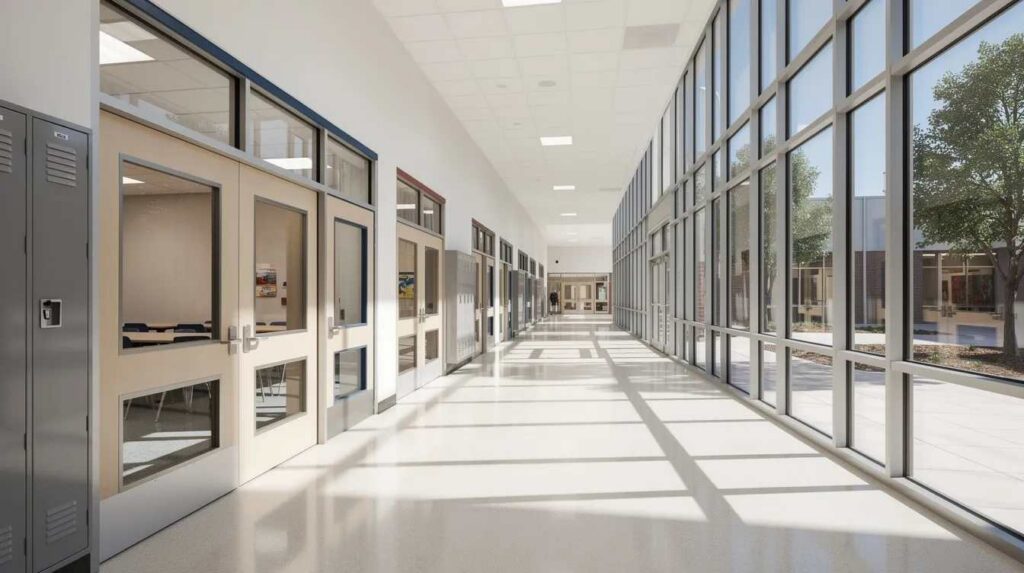
Dark, fortress-like school buildings increase student anxiety and work against trauma-informed best practices. Security glazing maintains the mental health benefits of natural daylight while providing protection from threats and vandalism. High-clarity glazing maximizes natural light without compromising safety, and security glass maintains high natural light for student wellness. Modern security glazing solutions can reduce classroom noise, with multi-layered security panes acting as acoustic dampeners that improve the learning space.
Security glazing improves overall energy efficiency and can withstand severe weather events like hurricanes, providing environmental and disaster resilience beyond security. Dynamic glass can self-tint while allowing natural light in classrooms, managing glare and solar heat gain. This “invisible hardening” approach preserves the decorative qualities and openness students need while keeping them secure.
Cost, Budgeting, and Common Pitfalls
Security glass is a significant investment but often costs less than full entrance reconstruction. Key cost drivers include performance level, thickness, framing changes, and installation complexity. Protect the most vulnerable zones first, then expand during future funding cycles.
Common pitfalls include overreliance on security film, buying products without recognized test reports, and ignoring frames and hardware that create weak failure points. Funding sources include federal programs like FEMA school safety grants, state-level security programs, and local bond measures. Life-cycle thinking-fewer replacements, lower maintenance, and energy savings-can offset upfront cost over 15–30 years.
How Security Glazing Integrates with Overall School Security
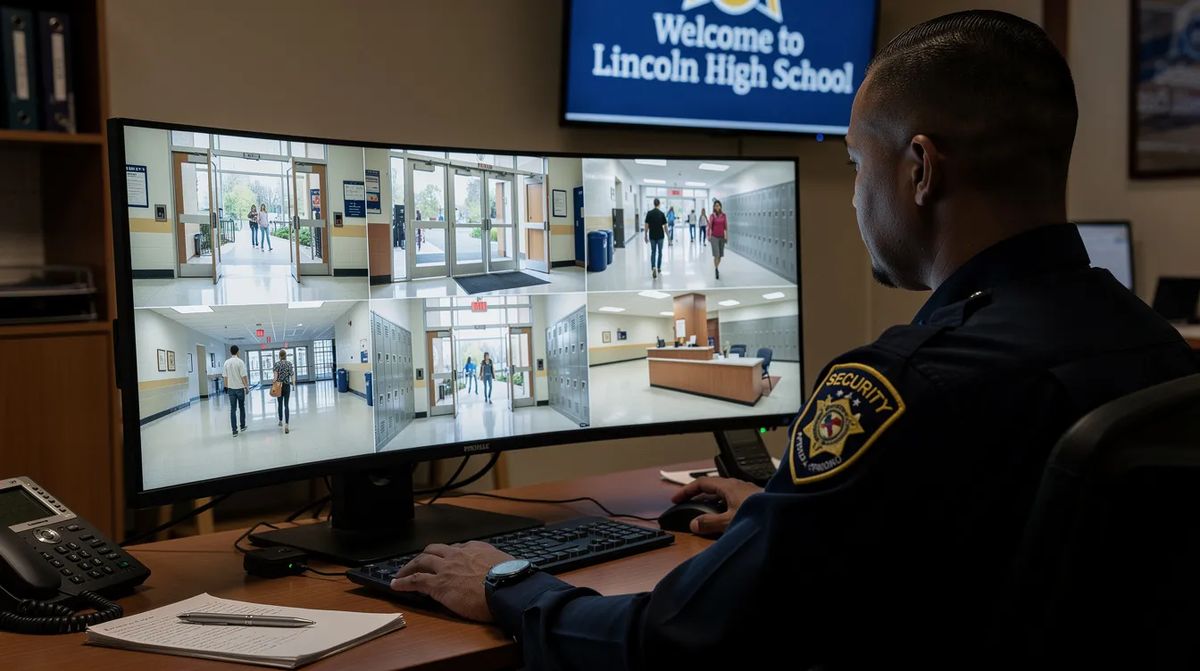
Security glazing is one layer in a comprehensive school security system, not a standalone solution. It coordinates with access control technology-card readers, intercoms, and lockdown controls-that rely on secure vestibules and doors. High-security locks, continuous hinges, and reinforced strike plates complement glazing performance. Visitor management policies, drills, and staff training should assume certain openings will hold for a set time. Clear glass supports camera coverage and line-of-sight for staff and first responders, improving their ability to assess conditions. Any glazing upgrade should be part of a broader, written school security plan reviewed annually.
Choosing the Right Security Glazing Partner
Product selection and installation quality matter as much as choosing the right standard. Seek partners with documented testing to ASTM F3561, UL 752, and relevant forced entry standards for school applications. Verify that products are tested as full assemblies and that installation crews are trained specifically for security glazing. Ask for case studies from K-12 projects completed within the last 3–5 years. Early design-assist collaboration ensures glazing, frames, hardware, and wall conditions are coordinated before construction documents are finalized. Look for transparency in performance data, straightforward pricing for customers, and realistic schedules that work around school calendars.
Frequently Asked Questions about School Security Glazing
What is security glazing? Security glazing refers to multi-layer glass systems designed to resist deliberate attack-forced entry, ballistic threats, and tool assault. Unlike standard safety glass meant for accidental impact, security glazing includes laminated glass, proprietary interlayer materials, reinforced frames, and tested hardware working as a complete system.
Is bullet resistant glass necessary in every school window? No. Ballistic protection is most critical at main entrances and street-facing openings. Classrooms and interior doors typically need forced entry resistance, which costs less and still provides minutes of delay. A risk assessment determines the right balance for each facility.
Does ASTM F3561 mean the glass is bulletproof? No. ASTM F3561 measures forced entry resistance after simulated gunfire-not full ballistic ratings. To stop bullets, look for UL 752 certification at the appropriate level.
Can existing school doors and frames be retrofitted? Yes, in many cases. When existing frames are structurally sound, security glazing can be installed without full door replacement. Frames that are corroded, undersized, or poorly anchored may need reinforcement or replacement to maintain tested performance.
Will security glazing make my school look like a fortress? It doesn’t have to. Modern security glazing looks nearly identical to standard glass, preserving clear sightlines and natural light. The goal is invisible hardening-students and visitors experience an open, welcoming environment without realizing the glass is engineered to protect them.
Conclusion and Next Steps
Upgrading glazing at critical entry points is one of the most impactful, visibly unobtrusive moves a district can make for school security. Three ideas should guide your planning: delay buys time and saves lives, rigorous standards like ASTM F3561 help you compare options objectively, and zoning allows limited budgets to go further.
Start with a campus-wide glazing assessment that maps current glass types, frame conditions, and risk levels by zone. Contact a qualified security glazing partner to schedule a consultation or request a detailed audit of your facilities. The goal is building safer, supportive learning environments where students thrive-spaces that feel open and welcoming, not fortified.