Table of Contents
- Introduction: The Weakest Point in Your Perimeter
- Why Glass Windows Attract Burglars
- Core Glass Security Options
- Beyond the Glass: Hardware, Sensors, and Layered Protection
- Residential vs Commercial Glass Window Security
- Installation, Maintenance, and Long‑Term Performance
- Why Choose Our Business
- Frequently Asked Questions
Introduction: The Weakest Point in Your Perimeter
A 2024 UK Home Office study found that 28% of domestic burglaries in England and Wales targeted ground-floor windows, with many completed in under 60 seconds. In North America, approximately 23-30% of residential break-ins involve forced entry through windows and glass doors.
Glass windows are often the weakest point of a home and a target for burglars, making it essential to enhance their security. Standard 3-6 mm float glass is manufactured primarily for visibility and light transmission—not impact resistance. A rock, hammer, or pry bar can silently shatter it before neighbours even notice.
This guide covers everything from stronger glazing options like laminated glass and polycarbonate panels to security window film, upgraded locks, and smart monitoring. Whether you’re protecting a front door sidelight, a sliding glass door, or a storefront, we’ll help you create layered protection that works for homes, shops, offices, and schools.
Why Glass Windows Attract Burglars
Intruders look for low-noise, low-effort entry points. Side, rear, and basement windows are prime targets because they’re often hidden from street view and neighbours.
- Instant failure of standard glass: Annealed glass shatters suddenly and quietly with enough force from a punch or pry bar, giving burglars fast access before anyone reacts.
- Vulnerable entry points in older buildings: Large single pane installations from the 1980s–2010s—patio doors, shopfronts—remain especially vulnerable to smash-and-grab theft.
- Outdated hardware: Many windows still have simple latches from the 1990s or earlier, which can be forced open even without fully breaking the glass.
- Visibility works against you: Burglars can easily size up valuables through unprotected glass, particularly at night with interior lights on. Privacy is absent in clear glazing.
- Egress requirements limit options: Emergency exits and basement windows must remain operable under building codes, so you need solutions that resist intrusion but still allow safe escape within 10-30 seconds.
Core Glass Security Options: From Stronger Glass to Unbreakable Panels
Think of glass window security as a ladder: from keeping broken glass in place, to resisting entry, to virtually invisible panels used in high-risk sites. Each option offers different levels of protection at varying cost points.
Laminated Security Glass (“Shatter‑Resistant” but Breakable)
Laminated glass, often referred to as ‘shatterproof glass’, is designed to hold glass shards in place when broken, providing a level of shatter resistance but not complete unbreakability. It consists of two or more panes bonded with a PVB or ionoplast interlayer.
- Slows intruders significantly—they must cut or tear through the intact plastic interlayer after the glass cracks
- Ideal for street-facing shop windows, ground-floor homes, and schools
- Provides added layer benefits: reduced injury risk from flying shards, 30-40 dB sound reduction, and partial uv protection
- Higher-grade options meet EN 356 P4A–P6B classifications for insurance compliance
- Post-2022 retail cases showed P5B-rated laminates deterred 70% of smash attempts
Tempered (Toughened) Glass: Stronger but Not Burglar‑Proof
Tempered glass is heat-treated at 600-700°C, making it 4-5× stronger than regular glass. However, once compromised, it shatters into small cubes and offers almost no delay to forced entry, a limitation explored further in guides on tempered glass uses, benefits, and drawbacks.
- Resists accidental impacts from children, pets, or sports balls
- Common in shower enclosures, balcony doors, and interior partitions
- Provides safety but should not be assumed as a burglar-proof solution
- For security purposes, combine with security film to prevent instant disintegration
- Standalone tempered glass can be bypassed in seconds by determined intruders
Polycarbonate & “Unbreakable” Glazing Panels
Polycarbonate panels are considered the true unbreakable glass, being significantly more difficult to break than standard glass and laminated glass, providing superior protection against forced entry and weather-related disasters like natural disasters, especially when used in engineered overglaze systems that outperform traditional security window films in forced-entry resistance. This aligns with broader research into whether unbreakable shatterproof glass really exists.
- Up to 250× stronger than glass at half the weight
- 8-12 mm security-grade panels can match armoured glass strength, certified to EN 356 P8B
- Modern nano-coated surfaces improve scratch resistance while remaining nearly invisible
- Some polycarbonate panels are engineered for ballistic protection, offering defense against firearm threats, making them suitable for high-security applications
- Perfect for liquor stores, pharmacies, jewellery shops, and schools facing vandalism—California retailers saw theft reduction of 85% after upgrades
- Can be retrofitted as secondary glazing over existing glass, preserving the original façade
Security Window Film: Upgrading Existing Glass Cost‑Effectively
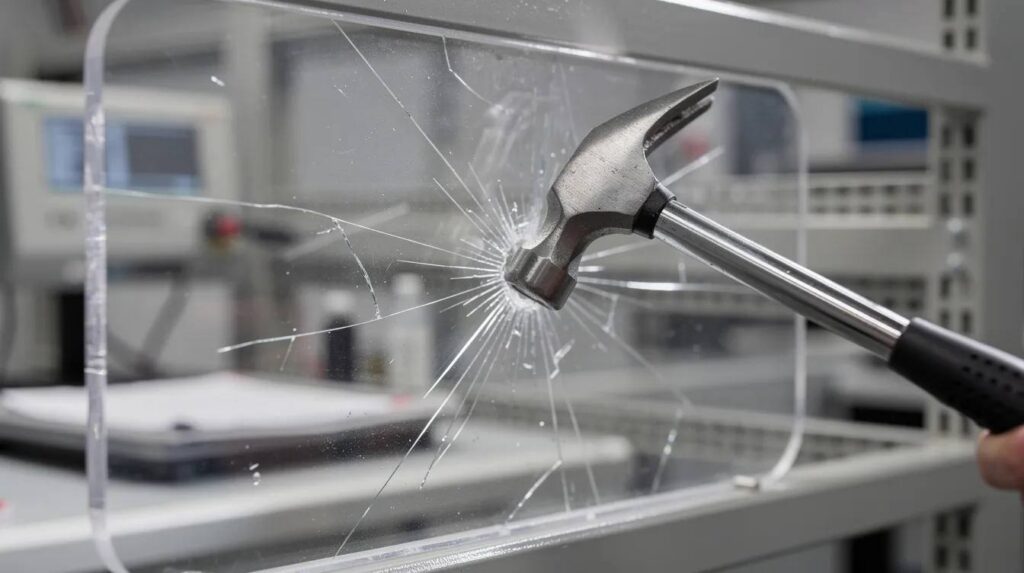
Security window film is a clear or lightly tinted polyester layer bonded to the inside of existing glass. Tear-resistant polyester or PET films are commonly used for security window films, typically 4-15 mil thick, and are a core component of many burglar-proof window strategies alongside stronger locks and security bars.
- Security window film acts as a protective layer that holds shattered glass in place, minimizing the risk of injury from flying shards during breakage
- Heavy-duty or blast security films can be up to 12 mil thick, designed to absorb shock waves from explosions or severe storms
- Reinforcing glass windows with security film can add a layer of protection, making forced entry more difficult for intruders
- Applying security film to windows can deter break-ins by making forced entry more difficult, thus enhancing the overall security of homes and businesses
- Safety window film can block up to 98% of harmful ultraviolet rays, helping to prevent fading of carpets and furniture while providing an added layer of security
- Cost-effective at $4-12/sq ft versus $50+/sq ft for full replacement
- Professional installation recommended for large storefronts to avoid bubbles and edge failure
Beyond the Glass: Hardware, Sensors, and Layered Protection
Strong glass alone isn’t enough. If your frame yields or your locks fail, even the best glazing won’t protect your property. Layered security makes every step noisy, time-consuming, and risky for intruders, mirroring comprehensive forced-entry protection strategies beyond the glass that integrate hardware, surveillance, and procedures.
Upgrade Window Locks, Latches, and Frames
Installing stronger locks on windows can significantly improve security, as many standard locks are easy to force open.
- Common weak points: Original 1970s-1990s wooden frames, simple swivel latches on sliders, corroded coastal hardware
- Pin and wedge locks are designed to prevent windows from sliding or being pried open
- Sliding window locks are devices that attach to the track to limit window movement
- Windows can be secured with keyed locks that prevent intruders from opening them from the inside
- Security screens utilize high-tensile stainless steel mesh that resists cutting and impacts while allowing ventilation
- Multi-point locking on patio doors distributes force across 4-8 points (up to 2,500 kg total resistance)
- Reinforce strike plates with 3-inch screws into studs for 300% improved holding strength
Security Bars, Grilles, and Secondary Barriers
Security bars or grilles come in fixed, swing-away, or removable types for different security needs.
- Best for basement windows, alley-side glazing, and storefronts closed overnight
- At least one window per sleeping room must have quick-release mechanisms for emergency egress
- Design options include powder-coated finishes, decorative patterns, or internal systems hidden behind blinds
- Internal lockable shutters add delay without changing external appearance
- Combining bars with laminated or polycarbonate glazing creates exceptional deterrence
Window Alarms, Glass‑Break Sensors, and Contact Switches
- Contact sensors utilize a magnetic system to detect when a window is opened and trigger an alarm if contact is broken while armed
- Glass break sensors use AI or acoustic technology to detect shattering glass sounds from a distance of up to 25 feet
- Shock or vibration sensors detect impact before actual breakage occurs
- Integrate sensors with a smart hub for 24/7 monitoring and instant smartphone alerts
- Wireless sensors offer easier installation; wired systems provide 99.9% uptime
Cameras, Lighting, and Deterrence Around Windows
Motion sensors detect heat or movement around the window and are often used as a secondary defense against intruders.
- Visible cameras and motion-activated lighting reduce attempts by 50-70% per Rutgers University studies
- Wide-angle 4K cameras with night vision (100 ft range) cover key window lines
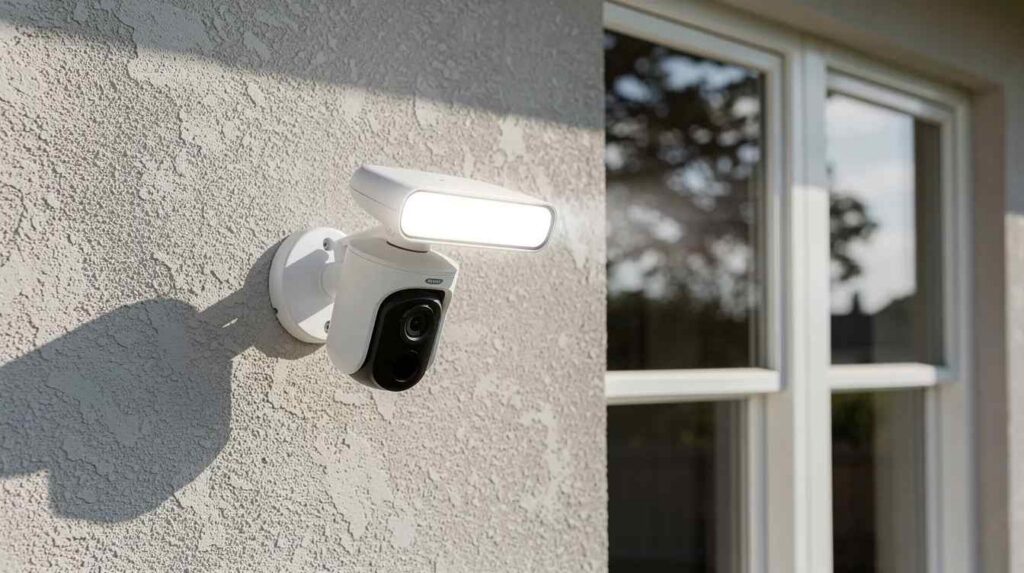
- Smart floodlights with integrated cameras send instant notifications
- Scheduled interior lighting scenes make it appear someone is home
- Signage stating “This property is monitored 24/7” adds psychological deterrence
Residential vs Commercial Glass Window Security
Risk profiles differ significantly between private homes and commercial premises. Family safety, aesthetics, and budget drive residential decisions, while business owners prioritize inventory protection, vandalism resistance, and insurance compliance, often turning to specialized commercial security window solutions for storefronts and public-facing glass.
Best Practices for Homes and Apartments
- Install laminated glass or 7-8 mil security film on ground-floor, basement, and balcony-accessible windows ($8-15/sq ft)
- Secure your sliding glass door with anti-lift devices and multi-point locks—these are frequent entry points
- Consider polycarbonate retrofit panels for high-crime neighbourhoods
- Use frosted film for privacy on side windows without blocking light
- Connect window sensors to whole-home smart alarms for alerts whether you’re at work or asleep
A 2023 NYC apartment complex saw break ins drop 40% after residents installed security film and sensors.
Best Practices for Shops, Offices, and Public Buildings
- Specify security-rated laminated glass or polycarbonate (P7B, $40-60/sq ft) for street-facing shopfronts, similar to the certified bulletproof window and door systems used in higher-risk facilities
- Minimize visible high-value items after closing; use lockable display cases behind glass
- Pair glazing upgrades with monitored CCTV (90-day cloud retention) and 24/7 intrusion alarms, creating a package similar to integrated bulletproof window and door security solutions used in banks and government sites
- Apply scratch-resistant protective films that can be peeled to remove graffiti quickly
- Schools need impact-resistant glazing near play areas to protect against accidents and deliberate attacks, and many now pair this with ballistic window film for active-shooter delay
Insurance often mandates EN 356 P4A+ glazing for commercial premises, with premiums dropping 20-30% after compliance.
Installation, Maintenance, and Long‑Term Performance
Even the strongest glass can be defeated if poorly fixed into the frame or if sealants fail. Correct installation is critical to real-world performance.
Professional vs DIY Security Upgrades
| Task | DIY Suitable? | Notes |
|---|---|---|
| Small window film applications | Yes | Risk of bubbles on large panes |
| Basic lock replacements | Yes | Follow manufacturer specifications |
| Large storefront film | No | Professional installers ensure proper edge adhesion |
| Polycarbonate systems | No | Requires correct edge clearances and fixing patterns |
| Laminated glass replacement | No | Accredited installers needed for warranty |
| DIY film failures occur in 20-30% of cases. Professional installation achieves 98% bubble-free results and maintains warranty validity. |
Warranty, Inspection, and Care
- Register products and keep documentation for future claims
- Use non-abrasive cleaning solutions and soft cloths—never spray ammonia-based cleaners on polycarbonate
- Inspect annually for damaged seals, frame movement, and condensation between panes
- Quality films carry 10-30 year warranties; 3M offers lifetime protection against yellowing
- Schedule professional inspections every 2-3 years to adapt to changing crime patterns
Why Choose Our Business for Glass Window Security
We specialize in security glazing retrofits for homes, retailers, and schools—not generic glass sales. Since 2010, we’ve completed over 5,000 security window projects across urban communities, deploying a range of safety and security glass systems to address threats from smash-and-grab theft to storms.
What sets us apart:
- We source EN/UL-certified laminated and polycarbonate products from trusted partners like 3M and Hammerglass
- Free on-site security assessments identify 10-20% of risks that property owners typically overlook
- Transparent pricing with clear $/sq ft breakdowns—no hidden money surprises
- 25-year installation guarantees and vetted professional installers
- We assist with insurance documentation and compliance paperwork
Ready to safeguard your property? Request a free, no-obligation survey. Speak with our team via phone, email, or web form. Have photos, measurements, and details about previous security concerns ready—we’ll determine the right solution for your risk level and budget.
Frequently Asked Questions About Glass Window Security
Is anything really unbreakable? Nothing is truly unbreakable. The best solutions buy you 3-15 minutes—enough time for alarms, neighbours, or police to respond. Think of it as buying time rather than achieving absolute invincibility.
What is the most cost-effective upgrade? For most homes, 8-mil security film ($5-10/sq ft) offers 2-5 minutes of delay. Full laminated replacement costs $30+/sq ft but provides 5-10 minutes. Film is the alternative for tight budgets.
Will security glass change how my windows look? Quality security films and polycarbonate maintain 85-95% light transmission. They’re virtually invisible when properly installed, with neutral tint options available.
Can I secure my windows without making my home look like a fortress? Yes. Clear laminated glazing, internal bars hidden behind blinds, and discreet sensors protect without fortress aesthetics.
How long does installation take?
- Small home: 1-2 days
- Single shopfront: 3-5 days
- School entrance: Up to 1 week
What maintenance is needed? Soft microfiber cleaning quarterly, professional inspections bi-annually for films, and re-edging every 10 years. Keep seals fixed and check for moisture intrusion after storms.