Table of Contents
- Introduction to Security Glass – Learn why security glass has become essential for commercial properties in 2026.
- What Is Security Glass? – Understand the definition, core benefits, and how security glass differs from standard glazing.
- Types of Security Glass – Explore laminated glass, polycarbonate panels, insulated units, and specialty options.
- Security Glass Performance – Match protection levels to specific threats, including burglary, ballistics, and blasts.
- Standards and Testing – Review key certifications and compliance requirements for security glazing.
- How Security Glass Works in Practice – Understand retrofit and new construction workflows.
- Safety vs. Security Glazing – Clarify the distinction between these commonly confused terms.
- Where to Use Security Glass – Identify priority applications by building type.
- FAQs – Get quick answers to common questions.
- Why Choose Our Business – Discover our specialized approach to security glazing solutions.
Introduction to Security Glass
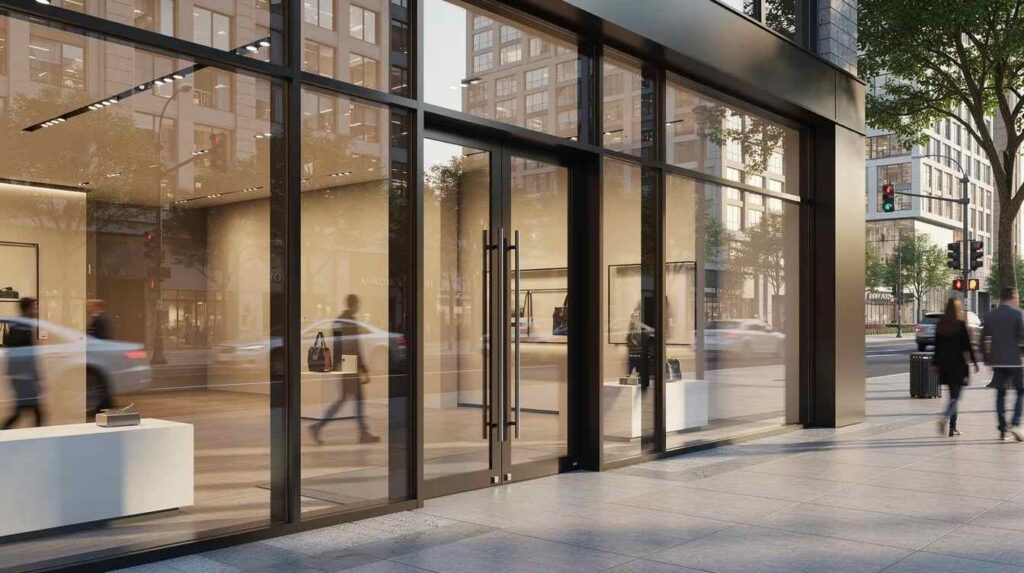
Between 2020 and 2024, commercial property owners across major cities witnessed firsthand how vulnerable normal glass can be during civil unrest and smash-and-grab incidents. Insurance companies have responded by requiring security upgrades at retail storefronts, pharmacies, and schools—often as a condition of coverage. Modern security glass is designed to be sleek and transparent, allowing for light-filled spaces without sacrificing safety.
Today’s security glazing can resist forced entry, ballistics, and bomb blast pressures while remaining optically clear and visually “invisible.” Security measures can be integrated into a building’s facade to avoid a fortress-like appearance. Unlike ordinary annealed or tempered glass that shatters on impact, engineered security systems maintain their integrity, protect people, and buy critical response time. Impact-resistant and shatter-resistant security glass can delay or prevent unauthorized access, giving security personnel more time to respond and deterring potential intruders.
Our company specializes in designing and professionally installing custom security glass systems for existing doors, windows, and storefronts. These solutions are easily installed with minimal disruption, ensuring effective protection and a seamless retrofit to your property.
What Is Security Glass? (Definition and Key Benefits)
Security glass is a family of glazing products engineered to resist intentional attacks across multiple threat vectors: burglary, forced entry, ballistics, and blasts. Security glass can provide a very high level of penetration resistance to protect people and items from forced entry and ballistic attacks. Security glass configurations are designed to help protect building occupants from injury or loss due to deliberate or intentional actions.
While basic safety glass protects against accidental breakage, security glass addresses deliberate attacks—a distinction we’ll expand later in this article.
Core functional benefits include:
- Forced entry delay that increases the difficulty and time required for intruders to gain access, serving as a deterrent and buying time for alarm response
- Bullet resistance against specified firearms
- Blast mitigation, reducing glass shards, and maintaining the building envelope
- Impact resistance against tools and weapons
- Shard retention prevents dangerous flying fragments that cause injury
Many types of security glass can block up to 99.9% of harmful UV rays, preventing fading of interior items. Security glass can also reduce heat transfer, leading to lower heating and cooling costs. At a high level, security glass is typically laminated, multi-layered, or made from high-performance plastics like polycarbonate combined with hard coatings. Visually, modern systems closely resemble standard glass, preserving light, visibility, and curb appeal.
Types of Security Glass and “Unbreakable” Glazing
There is no single “unbreakable glass”—rather, various types exist with different performance levels and cost implications. A project may combine multiple types strategically: laminated glass for display windows, polycarbonate for the highest-risk entry points. The combination of laminated glass with engineered framing systems further enhances energy absorption and blast mitigation performance in demanding security applications.
Main categories covered in this section:
- Laminated (shatter-resistant) glass
- Insulated laminated units
- Polycarbonate and hybrid systems
- Specialty ultra-clear security glass
Selection depends on threat level (smash-and-grab vs. firearms vs. explosions), building code requirements, and budget. Our team helps match threat assessments with the right glass type to avoid over- or under-securing a property.
Laminated Security Glass (Shatter-Resistant Glazing)
Laminated glass is constructed from two or more glass lites bonded with interlayers like PVB or ionoplast. Laminated glass, often referred to as ‘shatterproof glass’, is designed to hold glass shards in place when broken, preventing dangerous shattering and providing a delay against forced entry attempts.
Typical uses include retail storefronts, banks, schools, and office lobbies where the main threat is smash-and-grab burglary or vandalism. Strengths include high penetration resistance, delay of entry, compatibility with existing frame dimensions, and good optical clarity.
However, laminated glass may crack or craze under repeated heavy attack. Not all laminated glass is security-rated—you must specify tested security laminates meeting standards like EN 356 for burglary or forced entry performance, and understand the real capabilities of so‑called shatterproof or “unbreakable” glass.
Insulated Laminated Units (Security + Energy Performance)
An insulated laminated unit combines security laminated glass with an air or gas space and a second lite for thermal and acoustic performance. Double-glazed or low-emissivity (Low-E) security glass provides thermal insulation, maintaining comfortable building temperatures. The multiple layers in laminated security glass act as an acoustic barrier, damping external noise.
These units are ideal for exterior facades where owners want both high security and compliance with modern energy codes. Typical applications include storefronts in colder climates, glass curtain walls on corporate offices, and schools upgrading glazing efficiency and security simultaneously.
| Feature | Single Laminated Glass | Insulated Laminated Unit |
|---|---|---|
| Security Performance | High | High |
| Thermal Insulation | Basic | Excellent (improved U-value) |
| Sound Reduction | Moderate | Superior (30-35 dB) |
| Energy Savings | Minimal | Significant |
| Typical Use | Interior, mild climates | Exterior facades, demanding applications |
Polycarbonate and Hybrid “Unbreakable” Panels
Polycarbonate glazing is a tough plastic sheet up to 250 times stronger than glass of the same thickness. Glass-clad polycarbonate combines glass surfaces for scratch resistance with a polycarbonate core for impact strength. Polycarbonate panels are significantly more difficult to break than both standard glass and laminated glass, providing superior protection against forced entry and weather-related disasters.
While laminated glass can effectively delay forced entry attempts, polycarbonate windows maintain their integrity against aggressive attacks, including bomb blasts and ballistic threats. These systems can be engineered to meet standards like UL 752.
Typical use cases include pharmacies, high-value retail (jewelry, electronics), police stations, cash offices, and vulnerable ground-floor residential windows in high-crime areas. Although called “unbreakable,” these materials are designed to stay intact and resist penetration long enough to deter or outlast an attack—rather than being literally indestructible, making them ideal as forced entry security glazing overlays.
Specialty Ultra-Clear and Low-Iron Security Glass
Low-iron and ultra-clear security glass offers less green tint and better color accuracy, especially at thicker security glass builds. Real-world applications include museum display cases, zoo enclosures, high-end storefronts, and luxury residential properties where both aesthetics and security matter.
For example, a 3/8” laminated low-iron pane delivers significantly higher visible light transmittance than standard clear glass of similar thickness. Installing high-quality safety and security glass solutions can increase the property value and curb appeal—particularly relevant for luxury commercial and residential clients.
Security Glass Performance: Applications and Threat Levels
Choosing security glass starts with understanding the primary threat: burglary, forced entry, ballistics, or blast—and the typical building type. Performance must align with local building codes, insurance requirements, and applicable national standards.
Key application categories:
- Burglary resistance
- Ballistic resistance
- Forced entry resistance
- Blast protection
In many retrofit projects, our team conducts a site assessment to determine and prioritize which openings need which level of protection.
Burglary-Resistant and Anti-Theft Glazing
Burglary-resistant glazing defeats smash-and-grab attempts using sharp tools like hammers, bricks, and crowbars. Recent articles and news reports have highlighted the importance of burglary-resistant glass in protecting properties during protests and looting. Advanced solutions such as riot-resistant security laminate systems can significantly increase the effort required to breach glass while preserving transparency. Test procedures for burglary resistance glass involve the use of various weapons to break the glass and measure the number of attacks required to create an opening in the glazing material.
Smash-resistant glass, also known as vandal-resistant glass, is engineered to withstand various impact forces and is designed to crack like a spiderweb instead of shattering, providing an added layer of protection. Purpose-built riot protective window systems extend this concept further for businesses exposed to civil unrest. Smash-resistant glass is engineered to withstand a range of impact forces, preventing shattering and allowing security personnel more time to respond to an attack.
The European standard EN 356 classifies burglary resistance from P1A through P8B. A typical smash-and-grab attempt on standard tempered glass achieves penetration in 3-5 seconds; the same attack on security laminated glass may require 30-60 seconds of sustained effort—often enough to deter opportunistic thieves.
Ballistic-Resistant (Bullet-Resistant) Glazing
Ballistic-resistant glazing withstands specified firearms and ammunition without allowing projectile penetration or dangerous spall. Bullet-resistant glass typically consists of multiple layers of glass and laminates that absorb the force of a bullet, preventing it from penetrating through the glass. Advanced security technology is integrated into ballistic and vandal-resistant glass systems, enhancing protection by resisting forced entry, shattering, and ballistic threats. Performance levels are defined by Underwriters Laboratory (UL) standards.
Common standards include UL 752 (Levels 1-8) in North America and EN 1063 (BR and SG classes) in Europe. Retrofit systems like BulletShield ballistic-resistant panels use layered construction that combines multiple glass plies with polycarbonate or special interlayers, oriented to manage impact in a specific direction (attack side vs. safe side).
Typical applications include government buildings, police stations, cash-handling areas, embassies, military sites, and schools adopting active-shooter protection measures. Ballistic glass is thicker and heavier, potentially requiring reinforced framing systems and structural review in retrofit projects, so it is important to compare bulletproof glass options and retrofit ballistic systems when planning upgrades.
Forced Entry-Resistant Security Glass
Forced entry resistance focuses on preventing an intruder from creating a usable opening within a set time using tools, rather than just surviving initial impact. As part of a broader forced entry protection strategy, tests involve repeated shots with sledgehammers, axes, or other heavy tools, simulating real burglary or riot conditions.
Multi-layer laminated glass and polycarbonate hybrids typically resist penetration and maintain barrier effectiveness. Riot control glass is a term used for various products designed to withstand violent assaults, often similar to smash-resistant glass, and is increasingly used in urban areas prone to high crime and social unrest.
Different countries and agencies use varying standards and protocols. Our team ensures compliance for each project’s jurisdiction, whether retail or school applications.
Blast-Mitigating and Explosion-Resistant Glazing
Blast-mitigating glazing reduces injuries from flying glass and maintains the envelope during an explosion—rather than making a facility “bombproof.” Systems use laminated glass, robust framing, and controlled anchoring methods engineered as a complete unit to manage blast pressures.
Relevant standards include ASTM blast test methods, GSA glazing criteria, and EN 13541 for explosion resistance, along with detailed GSA/ISC blast-resistant performance classifications. Typical facilities include government buildings, critical infrastructure, transportation hubs, and high-profile corporate facilities. Blast design requires specialist consultants; our role is to integrate certified glazing and framing systems into the overall blast strategy.
Security Glass Standards, Testing, and Compliance
All serious security glass solutions should be backed by laboratory testing and certifications—not marketing claims alone. In the US, security glass standards address specifications and test methods for anti-theft protection, forced entry resistance, ballistic resistance, and bomb-blast protection. There are many standards covering test methods and performance of security glass.
Key standards:
- North America: UL 972 (burglary-resisting glazing), UL 752 (bullet-resisting materials)
- Europe: EN 356 (burglary), EN 1063 (ballistics), EN 13541 (explosion resistance)
Full-system testing is critical—glass, frame, anchorage, and hardware must perform as a complete assembly. We work with products tested to relevant standards and provide documentation, test reports, or video evidence for specifiers and security consultants.
How Security Glass Works in Practice (Retrofit and New Construction)
The best security glass strategies often retrofit into existing doors, windows, and storefronts to minimize cost and disruption. Many systems are designed as add-on interior or exterior panels that protect existing glass, avoiding full frame replacement.
Typical retrofit workflow:
- Site survey and threat assessment
- Measurement of existing frames
- Engineering review for structural capacity
- Custom fabrication to exact dimensions
- Professional installation during off-hours to reduce business downtime
- Quality verification and testing
In new construction, security glazing can be engineered into the building envelope from the start, optimizing cost versus performance versus aesthetics. Either approach delivers protection without creating a bunker-like appearance.
Safety vs. Security Glazing: What’s the Difference?
Safety and security glass serve different purposes. Safety glazing (tempered, basic laminated) prevents injuries during accidents—someone walking into glass doors, storms, or seismic events. Building codes require safety glass near floors, wet areas, and high-traffic zones.
Security glazing addresses deliberate threats: burglary attempts, vandalism, active shooter situations, civil unrest, and bomb blasts. Many security glass products also meet safety glass codes, but not all safety glass provides adequate security protection.
| Aspect | Safety Glazing | Security Glazing |
|---|---|---|
| Purpose | Prevent accidental injury | Resist deliberate attacks |
| Typical Products | Tempered, basic laminate | Multi-layer laminate, polycarbonate |
| Common Locations | Residential doors, wet areas | Storefronts, banks, schools |
| Primary Standards | ANSI Z97.1, EN 12600 | EN 356, UL 752, EN 1063 |
| Cost Range | €50-€150/m² | €150-€600+/m² |
Where to Use Security Glass: Key Building Types and Openings
Not every window needs the highest protection. Smart deployment targets the most vulnerable and critical areas first based on threat assessment and site layout.
Priority building types:
- Retail and shopping centers (display windows, entry points) that may benefit from dedicated storefront security solutions
- Schools and universities (main entrances, administrative areas)
- Government and municipal buildings (public-facing areas)
- Healthcare facilities (emergency departments, pharmacies)
- Commercial offices and corporate campuses (lobbies, data rooms)
- High-end residential (ground-floor windows, entry doors)
Priority openings include: main entrances, ground-floor windows, cash wraps, display windows, corridor doors in schools, and glazing near critical infrastructure.
For instance, a convenience store might install P5A laminated glass on entry doors and display windows while using standard safety glass on upper floors. A school might prioritize ballistic glazing for administrative offices and main entries, with forced entry-resistant glass for classroom windows. We help property owners create phased upgrade plans based on crime patterns and budget.
FAQs About Security Glass
Is security glass really unbreakable? No glass is literally indestructible. Security glass is engineered to resist penetration and maintain its form under attack, buying critical response time. The goal is deterrence and delay, not absolute impermeability.
Can you retrofit security glass into my existing storefront? Yes. Many security glazing systems are designed specifically for retrofit applications, fitting into existing frames without full replacement. Our team measures your current openings and fabricates custom solutions.
Will security glass make my building look like a bunker? Modern security glass appears virtually identical to standard glass. You maintain a welcoming, transparent appearance while dramatically increasing protection.
How much more does security glass cost than standard glass? Costs vary by protection level. Burglary-resistant laminated glass typically ranges from €150-€250/m², while ballistic glass starts at €400+/m². Some insurance companies provide lower premiums for properties equipped with advanced security measures like impact-resistant glass, offsetting costs over time.
Does security glass affect visibility or create tint? Quality laminated security glass offers excellent optical clarity. Ultra-clear low-iron options eliminate the green tint present in standard glass, particularly important for display applications.
How long does installation take for a typical retail store? Most retail storefronts can be completed in 1-3 nights of off-hours work, minimizing business disruption. Installation timeline depends on the number of openings and complexity.
Does polycarbonate require special cleaning? Coated polycarbonate surfaces should be cleaned with soft cloths and specific cleaning agents to avoid scratching. We provide maintenance guidance with every installation.
Have a project-specific question? Contact us directly for a customized answer.
Why Choose Our Business for Security Glass Solutions
When you’re interested in upgrading your property’s protection, choosing the right partners matters. With an extensive past in providing security glass solutions, we specialize exclusively in security glazing—not general window installation—bringing focused expertise to every project.
What sets us apart:
- Years of dedicated experience in commercial security glazing
- Broad product line of security glass and door systems designed for vulnerable entry points
- Specialization in retrofit systems that minimize disruption
- Use of tested, certified products meeting UL, EN, and other standards
- Coordination with security consultants, architects, and building officials
- Commitment to maintaining welcoming, transparent appearances
Our services include:
- On-site assessments and threat analysis
- Threat-aligned product recommendations across various types
- Detailed proposals with tiered options and cost comparison
- Professional installation by trained crews
- Ongoing support and documentation for future reference
Whether you manage a retail store in a downtown area, a K-12 school, or a municipal office, we deliver comprehensive security glass solutions that protect without compromising the welcoming environment your clients and visitors expect.
Ready to upgrade your property’s protection? Request a tailored security glass consultation today. Visit our contact page or call to discuss your specific building requirements.