If you are evaluating security glazing for schools, the goal is not to make a school building feel fortified. The goal is to delay intrusion, protect children and students, preserve visibility, and support school security plans when seconds matter.
Table of Contents
Why Glazing Is Often the Weak Link in School Security
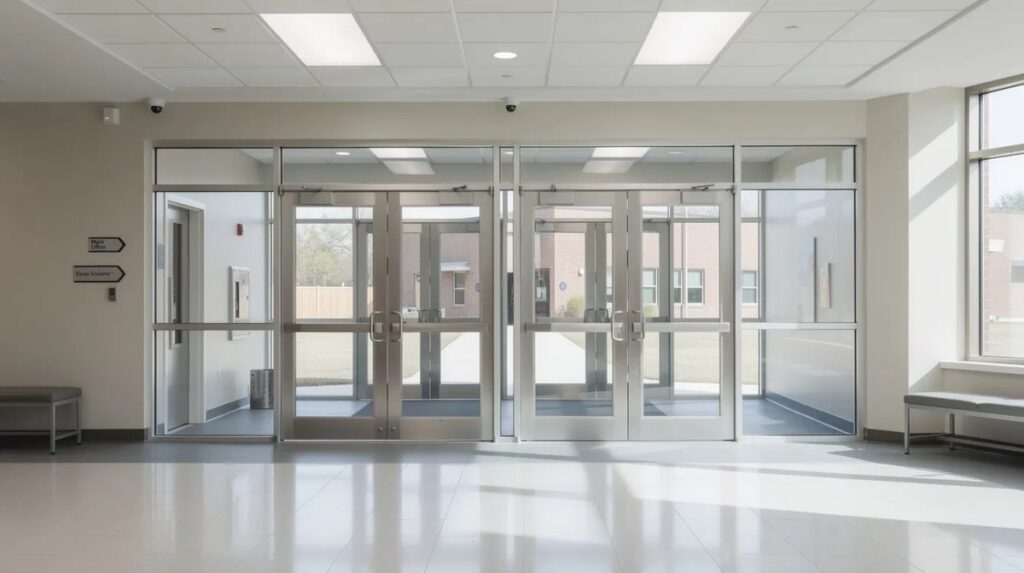
Standard glass can fail in seconds under deliberate force. Intruders often target glass in doors, sidelites, and ground-floor windows because locks may remain intact while the surrounding building envelope is breached. Standard tempered glass breaks quickly; basic laminated glass may hold fragments but still allow a person to gain access through a hole.
This matters because 70% of active shooter incidents end within five minutes, and many school shootings are over in under four minutes. According to the FBI, active shooter incidents in education settings move fast, so delay at the entry point is critical.
Security glazing transforms traditional glass into fortified barriers. While not bulletproof, security glass holds shattered shards together to prevent injuries, reduce breaking hazards, and support lockdown procedures. Security glazing can delay entry during an active shooter incident and can delay unauthorized entry by several minutes.
Example: an intruder attacks a main entry vestibule. The doors are locked, but the sidelite is standard glass. After impact from a hammer or pry bar, the opening allows access to the interior locks. The failure chain is not the lock alone; it is the glass, frame, installation, and hardware acting as one system.
Key weak points include:
- Glass type and interlayer performance
- Limited frame bite or weak anchorage
- Poor framing system strength
- Hardware exposed near the attack line
- Assemblies not tested as complete systems
Understanding Modern School Security Glazing Standards
Newer forced entry standards focus on forced entry resistance after an armed attack, not only everyday safety. ASTM F3561 was developed for security glazing after active shooter incidents and evaluates fenestration systems after a simulated active shooter attack.
Key testing standards for security glazing include ASTM F3561 and UL 752. ASTM F3561 testing involves pre-weakening glass with 10 gunshots, then applying physical attack. ASTM F3561-22 includes eight levels of forced-entry testing, and ASTM F3561-23 is referenced for main entrance glazing assemblies. This is not a ballistic standard; it measures forced entry protection after damage.
Older rules such as ANSI Z97.1 and 16 CFR 1201 address human impact safety. Security glazing must meet ANSI Z97.1 for impact safety, but that does not prove intrusion resistance. Safety glazing minimizes life-threatening injuries by holding together or breaking into small fragments.
| Standard | What it evaluates | Typical school use |
|---|---|---|
| ASTM F3561 | Forced entry after gunshot weakening | Main entry, vestibules, doors |
| UL 752 | Bullet resistance | Offices, security lobbies |
| ASTM F1233 | Forced entry, ballistic, thermal, chemical attack | Higher-risk zones |
| ASTM F1915 | Detention-grade abuse resistance | Specialized areas |
| ANSI Z97.1 / 16 CFR 1201 | Human impact safety | Code-required glass safety |
ASTM F1233 Class 1.4 provides 14 minutes of forced-entry resistance. In demanding specifications, security glazing must meet ASTM F1233 and ASTM F3561 standards when the project requires both delay and verified system performance. Guidance from the national glass association and the broader industry increasingly points architects toward full-assembly testing.
Materials and Systems: From Security Glazing to Bullet Resistant Glass
Security glazing is not just glass. It is glass, interlayers, frame, anchorage, locks, doors, glazing stops, and installation working together.
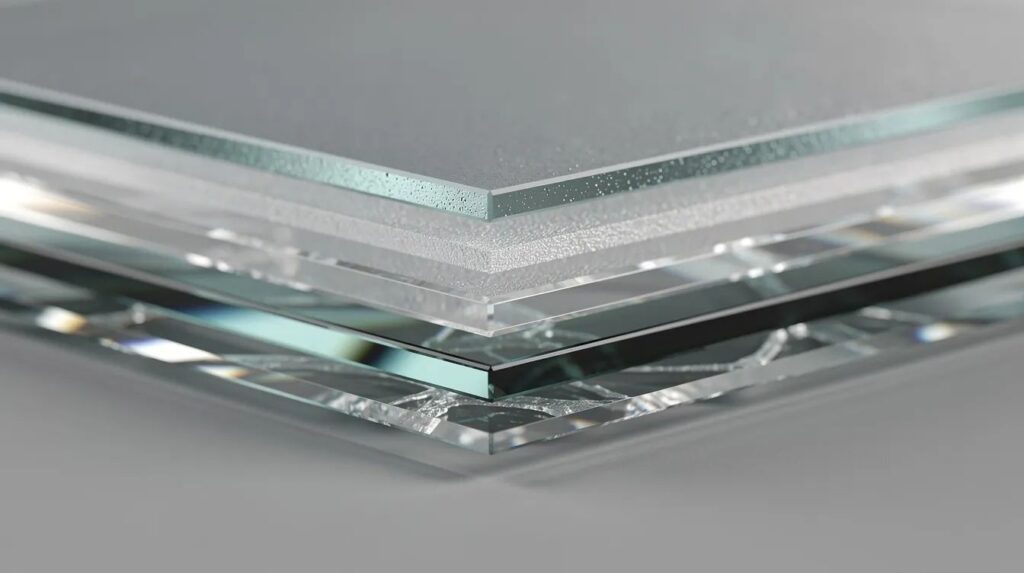
Laminated security glass consists of bonded sheets of glass with a clear plastic interlayer. This type of glass creates a sturdy barrier that does not limit natural daylight. Laminated glass maintains structural integrity during attacks by bonding fragments to an interlayer, and some products use a proprietary interlayer developed for higher performance.
Multi-ply laminates and polycarbonate materials resist repeated strikes and ballistic impacts. Glass-clad polycarbonate combines materials to absorb ballistic energy while maintaining clarity. Bullet resistant glass assemblies are used where ballistic threats are elevated, such as front offices or security screening space.
Forced entry glazing is engineered to resist forced entry during attacks; bullet resistant glass is tested to stop specific rounds. Some systems combine both, but they must be tested as a full assembly.
Security window film is a heavy-duty polyester layer applied to glass surfaces. It can slow shattering and add modest delay, but film does not make glass bullet resistant and is not equivalent to tested security glazing. Its benefit depends on the glass, existing frames, adhesive, and installation quality.
Heavy-duty security glazing systems are engineered to resist violent physical breaches. Security glazing can withstand hand tool attacks from items like hammers and pry bars, and security glazing can withstand repeated physical attacks and ballistic threats. Reinforced glass deters vandalism and theft by resisting break-ins, and security glazing acts as a multi-hazard barrier against vandalism and environmental hazards.
Codes, Standards, and Emerging School Security Requirements
As of 2026, most U.S. building codes do not require security glazing. No current building codes mandate school security glazing as a universal national requirement for classrooms, entrances, or sidelites. Most codes focus on egress, fire, accessibility, and impact safety.
That is changing. ASTM F3561-23 has been discussed for future model code use at main entrances, doors, and sidelites in K–12 schools. Utah’s House Bill 84 requires security glazing in K-12 schools, showing how state-level legislation can move faster than national model codes.
Required today in most jurisdictions: comply with impact safety, fire, egress, and accessibility rules.
Best practice: use tested school security glazing at entry vestibules, administration areas, and other critical access points.
A professional risk assessment should review threats, response times, visibility, vandalism, and the ability of security systems and other measures to protect classrooms without harming the learning atmosphere.
Designing and Implementing Security Glazing Upgrades in Schools
Most schools are upgrading existing buildings, so phasing matters. Educational institutions use a tiered framework of security glazing options range from basic safety mitigation to ballistic-rated systems.
A practical process looks like this:
- Assess doors, sidelites, ground-floor windows, and vulnerable access points.
- Prioritize entry vestibules, administration, nurse areas, commons, and classroom doors with large lites.
- Select forced entry only or combined ballistic and forced entry performance.
- Check existing frames, frame depth, anchors, hinges, and weight limits.
- Require tested assemblies; glass alone should not pass as a system.
Security glass can be retrofitted into existing school frames, but some openings need a new framing system. Security glazing holds together when damaged to prevent glass walk-through accidents.
Good school design should still feel open. Security glazing maintains natural light while enhancing school safety. Security glazing improves passive supervision by allowing clear sightlines, which helps staff see activity without making the building feel harsh. Decorative films, frits, or shades can add privacy where needed.
For example, a 1970s elementary school might replace monolithic glass with laminated security glazing, upgrade frames, and install stronger hardware. The result is a clearer line between public and secured space while maintaining integrity, access control, and a welcoming atmosphere for parents, customers, staff, and students.
Systems such as CHILDGARD® are designed to resist forced entry in schools. DefendEd systems withstand physical attacks for almost 15 minutes, and DefendEd security glazing withstands attacks for up to 14 minutes. Product claims should always be verified with test reports showing how the system was manufactured, installed, and tested.
FAQs About Security Glazing for Schools
Does security glazing stop bullets?
Not always. Forced entry resistance is about delaying entry after damage, while ballistic protection is about stopping specified rounds. UL 752 and similar standards apply when bullet-resistant glass is required.
Can we retrofit security glazing into our existing doors and windows?
Often, yes. Existing frames must be checked for thickness, bite, anchorage, and hardware compatibility. If the frame cannot support the materials, replacement may be the safer solution.
Will upgraded glazing make our school feel like a fortress?
No. Modern glazing can look like standard glass while adding protection. It can preserve natural light, visibility, and a calm school design.
How does security glazing fit with lockdown and emergency plans?
It buys time. It complements lockdown procedures, communication, training, and other measures, but it does not replace them.
Is window film enough for school security?
Film can help hold broken glass together, but it is not the same as tested security glazing. High-risk zones need assemblies designed and tested for forced entry standards.
How long does it last?
With proper cleaning and inspection, quality systems can last for years. Watch for scratches, seal failure, frame corrosion, and damaged hardware.
What about cost and funding?
Costs vary by threat level, size, and installation complexity. Districts often use grants, bonds, capital budgets, and phased project planning to focus resources on the most critical openings first.
Conclusion and Next Steps for Strengthening School Security
Standard school glass is not usually designed for forced entry. Security glazing can protect people, slow intruders, maintain natural light, and improve the performance of the building during threats.
Time is the most valuable asset during active shooter incidents and other intrusion events. Start by compiling door and window schedules, existing drawings, and risk assessments, then schedule a glazing assessment for your campus.
Explore our security glazing resources and technical guides to plan upgrades that meet the highest standards. The focus should always be clear: better safety for children, students, staff, and every person in the school building.