- The Architectural Imperative: Beyond Single-Purpose Sound Barriers
- Deconstructing Clear Sound Barriers: Beyond Single-Purpose Solutions
- The Synergy of Silence and Security: Introducing Advanced Retrofit Glazing
- Mastering Sound: Understanding STC Ratings and Acoustic Performance in Glazing
- The Unseen Shield: Integrating Forced-Entry Protection with Superior Sound Dampening
- Preserving Architectural Vision: Aesthetics and Seamless Integration
- Specifying Excellence: A Comprehensive Approach to Dual-Benefit Glazing Systems
- Frequently Asked Questions
The Architectural Imperative: Beyond Single-Purpose Sound Barriers
The Silent Threat: How Noise Pollution Impacts Occupant Well-being and Productivity
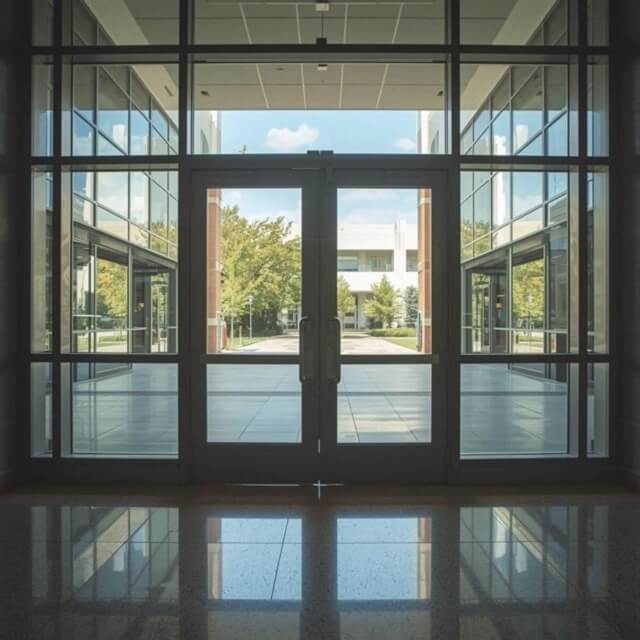
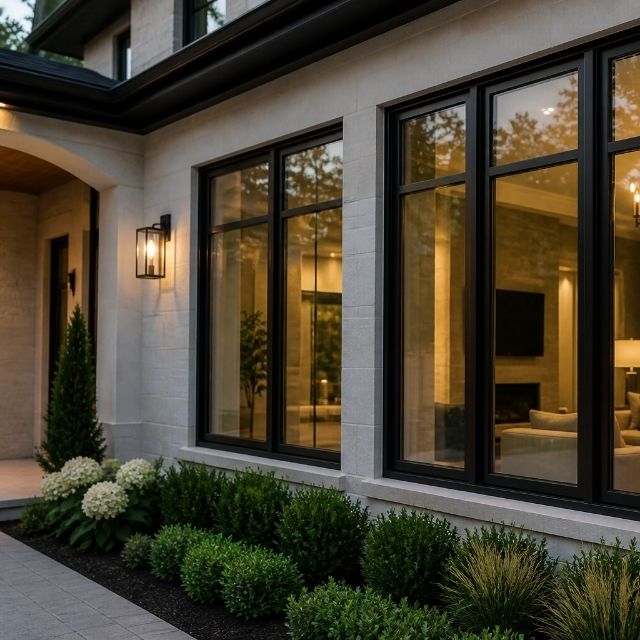
Clear sound barriers for windows provide architects and building owners with a sophisticated way to reduce exterior noise, strengthen security, and maintain unobstructed views without compromising architectural aesthetics. Unwanted noise infiltration is more than a mere annoyance. It represents a significant impediment to occupant well-being and overall productivity within commercial and institutional environments.
Persistent external noise, whether from traffic, construction, or urban activity, contributes to elevated stress levels and cognitive fatigue. In professional settings, this translates directly to reduced concentration, diminished work quality, and an increased propensity for errors. Healthcare facilities experience compromised patient recovery and staff performance, while educational institutions face challenges in creating conducive learning environments. Mitigating these acoustic intrusions is not merely a comfort amenity, but a fundamental requirement for fostering healthy, efficient, and habitable spaces.
Evolving Demands: The Architect’s Challenge in Balancing Aesthetics, Function, and Comfort
Modern architectural practice navigates a complex intersection of demands, where each project requires a delicate balance between visual appeal, practical utility, and occupant experience. Architects are tasked with creating structures that are not only structurally sound and aesthetically striking, but also supremely functional and deeply comfortable. Acoustic comfort has ascended to a non-negotiable metric of quality, alongside energy efficiency, lighting, and indoor air quality. The challenge intensifies when attempting to integrate robust acoustic insulation into fenestration without compromising natural light, external views, or the building’s inherent design integrity. This multifaceted requirement pushes architects to seek sophisticated solutions that address every dimension of building performance simultaneously.
The Search for Clarity: Why Architects and Building Owners Seek Clear Sound Barriers for Windows
The desire for a clear sound barrier for windows stems from a fundamental need to maintain open sightlines and abundant natural light while effectively blocking external noise. Unlike solid walls, windows inherently represent an acoustic vulnerability in a building envelope. Architects and building owners are acutely aware that traditional opaque soundproofing materials, while effective, are unsuitable for fenestration due to their visual obstruction. Their pursuit is for solutions that offer significant sound transmission loss without introducing visual distortion, tinting, or bulky alterations to the existing window system. This emphasis on optical clarity alongside acoustic performance underscores the aesthetic and functional importance of windows in architectural design.
Deconstructing Clear Sound Barriers: Beyond Single-Purpose Solutions
Understanding the Basics: What Constitutes a Sound Barrier for Fenestration?
A sound barrier for fenestration refers to any system designed to reduce the transmission of airborne sound waves through a window opening. Its effectiveness is quantified by its Sound Transmission Class (STC) rating, a single-number rating of a material’s or an assembly’s ability to resist airborne sound transfer. Higher STC values indicate superior sound insulation.
Key Acoustic Principles
- Mass: Heavier materials inherently possess greater sound-stopping capabilities.
- Decoupling: Separating glass panes with an air or gas space helps to break the path of sound waves, preventing direct vibration transfer.
- Damping: Materials that dissipate vibrational energy rather than transmitting it contribute significantly to sound reduction.
Traditional approaches often involve thick monolithic glass, laminated glass with an acoustic interlayer, or insulated glass units (IGUs) with increased air gaps. Secondary glazing systems add an entirely new layer of glass inside the existing window, creating an additional air cavity for enhanced performance. These methods contribute to various window soundproofing solutions.
The Allure and Limitations of Traditional Window Soundproofing Solutions
Traditional window soundproofing solutions hold significant appeal due to their focused approach to mitigating noise. Laminated glass, with its viscoelastic interlayer, effectively dampens sound vibrations, achieving higher STC ratings than monolithic glass of equal thickness. Insulated glass units (IGUs) offer improved thermal performance alongside moderate acoustic benefits, particularly when thicker glass and larger air spaces are specified. Secondary glazing systems, by introducing an independent interior window, create a substantial air gap that can deliver considerable acoustic improvements, often elevating STC ratings into the mid-40s or even 50s.
However, these single-purpose solutions inherently come with limitations. While they address acoustic performance, they frequently overlook other critical building demands. Traditional laminated glass, for instance, offers limited protection against forced entry or ballistic threats. Secondary glazing, while acoustically effective, introduces an additional visual layer that can alter the interior aesthetic and require significant installation effort, potentially compromising existing architectural elements. Furthermore, none of these solutions, when solely focused on sound, inherently provides robust security beyond basic impact resistance. This singular focus often necessitates additional, separate systems to address security vulnerabilities.
The Missed Opportunity: Why Prioritizing Only Acoustic Performance Falls Short
Prioritizing only acoustic performance in fenestration represents a significant architectural missed opportunity in modern building design. While achieving a high STC rating is undoubtedly important for occupant comfort and productivity, it addresses only one facet of a building’s functional requirements. A sound barrier that offers exceptional noise reduction but provides minimal resistance to forced entry, blast impacts, or even active shooter threats leaves a critical vulnerability in the building envelope.
Investing in a single-purpose soundproofing solution often means:
- Redundant Systems: The eventual need to install a separate security film, security glazing, or an entirely different fenestration system to address threat mitigation. This adds unnecessary cost, complexity, and potential aesthetic compromises.
- Compromised Aesthetics: Bulky secondary glazing or heavily tinted security films added post-hoc can detract from the original design intent and visual clarity that architects and building owners initially sought.
- Inefficient Resource Allocation: Deploying separate contractors and materials for distinct functions (acoustic versus security) is inefficient from both a budgetary and logistical perspective.
The modern imperative calls for integrated solutions that address multiple performance criteria simultaneously. A solution that only silences noise but fails to secure the perimeter falls short of Alex Chen’s goal to create buildings that are truly safe, functional, and visually stunning. This singular focus on acoustics, therefore, leads to an incomplete and ultimately less resilient building solution.
The Synergy of Silence and Security: Introducing Advanced Retrofit Glazing
Redefining Performance: Integrating Elite Acoustic Insulation with Robust Threat Mitigation
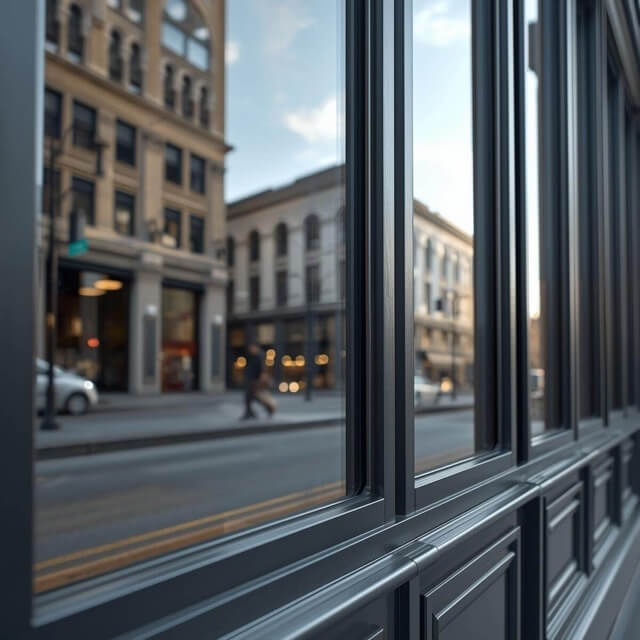
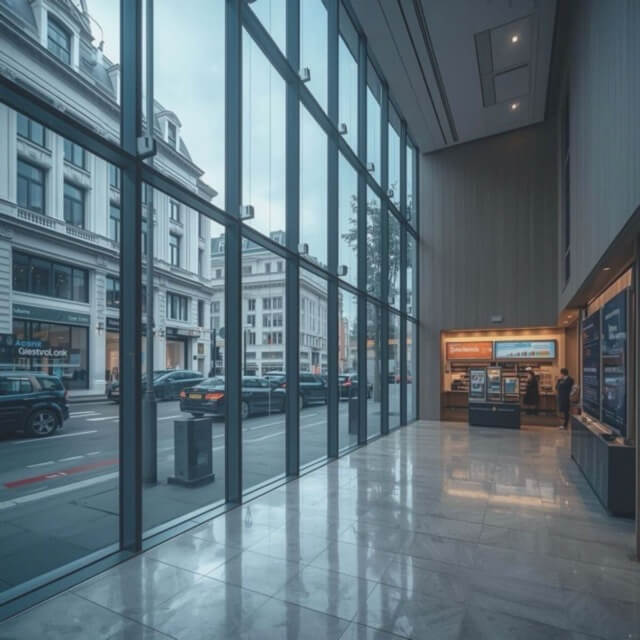
The conventional approach to mitigating external noise or enhancing security often involves separate, single-purpose solutions. This frequently results in an architectural compromise, introducing additional bulk, aesthetic alterations, or complex installations that detract from original design intent. However, advanced retrofit glazing systems present a paradigm shift, seamlessly integrating elite acoustic insulation with robust threat mitigation within a single, elegant solution. This integrated design ethos eliminates the need for disparate systems, preserving architectural integrity while delivering superior performance.
These engineered solutions address a crucial market demand for comprehensive protection without visual obtrusion. By combining high-performance sound dampening with formidable impact resistance, these systems provide a multifaceted defense. They effectively reduce noise pollution from urban environments, traffic, or adjacent spaces, simultaneously forming a resilient barrier against forced entry attempts and other security threats. This redefinition of performance allows architects and building owners to achieve both peace and protection from a unified system. Such acoustic security glass offers comprehensive benefits.
Patented Innovation: How Modern Acoustic Security Glass Delivers Dual-Benefit Functionality
The efficacy of modern acoustic security glass stems from sophisticated, often patented, material science and engineering principles. These systems typically employ a multi-layered construction, utilizing a combination of robust materials such as polycarbonate and specialized interlayers, adhered directly to existing glass. The key to their dual-benefit functionality lies in the inherent properties and synergistic arrangement of these components.
The unique structure is engineered to perform two critical functions:
- Acoustic Dampening: The varying densities and viscoelastic properties of the laminated layers, particularly the polycarbonate and the bonding agents, work to absorb and dissipate sound energy across a broad frequency spectrum. This inter-layering effectively disrupts sound waves and minimizes vibrational transfer, significantly reducing noise ingress.
- Impact Resistance: The same polycarbonate layers, known for their exceptional strength and flexibility, provide a formidable barrier against physical attack. This advanced material, when properly bonded, transforms standard glass into a highly resistant surface capable of withstanding repeated impacts from blunt force, ballistic threats, and forced entry attempts. The system flexes upon impact, absorbing energy without shattering or dislodging, thereby mitigating threats while preserving the original facade.
This innovative construction allows the system to remain virtually invisible post-installation, seamlessly blending with the existing window framework and maintaining the building’s aesthetic integrity.
Addressing Alex Chen’s Vision: Creating Safe, Functional, and Visually Stunning Buildings
For architects like Alex Chen, the challenge often lies in harmonizing safety, functionality, and aesthetics within a single design. Traditional methods frequently force a trade-off among these critical elements. Advanced acoustic security glazing directly addresses this predicament by delivering a solution that enhances all three aspects simultaneously, without compromise.
- Safety: The robust security properties provide a formidable defense against forced entry, vandalism, and other physical threats, ensuring occupants and assets are protected.
- Functionality: Elite acoustic insulation transforms interior spaces, creating quieter, more productive, and comfortable environments by significantly reducing unwanted external noise.
- Visual Appeal: As a retrofit system that adheres to existing glass, it preserves the original architectural design and views. Its low-profile, unobtrusive nature means no bulky frames or aesthetic alterations are required, allowing the building’s visual integrity to remain uncompromised.
This integrated approach enables the creation of spaces that are inherently secure, acoustically optimized, and visually true to their original architectural vision.
Mastering Sound: Understanding STC Ratings and Acoustic Performance in Glazing
Deciphering the Decibels: What Sound Transmission Class (STC) Means for Windows
Sound Transmission Class, or STC, is a single-number rating system widely used to quantify the ability of a building element, such as a window, wall, or door, to reduce airborne sound. A higher STC rating indicates greater effectiveness in preventing sound transmission. In the context of windows, STC values are crucial for architects and designers aiming to control noise pollution and create acoustically comfortable interior environments.
For instance, a standard single-pane window might achieve an STC rating in the low 20s, offering minimal sound reduction. Double-pane windows typically range from STC 25-35. Advanced acoustic glazing systems, especially those incorporating laminated polycarbonate, can achieve STC ratings exceeding 40, representing a significant reduction in perceived noise. Understanding these ratings allows for precise specification to meet project-specific acoustic requirements, from mitigating street traffic to ensuring speech privacy. This is central to effective sound transmission class windows.
The Mechanics of Sound Dampening: How Laminated Polycarbonate Systems Achieve Superior STC
The superior acoustic performance of laminated polycarbonate systems is rooted in fundamental principles of sound physics, specifically sound reflection, absorption, and dampening. Unlike monolithic glass, which readily transmits vibrations, these multi-layered systems are engineered to counteract sound energy effectively.
Key mechanisms contributing to their high STC ratings include:
- Mass and Density: The additional mass provided by the polycarbonate layers and the specialized interlayers increases the system’s resistance to vibration, thereby reflecting more sound energy.
- Dissimilar Materials: The combination of different materials, such as glass and polycarbonate, with distinct natural resonant frequencies, helps to break up and absorb sound waves across a broader spectrum. This prevents a single frequency from easily passing through.
- Viscoelastic Damping: The soft, rubber-like nature of the interlayers and bonding agents between the rigid glass and polycarbonate layers acts as a powerful dampener. These materials convert vibrational energy (sound) into heat, effectively dissipating it rather than allowing it to transmit through.
This engineered composite structure ensures that sound waves encounter multiple obstacles, each designed to reduce their energy and prevent their propagation into the interior space, resulting in significantly enhanced acoustic dampening.
Beyond Simple Reduction: Analyzing the Full Spectrum of Noise Control for Architectural Glazing
While STC ratings provide a valuable benchmark for sound reduction, a comprehensive approach to noise control in architectural glazing extends beyond this single metric. Effective acoustic design considers the full spectrum of noise control to create truly serene environments.
Key additional considerations include:
- Low-Frequency Noise: STC ratings are most accurate for mid to high-frequency sounds. However, low-frequency noises, such as those from heavy vehicles or HVAC systems, often require specialized glazing designs or additional dampening strategies to mitigate effectively.
- Flanking Paths: Sound can bypass a well-insulated window through gaps around the frame, wall imperfections, or even through the wall itself. A holistic noise control strategy must address these “flanking paths” to ensure the entire window assembly performs as intended.
- Outdoor-Indoor Transmission Class (OITC): For environments dominated by exterior noise sources like traffic or aircraft, the OITC rating may be more relevant than STC. OITC is specifically designed to measure how well a building component attenuates lower-frequency outdoor noises.
Ultimately, achieving superior acoustic performance in architectural glazing requires an understanding of both material science and installation practices. It involves selecting advanced systems like laminated polycarbonate that excel in broad-spectrum sound dampening, coupled with meticulous attention to detail in installation and sealing to eliminate potential sound leaks.
The Unseen Shield: Integrating Forced-Entry Protection with Superior Sound Dampening
Architectural design demands solutions that are both functional and discreet. Advanced security glazing achieves this by offering an “unseen shield” that seamlessly integrates robust forced entry protection with superior acoustic performance. This innovative approach ensures that buildings remain secure, quiet, and visually appealing without compromising one critical aspect for another.
Fortifying Fenestration: The Structural Integrity of Advanced Security Glazing
The core of effective security and sound dampening lies in the structural integrity of the fenestration. Advanced security glazing systems are engineered with multi-layered, laminated compositions, often incorporating high-strength polycarbonate sheets. These materials provide exceptional impact resistance against forced entry attempts, transforming a vulnerable glass pane into a formidable barrier. Simultaneously, the inherent mass, damping properties, and air gap spacing within these engineered layers significantly improve the acoustic insulation, effectively reducing noise transmission across a wide frequency spectrum. This dual-purpose design ensures that windows are not just visually transparent, but also physically resilient and sonically isolating.
Proactive Defense: How Retrofit Security Systems Deter and Delay Intrusions
Retrofit security systems are not merely reactive; they embody a proactive defense strategy. By integrating an interior layer of advanced security glazing, these systems create a virtually impenetrable barrier that deters potential intruders. The enhanced structural integrity means that even sustained physical attacks with implements like bricks, hammers, or even ballistic rounds fail to breach the system quickly. This extended delay is critical, providing valuable time for security personnel or law enforcement to respond, often leading to the apprehension of perpetrators or the abandonment of the intrusion attempt. The visible resilience of these systems, though subtle, sends a clear message that the building is fortified, reducing its appeal as a target.
The Economic Advantage: Consolidating Security and Acoustic Investments in a Single Window Assembly
From a financial perspective, specifying a combined security and acoustic retrofit glazing system offers a significant economic advantage. Traditional approaches often involve separate investments in soundproofing film or secondary glazing for acoustics, and then another layer of security film, bars, or alarms for protection. This segmented strategy can lead to increased material costs, complex installations, longer project timelines, and higher maintenance expenses. By consolidating these requirements into a single, engineered retrofit system, building owners and architects benefit from:
- Reduced Material Costs: One integrated system replaces multiple disparate solutions.
- Streamlined Installation: A single installation process minimizes labor and disruption.
- Lower Lifecycle Costs: Unified maintenance and longer product lifespans.
- Optimized Performance: Engineered for synergistic security and acoustic benefits.
This consolidation represents a strategic investment, delivering comprehensive protection and environmental control without unnecessary duplication of effort or expense.
Preserving Architectural Vision: Aesthetics and Seamless Integration
Architects strive to create structures that are not only safe and functional, but also visually stunning. The challenge often lies in integrating security and performance enhancements without compromising the original design intent. Advanced retrofit security glazing rises to this challenge, ensuring that enhanced protection and acoustic comfort are achieved with minimal visual impact.
Undetectable Defense: Maintaining Original Sightlines and Exterior Appearance with Retrofit Glazing
A key differentiator of advanced retrofit security glazing is its ability to provide an “undetectable defense.” Unlike overt security measures such as grilles, bars, or bulky secondary window frames, these systems are designed to be virtually invisible. They typically involve an interior application that adheres precisely to the existing window frame, preserving the original glass pane, window aesthetics, and exterior facade. This meticulous integration ensures that architects can maintain:
- Original Sightlines: Unobstructed views from both interior and exterior perspectives.
- Historic Fidelity: Ideal for heritage buildings where maintaining original features is paramount.
- Architectural Harmony: Seamless blending with contemporary or traditional designs.
The result is enhanced security and sound control that is perceived neither from the street nor within the building, allowing the architectural vision to shine unimpeded.
The Retrofit Advantage: Enhancing Existing Windows Without Costly Replacements
The “retrofit advantage” offers a compelling argument for building owners facing security or acoustic challenges. Rather than undertaking costly and disruptive full window replacements, which involve removing existing frames, installing new units, and extensive construction work, retrofit systems are installed directly over or within the existing window assembly. This approach significantly reduces:
- Project Timelines: Quicker installation means less operational downtime.
- Construction Waste: Minimizing demolition and disposal.
- Capital Expenditure: A fraction of the cost of full window replacement.
This efficiency makes high-performance security and soundproofing accessible for a wider range of projects, from commercial properties to educational institutions and governmental facilities.
Design Harmony: How Dual-Benefit Systems Support Architectural Integrity and Visual Appeal
Ultimately, advanced dual-benefit security glazing systems achieve a state of design harmony. They provide the robust protection and superior sound dampening required in today’s urban environments without detracting from a building’s inherent beauty or architectural integrity. These systems underscore the principle that security and performance enhancements do not have to come at the expense of aesthetics. By offering a solution that is structurally resilient, acoustically superior, and virtually invisible, architects can confidently specify a single, engineered retrofit glazing system that genuinely supports the creation of safe, functional, and visually stunning spaces. This comprehensive solution surpasses merely installing a clear sound barrier for windows.
Specifying Excellence: A Comprehensive Approach to Dual-Benefit Glazing Systems
Defining Project Requirements: Assessing Acoustic, Security, and Aesthetic Needs
True architectural excellence in glazing systems begins not with product selection, but with a precise definition of comprehensive project requirements. While traditional approaches might compartmentalize acoustic insulation, security, and aesthetic considerations, a holistic assessment reveals their interconnected nature. A single-purpose clear sound barrier for windows, for instance, addresses only one facet, potentially overlooking critical security vulnerabilities or architectural design integrity.
- Acoustic Requirements: This evaluation extends beyond a simple STC rating. It involves identifying the specific noise sources (e.g., highway traffic, urban din, internal HVAC systems, adjacent conference rooms), their dominant frequency ranges, and the desired sound reduction levels within the occupied space. Understanding the quality of quietness needed, whether for sensitive data centers, executive offices, or residential units, dictates the precise acoustic dampening performance required.
- Security Requirements: Simultaneously, the threat landscape must be rigorously assessed. This includes evaluating potential forced entry methods, the types of tools an intruder might employ, and the desired delay time for first responders to arrive. For higher-risk environments, considerations might expand to include ballistic resistance or blast mitigation, which demand specific engineering and material properties.
- Aesthetic Requirements: Architects and building owners prioritize preserving the original design intent and visual integrity of a structure. This means any integrated system must be virtually invisible, maintain optical clarity, and not alter the building’s facade or interior sightlines. The solution must integrate seamlessly, honoring the existing architectural language rather than introducing a discordant element.
By defining these parameters concurrently, architects can move beyond siloed thinking and recognize that a solution addressing all three categories simultaneously offers superior value and performance, ensuring structures are safe, functional, and visually stunning.
Technical Specifications: Key Considerations for Laminated Polycarbonate and Window Assembly Integration
The integration of advanced acoustic and security performance hinges on precise technical specifications, particularly concerning the material science of laminated polycarbonate and its assembly within existing window systems. This dual-benefit capability is engineered, not coincidental.
Material Composition and Performance
Laminated polycarbonate, unlike traditional glass, possesses inherent properties that make it uniquely suited for both advanced security and acoustic dampening. Its extraordinary tensile strength and impact resistance provide robust protection against forced entry. When engineered into multi-ply layers or combined with other proprietary materials, it can effectively mitigate attacks from various tools, from blunt objects to power tools, significantly extending defeat times. For acoustic performance, the material’s viscoelastic properties and the construction of laminated layers disrupt sound wave propagation, contributing significantly to a system’s overall STC rating. Its optical clarity, when properly manufactured and treated, ensures that this enhanced protection remains visually unobtrusive.
Engineered System Integration
A high-performance system is more than just a sheet of material. It’s an engineered assembly.
- Retrofit System Design: Effective dual-benefit systems are designed as retrofit solutions, installing over existing primary glazing. This approach preserves the original window frame and facade while introducing a new layer of protection and insulation. The controlled air gap between the primary window and the retrofit polycarbonate system is critical, acting as an insulating layer that significantly improves both thermal performance and acoustic attenuation, functioning much like secondary glazing.
- Robust Attachment and Framing: The security performance of any glazing system is only as strong as its attachment to the building structure. Specifying robust, engineered framing and anchoring mechanisms is paramount. These systems must be designed to absorb and distribute impact forces, preventing the entire assembly from being compromised. Custom-engineered frames, often crafted from robust aluminum or steel, are securely fastened to the existing window frame or structural opening, ensuring the security glazing remains anchored even under sustained attack. This meticulous integration guarantees that the system meets stringent forced entry or ballistic resistance standards.
These technical considerations underscore why an integrated approach provides superior performance compared to attempting to add separate, often incompatible, layers of soundproofing and security.
Partnering for Performance: Selecting an Engineered Solution Provider like Impact Security LLC’s DefenseLite
Achieving the sophisticated balance of elite acoustic performance, robust security, and seamless architectural integration demands more than just purchasing a product. It requires partnering with an engineered solution provider. This collaboration is critical for delivering a system that precisely meets the project’s multifaceted requirements and aligns with the architect’s vision.
A proficient provider offers:
- Comprehensive Expertise: They possess deep knowledge across both advanced glazing material science and real-world threat mitigation strategies. This includes understanding attack methodologies, forced entry standards (such as UL 752 or ASTM F1233), and the intricacies of acoustic engineering to achieve specific STC ratings.
- Customization and Adaptability: Every architectural project presents unique challenges, from varied window types and sizes to specific threat profiles and aesthetic demands. An ideal partner can custom-engineer solutions that integrate flawlessly with existing structures, addressing specific vulnerabilities while maintaining the building’s aesthetic integrity. This bespoke approach ensures optimal performance without over-engineering or compromising design.
- Proven Performance and Certification: Trustworthy providers back their claims with verifiable data. This includes independent third-party testing for forced entry, ballistic resistance, and acoustic performance. Certifications from recognized bodies provide assurance that the system will perform as specified under real-world conditions. A comprehensive warranty further underscores confidence in the product’s longevity and effectiveness.
- Professional Installation and Support: The performance of an advanced glazing system is heavily reliant on expert installation. A reputable partner provides or oversees certified installation teams, ensuring that the system is correctly fitted, anchored, and sealed to achieve its designed acoustic and security performance. This end-to-end involvement, from initial assessment to post-installation support, is integral to the overall success and longevity of the solution.
By carefully selecting a partner like Impact Security LLC’s DefenseLite, architects and building owners gain access to a fully integrated, engineered solution that masterfully blends elite acoustic insulation with robust threat mitigation, all while preserving and enhancing architectural design. This strategic partnership transforms the challenge of dual requirements into an opportunity for comprehensive, high-performance building envelope design.
Frequently Asked Questions
What is a clear sound barrier for windows?
A clear sound barrier for windows is any transparent fenestration system designed to reduce airborne sound transmission without obstructing visibility. While traditional solutions often focus solely on acoustics, advanced systems integrate both sound reduction and robust security features.
How does Sound Transmission Class (STC) relate to window soundproofing solutions?
Sound Transmission Class (STC) is a numerical rating indicating a window assembly’s ability to block airborne sound. Higher STC ratings signify better sound insulation. Advanced acoustic security glass systems often achieve significantly higher STC ratings than standard glass, effectively reducing noise pollution.
Can acoustic security glass protect against forced entry and ballistic threats?
Yes, modern acoustic security glass is engineered with multi-layered polycarbonate composites that provide exceptional resistance to forced entry, impacts, and even ballistic threats, transforming a standard window into a formidable barrier while simultaneously enhancing sound dampening.
What are the benefits of a retrofit glazing system for noise reduction and security?
Retrofit glazing systems offer significant advantages by enhancing existing windows without costly full replacements. They provide both superior acoustic insulation and robust forced entry protection in a single, unobtrusive application, preserving architectural aesthetics, reducing installation time, and offering economic efficiency.
Why is an integrated approach better than separate soundproofing and security solutions?
An integrated approach, like that offered by dual-benefit retrofit glazing systems, provides a cohesive solution that addresses multiple performance criteria simultaneously. This avoids redundant systems, streamlines installation, reduces costs, and prevents aesthetic compromises often associated with adding separate, incompatible layers of soundproofing and security post-construction.