Table of Contents
Understanding School Entryway Security Glass in 2026
Key Threats Targeting School Entryway Glass
From Annealed Glass to Bullet Resistant Systems
Designing Secure School Entryways Without Sacrificing the Learning Environment
Retrofitting Existing School Entryways vs. New Construction
How Impact Security Designs and Delivers School Entryway Security Glass Solutions
Cost, Funding Strategies, and Phased Entryway Upgrades
FAQs About School Entryway Security Glass
Why Choose Impact Security for Your School Entryway Security Glass
Understanding School Entryway Security Glass in 2026
School entryway security glass refers to glazing systems in vestibule doors, sidelights, transoms, and storefronts that are specifically engineered to resist forced entry, ballistic attack, and vandalism. Since 2022, federal guidance and state legislation have pushed districts to harden entry points, and 2024–2026 funding cycles have accelerated vestibule upgrades across the country. The main entryway is both the first line of defense and the first point of contact for every visitor, yet the glass in those openings is typically the weakest part of the physical barrier.
Standard architectural glass was never designed for security. Annealed glass shatters into dangerous shards on first impact. Tempered safety glass breaks into small cubes that reduce laceration risk but offers no meaningful delay against a determined attacker. Wired glass provides fire safety but not security against intruders. Modern security glazing, by contrast, is purpose-built to withstand sustained assault and is tested to standards like ASTM F3561 for forced entry resistance and UL 752 for bullet resistance. The common term bulletproof glass is actually a misnomer; the correct designation is bullet resistant glass, since no glazing stops every possible threat.
Well-designed security glass for school entryways preserves natural light and clear sight lines, supporting a calm and welcoming learning environment rather than a fortress atmosphere. Security glass must maintain visibility and natural light so staff members can monitor approaching visitors while students feel at ease. Impact Security specializes in retrofit security glazing systems for schools across the United States, with solutions engineered for existing buildings and new construction alike.
Key Threats Targeting School Entryway Glass
Most security incidents at K-12 educational facilities begin at or pass through the main doors, making entryway glass the practical first line of defense against multiple real world threats. Traditional entry glazing is designed for weather protection and aesthetics, not forced entry resistance or ballistic threats, so it can fail in seconds under attack.
Schools face forced entry threats from intruders using tools like hammers, pry bars, and crowbars to break through door glass and sidelights. Once standard window glass is breached, would be intruders can reach through to unlock interior hardware and gain access to hallways and classrooms in moments. Active threat scenarios involve attackers breaking through glass with repeated blows or gunfire, creating easy access before lockdown protocols can take full effect. Even tempered glass does not prevent forced entry or storm damage; it simply breaks out faster.
Non-ballistic threats also matter. Vandalism from rocks, bricks, or angry visitors can shatter unprotected school windows and send broken glass fragments that fly dangerously inwards, creating immediate injury risk. Flying debris can smash school windows during storms and severe weather, disrupting operations. Annealed glass breaks easily into sharp shards under any of these scenarios. Every second of delay that security glass provides is critical time for staff and students to reach safety.
From Annealed Glass to Bullet Resistant Systems: Entryway Glazing Options
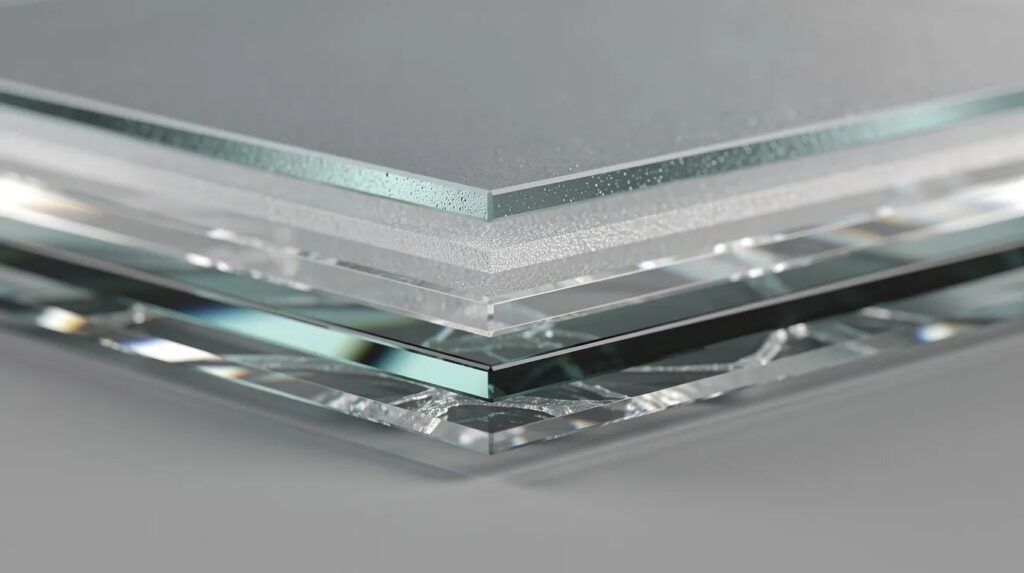
Not all school security glass is the same. The spectrum runs from standard glass with no protective value through safety glass with impact resistance to forced-entry-resistant glazing and full bullet-resistant systems.
| Glazing Type | Strengths | Limitations |
|---|---|---|
| Annealed glass | Low cost, common in older school doors | Annealed glass is fragile and easily breaks into sharp shards; zero forced entry delay |
| Tempered glass | Tempered glass is four to five times stronger than annealed glass; safer breakage pattern | Shatters completely on sustained attack; does not slow a determined intruder |
| Wired glass | Fire-rated for exit corridors | Wired safety glass provides fire safety but not security against intruders; weak under mechanical attack |
| Laminated safety glass | Laminated security glass remains intact under impact, reducing risk of shattering; laminated glass can also improve sound insulation and energy efficiency | Limited effectiveness against high-energy tools or sustained assault |
| Forced entry resistant glazing | Polycarbonate-based security glazing is virtually unbreakable; withstands bats, hammers, crowbars | Heavier, requires compatible framing |
| Bullet resistant glass | Security glazing offers ballistic protection against gunfire in schools; rated to UL 752 standards | Thicker, costlier; protection level must match threat assessment |
Security window films provide a cost-effective option for improving security on existing glass by adding fragment retention and modest forced entry delay, though film alone does not equal true forced entry or ballistic protection. Riot Glass absorbs impact and prevents entry even if damaged, making it effective against sustained melee attacks.
For school vestibules, UL 752 Levels 1 through 3 address handgun threats and are the most commonly specified. Security glass can hold an intruder outside for up to 2 minutes, giving staff and students the window needed to execute lockdown procedures. Many security glass products are certified to safety standards like ASTM and UL, and ASTM F1233 is used for forced entry resistance testing. Entryway solutions often combine technologies, such as a forced entry shield over existing glass plus ballistic protection at the classroom door or interior doors, to balance protection and budget.
Designing Secure School Entryways Without Sacrificing the Learning Environment
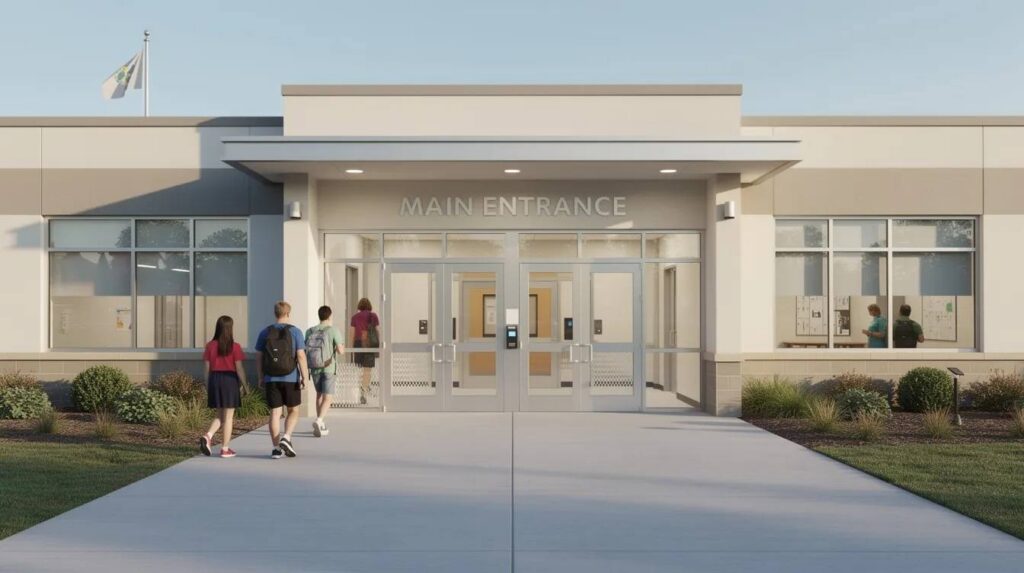
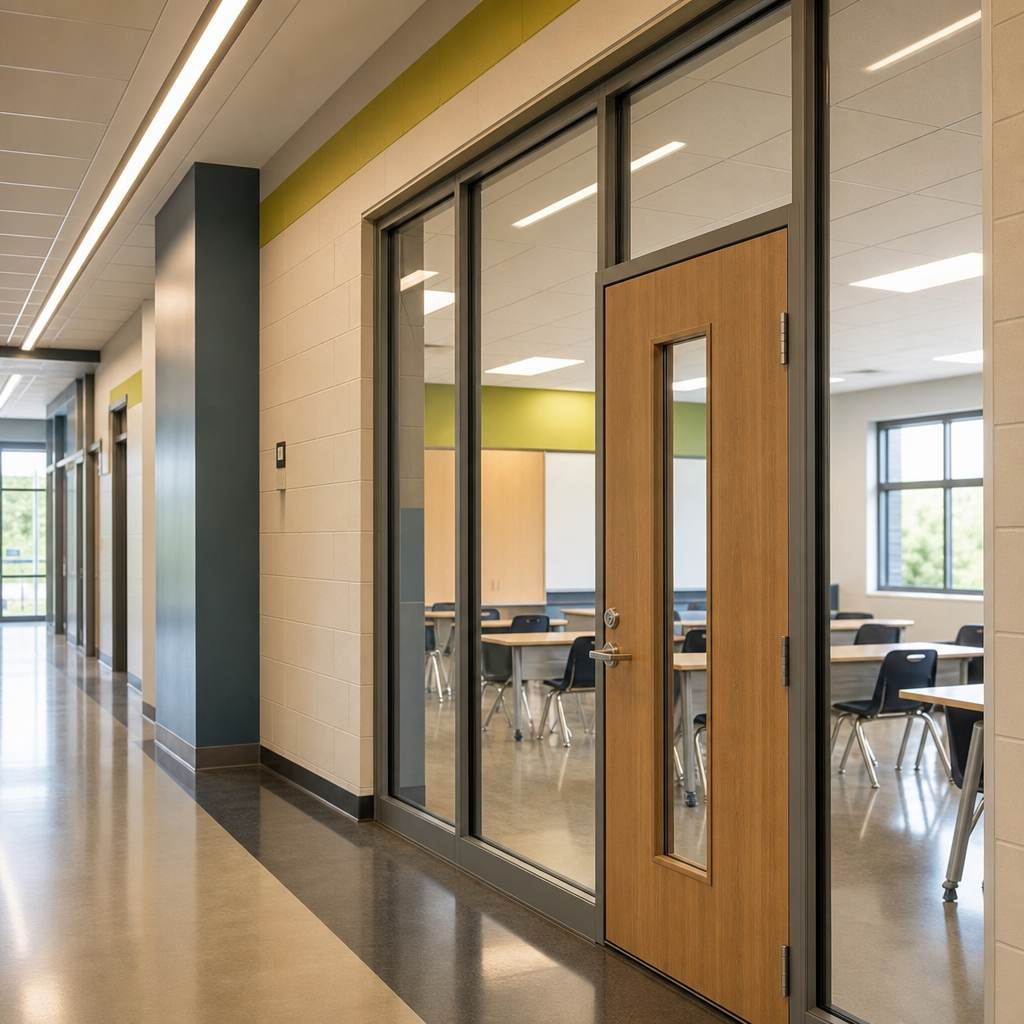
School entryway security glass must support school safety, daily supervision, and a healthy, student-centered environment simultaneously. Security glass maintains visibility and natural light in classrooms and vestibules, allowing administrators to see approaching visitors, verify identification, and monitor traffic without sacrificing the welcoming atmosphere that students and families expect.
Trauma-informed design means avoiding visible heavy armor. Retrofit shields that look like standard glass while delivering forced entry or bullet resistant performance keep the school building from feeling like a bunker.
Security glass reduces injury risks from broken glass fragments during any incident, protecting students and staff members from secondary harm.
In a properly designed secure vestibule, visitors enter through an exterior door into a glassed-in mantrap, are verified at a reception window, and only then pass through an interior set of security doors. Reinforced frames complement security glass to enhance overall protection across the entire assembly.
Security glass provides a physical barrier against intruders, and security glass can delay entry during active threat scenarios, but only when doors, frames, locks, and glazing work as one integrated system. If the glass is upgraded but the frame or locking hardware remains weak, the system fails at its weakest point.
Retrofitting Existing School Entryways vs. New Construction
The majority of U.S. schools in 2026 are existing structures, not new builds, so security glass solutions must work as retrofits. Retrofit security glazing systems mount over or in front of existing glass in doors, sidelights, and storefronts, adding forced entry resistance or ballistic protection without tearing out entire assemblies. Products designed with retrofittable framing adapters attach to existing frames and existing aluminum profiles, preserving the school’s appearance.
Retrofitting delivers shorter installation timelines, often completed over weekends or school breaks with minimal disruption to students and staff. Chesterfield County, Virginia, equipped 38 schools with secure vestibules for approximately $5.3 million, roughly $140,000 per school building. Sussex Academy in Delaware used phased window film and structural attachment retrofits aligned with the academic calendar, keeping disruption minimal.
New construction or major renovations offer the chance to specify integrated ballistic storefronts, pre-engineered bulletproof doors and bulletproof windows, and factory-glazed entry systems aligned with current ASTM and UL standards. Regardless of approach, all security glazing selections must coordinate with fire egress, ADA accessibility, and energy codes. District teams should prioritize the highest-risk openings first, including main office doors, vestibule sidelights, and transaction windows, then plan a multi-year roadmap to bring additional school doors and entrances up to the same protection level.
How Impact Security Designs and Delivers School Entryway Security Glass Solutions
Impact Security provides turnkey, engineered glazing systems that upgrade existing school entryways to resist forced entry, vandalism, and ballistic threats. The process starts with an on-site assessment by certified dealers who document current glass types, measure windows and doors, and identify high-risk areas such as main vestibules, gym entries, and administrative offices.
Impact Security’s product families, including DefenseLite forced entry shields and BulletShield ballistic systems, are configured for specific school entryway needs. Options range from anti-intrusion-only panels to combined forced entry and bullet-resistant performance. Stainless steel security screens resist cutting and prying attempts at vulnerable openings. Security glass is tested to meet ASTM F3561 standards, and ASTM F3561 tests security glass for forced entry resistance after attacks, including active shooter scenarios. Security glass can be ballistic-resistant based on industry standards, and security glass can be ballistic-resistant according to UL 752 standards.
Custom panels are fabricated to each opening, with framing finishes that blend with existing storefronts. Trained crews install during off-hours or breaks using tamper-resistant fasteners, upgrading doors, sidelights, and transoms in coordinated sequence. Post-installation, Impact Security provides maintenance guidance, inspection schedules, warranty coverage, and partners with districts to expand protection from the entryway to interior office glazing and other vulnerable openings over time.
Cost, Funding Strategies, and Phased Entryway Upgrades
Budget is one of the primary obstacles for districts considering school entryway security glass. Key cost drivers include the number and size of entry openings, whether forced entry resistance alone or full bullet-resistant ratings are needed, condition of existing frames, and scheduling constraints.
Many schools have accessed federal and state school safety grants, ESSER funds repurposed for security, local bond measures, and insurance incentives to fund upgrades between 2020 and 2026. A phased approach makes the investment manageable: start with the main front entry and administrative vestibule, then expand to secondary entrances as funds become available. This ensures that the highest-risk glass is addressed first during the most critical time windows.
Factor in lifecycle savings as well. Upgraded security glazing reduces glass replacement costs from vandalism and break-ins, minimizes operational disruptions, and can lower liability exposure. The many benefits compound over years of service. Facility leaders should request a detailed proposal from Impact Security that includes line-item pricing per opening and options at different protection levels, giving school boards the data they need to create a secure, defensible budget.
FAQs About School Entryway Security Glass
These are the questions facility managers, superintendents, and security directors ask most often when evaluating entryway security glass for their campuses.
What is the difference between bulletproof glass and bullet resistant glass?
No glass is truly bulletproof. Bullet resistant glass is tested and rated under UL 752, which defines specific threat levels from handguns through rifles. UL 752 sets bullet resistance standards for security glass, with Levels 1 through 3 covering common handgun calibers specified for school vestibules. Bullet resistance depends on the glazing system, frame, and hardware working together.
Can security window film replace true forced entry or bullet resistant glass?
Security window film improves fragment retention and adds modest delay, but it does not deliver the same forced entry resistance or bullet resistance as engineered security glazing systems. Film is best used as a supplemental layer or interim measure on lower-priority openings while full security glass is phased into high risk areas.
How long does retrofit installation take for a standard entry vestibule?
Most vestibule retrofits are completed in one to five days depending on the number of openings. Work is typically scheduled during summer breaks, long weekends, or overnight shifts to keep the campus operational and protect the learning environment from disruption.
How do you maintain security glazing after installation?
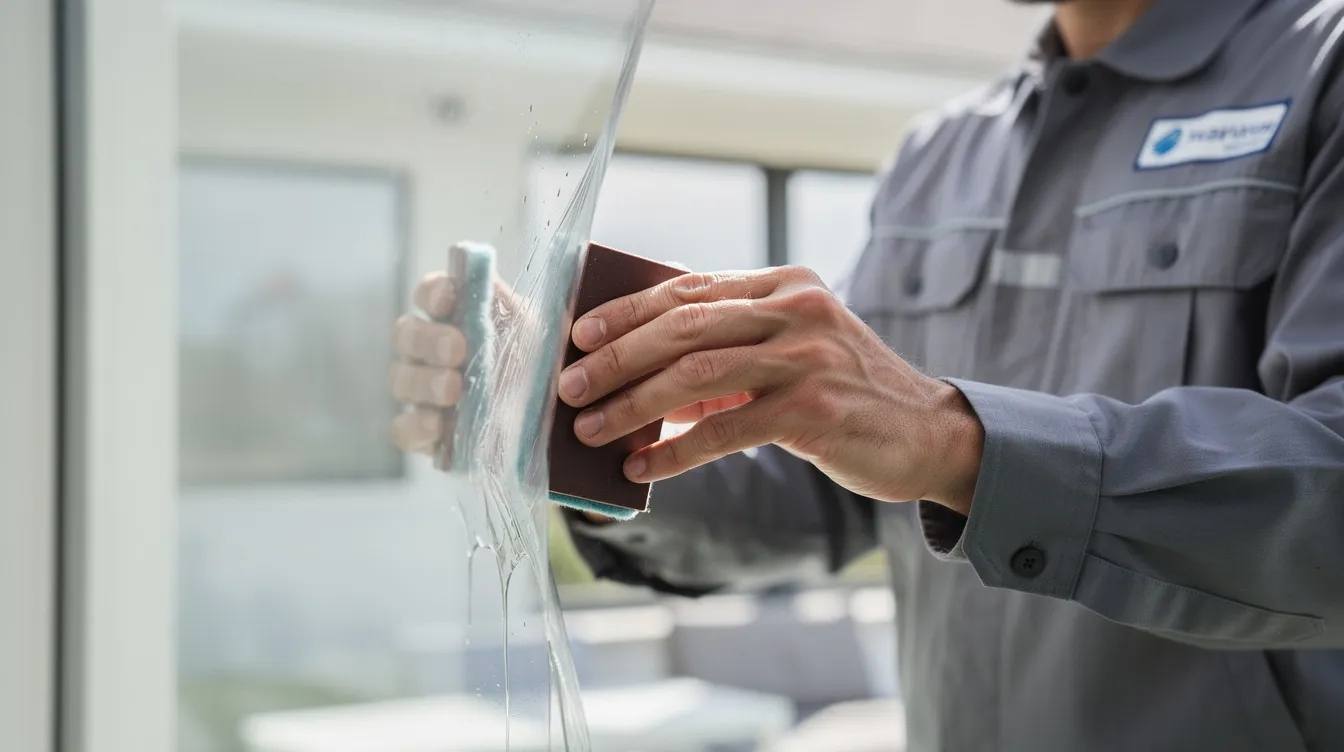
Security glazing cleans with standard glass cleaners. Polycarbonate panels resist scratching better than standard glass but should be cleaned with non-abrasive materials. If glazing is attacked or partially damaged during an incident, it may still hold but should be inspected promptly and replaced if integrity is compromised. Security glass can delay intruders during an active threat even after sustaining damage.
Does entryway security glass affect fire egress or ADA accessibility?
Properly specified security glass does not block exit paths or compromise accessibility. Impact Security coordinates with local code officials to ensure every installation meets fire egress, ADA, and energy code requirements. Security doors and hardware are selected to allow emergency egress while maintaining access control during normal operations.
Why Choose Impact Security for Your School Entryway Security Glass
Impact Security is a U.S.-based specialist in protective glazing for schools, hardening vulnerable glass openings without full replacement since 2016. The company’s primary goal is to protect students and staff members through engineered retrofit systems backed by independently tested forced entry and ballistic performance and supported by a nationwide network of certified installers experienced on school campuses.
Impact Security’s solutions turn entryway glass into a true first line of defense against active threats, forced entry, and vandalism while preserving the welcoming atmosphere and daylight that define a healthy school. District teams receive support with threat assessments, budgeting, grant documentation, and coordination with architects or any security expert involved in broader campus upgrades.
Ready to secure your school’s entryway? Request a free entryway assessment or estimate from Impact Security. Share your building information and connect with a local certified dealer to plan your next steps toward making every entrance a barrier that bad actors cannot easily defeat.